Vendor Relationship Management: Boosting Supplier Performance by 10% in 2025

Vendor relationship management is crucial for organizations aiming to enhance supplier contributions, with strategic implementation poised to improve supplier performance by 10% in 2025 through collaborative practices and advanced analytics.
In today’s dynamic business landscape, effective vendor relationship management is no longer just a best practice; it’s a strategic imperative. As businesses strive for greater efficiency and resilience, optimizing supplier performance has emerged as a critical driver for competitive advantage. This article delves into how organizations can systematically improve supplier performance by a tangible 10% in 2025, focusing on proactive engagement, data-driven insights, and collaborative frameworks.
Understanding the Core of Vendor Relationship Management
Vendor relationship management (VRM) goes beyond mere transactional interactions with suppliers. It’s about cultivating strategic partnerships that drive mutual value and foster innovation. A robust VRM framework is designed to optimize the entire lifecycle of supplier engagement, from selection and onboarding to performance monitoring and continuous improvement. This strategic approach transforms suppliers from simple service providers into integral extensions of your operational ecosystem.
The primary goal of VRM is to maximize the value derived from supplier relationships while mitigating risks. This involves a clear understanding of supplier capabilities, performance metrics, and their alignment with strategic business objectives. By fostering transparency and open communication, organizations can unlock new opportunities for collaboration and efficiency gains.
Key Pillars of Effective VRM
- Strategic Alignment: Ensuring supplier goals align with organizational objectives.
- Performance Monitoring: Tracking key performance indicators (KPIs) to assess supplier effectiveness.
- Risk Management: Identifying and mitigating potential disruptions in the supply chain.
- Continuous Improvement: Implementing feedback loops for ongoing optimization.
Ultimately, a well-executed VRM strategy creates a symbiotic relationship where both the organization and its vendors thrive. It’s about building trust, fostering innovation, and ensuring that every supplier interaction contributes positively to the bottom line, paving the way for significant performance improvements in the coming year.
Setting Ambitious Goals: The 10% Performance Improvement Target
Achieving a 10% improvement in supplier performance by 2025 is an ambitious yet attainable goal for organizations committed to strategic vendor relationship management. This target requires a clear vision, meticulous planning, and a consistent focus on measurable outcomes. It’s not just about cost reduction; it encompasses a broader spectrum of improvements, including quality, delivery timelines, innovation, and responsiveness.
To set such a target effectively, businesses must first establish a baseline of current supplier performance. This involves gathering comprehensive data across various metrics and identifying areas with the most significant potential for improvement. The 10% goal then becomes a tangible benchmark against which all VRM initiatives are measured. It encourages a proactive approach, pushing teams to identify and implement innovative solutions rather than merely maintaining the status quo.
Defining Measurable Performance Metrics
Successful performance improvement hinges on well-defined and measurable metrics. These should be tailored to the specific nature of each supplier relationship and the overall strategic objectives of the organization. Common metrics include:
- On-time delivery rates: Ensuring goods and services arrive as scheduled.
- Quality defect rates: Minimizing errors and non-conformities.
- Cost savings achieved: Identifying and realizing financial efficiencies.
- Innovation contributions: Assessing new ideas or solutions brought forth by suppliers.
- Responsiveness and flexibility: Evaluating a supplier’s ability to adapt to changing demands.
By focusing on these clear, quantifiable metrics, organizations can track progress effectively and make informed decisions. The 10% improvement target acts as a powerful motivator, driving continuous engagement and accountability within both the organization and its supplier network.
Leveraging Technology for Enhanced VRM
In the quest to improve supplier performance, technology plays an indispensable role in modern vendor relationship management. Advanced platforms and tools streamline processes, provide data-driven insights, and facilitate seamless communication, all of which are critical for achieving a 10% boost in efficiency by 2025. Manual processes are often prone to errors and inefficiencies, making technology a necessary accelerator for VRM initiatives.
Implementing a dedicated VRM software solution can centralize all supplier-related information, making it easily accessible and actionable. These platforms often include features for contract management, performance tracking, risk assessment, and communication, providing a holistic view of each vendor relationship. The integration of artificial intelligence (AI) and machine learning (ML) further enhances these capabilities, offering predictive analytics and automated insights that uncover hidden opportunities for optimization.
Essential Technological Tools for VRM
- Supplier Relationship Management (SRM) Platforms: Centralize data, automate workflows, and manage contracts.
- Analytics and Business Intelligence Tools: Provide real-time insights into supplier performance and trends.
- Communication and Collaboration Platforms: Facilitate seamless interaction and information sharing.
- Risk Management Software: Identify and monitor potential supply chain disruptions proactively.
By strategically adopting and integrating these technologies, organizations can transform their VRM practices. They move from reactive problem-solving to proactive optimization, using data to drive decisions and foster more productive and resilient supplier partnerships. This technological integration is a cornerstone for realizing significant performance gains.
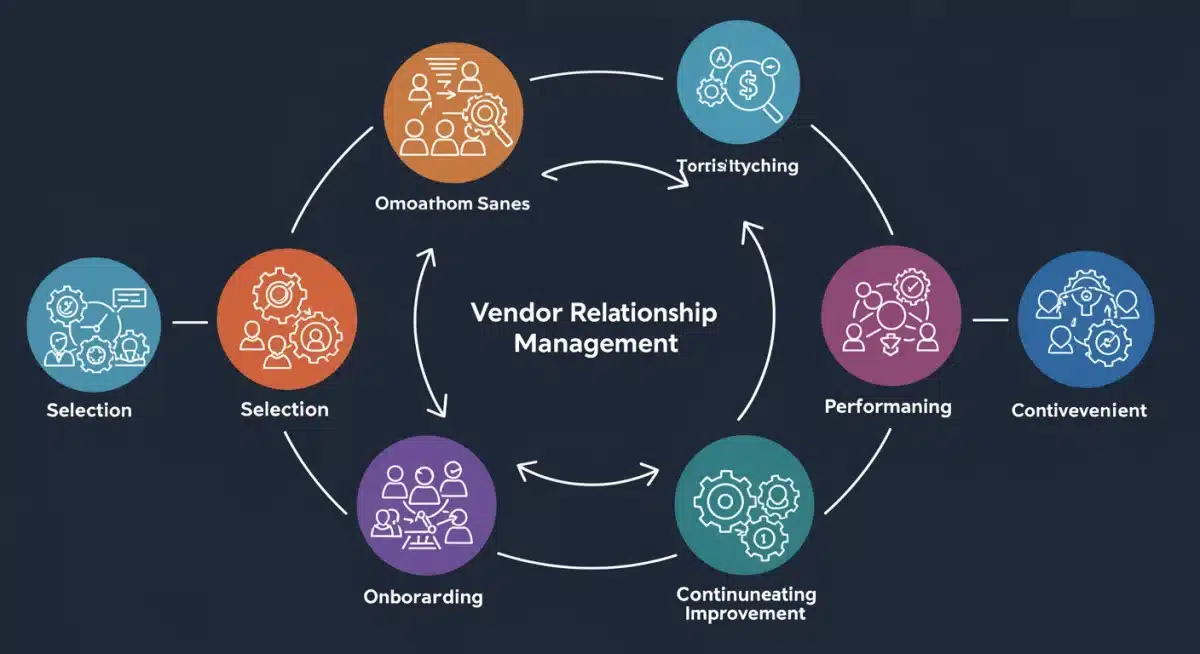
The infographic above illustrates how technology underpins each stage of the VRM lifecycle, from initial supplier selection through continuous performance monitoring and improvement. Each arrow represents a constant feedback loop, emphasizing the iterative nature of effective vendor management.
Fostering Collaboration and Communication
Effective collaboration and transparent communication are the bedrock of successful vendor relationship management, especially when aiming for a challenging goal like a 10% improvement in supplier performance by 2025. Without open channels and a collaborative mindset, even the most advanced technologies and strategic plans will fall short. Building strong relationships with vendors means treating them as true partners, not just service providers.
Establishing regular, structured communication channels is paramount. This includes scheduled performance reviews, joint planning sessions, and informal check-ins. It’s not enough to simply send out performance reports; engaging in dialogue about challenges, opportunities, and shared objectives fosters a sense of mutual responsibility. Encouraging suppliers to provide feedback on internal processes can also uncover valuable insights and areas for improvement on both sides.
Strategies for Enhanced Collaboration
- Joint Performance Reviews: Discussing KPIs and setting future goals together.
- Shared Vision Workshops: Aligning long-term objectives and strategic initiatives.
- Feedback Mechanisms: Creating formal and informal channels for mutual feedback.
- Cross-Functional Teams: Involving relevant departments in supplier interactions.
By actively fostering an environment of trust and mutual respect, organizations can transform vendor relationships from purely transactional to truly collaborative. This not only enhances performance but also drives innovation and builds resilience, ensuring that partnerships can withstand unforeseen challenges and contribute consistently to organizational success.
Risk Mitigation and Compliance in VRM
Risk mitigation and ensuring compliance are critical components of robust vendor relationship management, directly impacting the ability to achieve a 10% improvement in supplier performance by 2025. Unforeseen risks, whether operational, financial, or reputational, can severely disrupt supply chains and erode performance gains. Proactive identification and management of these risks are essential for maintaining stability and ensuring continuous progress.
A comprehensive VRM strategy includes a detailed risk assessment framework for all suppliers. This involves evaluating financial stability, cybersecurity protocols, ethical practices, and adherence to regulatory requirements. Establishing clear service level agreements (SLAs) and contractual terms that address potential risks and outline mitigation strategies is also vital. Regular audits and due diligence processes help ensure ongoing compliance and identify any new or emerging threats.
Key Aspects of Risk and Compliance
- Financial Stability Checks: Assessing a supplier’s economic health to prevent disruptions.
- Cybersecurity Assessments: Ensuring data protection and network security.
- Regulatory Compliance: Verifying adherence to industry standards and legal requirements.
- Contingency Planning: Developing backup strategies for critical suppliers.
By prioritizing risk mitigation and compliance, organizations can build a more resilient supply chain, safeguarding against potential setbacks that could derail performance improvement efforts. This proactive approach not only protects the business but also reinforces trust and reliability within the vendor network, contributing to long-term success.
Measuring and Sustaining Performance Gains
Measuring progress and sustaining the gains achieved through vendor relationship management are as crucial as the initial implementation efforts. To realize and maintain a 10% improvement in supplier performance by 2025, organizations must establish robust measurement systems and commit to continuous improvement. Without consistent tracking and adaptation, initial successes can quickly fade.
Regular performance reviews, utilizing the previously defined KPIs, are fundamental. These reviews should not just be about reporting numbers but about analyzing trends, identifying root causes of underperformance, and celebrating successes. Implementing a feedback loop where performance data informs future strategies and corrective actions is vital. This iterative process ensures that VRM remains dynamic and responsive to changing business needs and market conditions.
Strategies for Sustained Improvement
- Continuous Monitoring: Regularly tracking KPIs and performance metrics.
- Feedback Loops: Using performance data to inform future strategies.
- Benchmarking: Comparing supplier performance against industry best practices.
- Incentive Programs: Rewarding suppliers for exceptional performance and innovation.
Sustaining performance gains also involves fostering a culture of continuous improvement within both the organization and its supplier network. This means encouraging innovation, investing in supplier development, and regularly revisiting strategic objectives. By embedding these practices into the core of VRM, businesses can ensure that the 10% performance improvement is not just a one-time achievement but a foundational element of enduring success.
| Key Aspect | Brief Description |
|---|---|
| Strategic Alignment | Aligning supplier goals with organizational objectives for mutual benefit and efficiency. |
| Technology Integration | Utilizing VRM software, AI, and analytics for streamlined processes and data-driven insights. |
| Collaboration & Communication | Fostering open dialogue and partnership with vendors for shared success and innovation. |
| Risk Mitigation | Proactively identifying and managing potential supply chain disruptions and compliance issues. |
Frequently asked questions about vendor relationship management
VRM is a strategic approach to managing interactions with third-party vendors to extract maximum value from these relationships. It involves a systematic process of selecting, onboarding, monitoring, and continuously improving supplier performance to align with business objectives and mitigate risks effectively.
This goal is realistic because businesses now have access to advanced data analytics, AI-powered tools, and established best practices in VRM. By focusing on strategic alignment, performance monitoring, and collaborative communication, companies can systematically identify and address inefficiencies, leading to measurable gains.
Technology, such as SRM platforms and AI, centralizes data, automates processes, and provides real-time insights into supplier performance. It facilitates better communication, risk assessment, and predictive analytics, enabling organizations to make informed decisions and optimize their vendor interactions more effectively and proactively.
Open and transparent communication is vital for building trust and fostering collaboration. Regular performance reviews, joint planning, and feedback mechanisms ensure that both parties are aligned on goals and challenges. This collaborative environment drives mutual improvement and strengthens the partnership, leading to better outcomes.
Sustaining improvements requires continuous monitoring of KPIs, regular benchmarking, and a commitment to ongoing feedback loops. Investing in supplier development, incentivizing strong performance, and adapting strategies to market changes are key to maintaining and building upon initial performance gains over time.
Conclusion
The journey to improving supplier performance by 10% in 2025 through effective vendor relationship management is multifaceted but highly rewarding. By embracing strategic alignment, leveraging cutting-edge technology, fostering genuine collaboration, proactively mitigating risks, and committing to continuous measurement, organizations can transform their supply chains. This not only leads to significant operational efficiencies and cost savings but also builds resilient, innovative partnerships that are critical for navigating the complexities of the modern global market. The future of successful businesses lies in their ability to cultivate and optimize these vital vendor relationships.