US Tariff Adjustments 2025: Impact on 20% of Imports

The upcoming US tariff adjustments in 2025 are set to significantly impact 20% of imported goods, mandating businesses to re-evaluate their sourcing strategies and supply chain resilience.
The global economic landscape is constantly shifting, and few shifts create as much ripple effect as changes in trade policy. In 2025, the United States is poised to implement new tariff adjustments that will significantly impact approximately 20% of imported goods, a move that demands immediate attention and strategic planning from businesses across various sectors.
The impetus behind the 2025 tariff changes
The decision to introduce new tariff adjustments in 2025 is not arbitrary; it stems from a complex interplay of economic, political, and strategic considerations. Governments often leverage tariffs as a tool to achieve various objectives, ranging from protecting domestic industries to addressing perceived unfair trade practices. Understanding these underlying motivations is crucial for businesses to anticipate the potential long-term implications.
One primary driver for these adjustments is often the desire to rebalance trade deficits. When a country imports significantly more than it exports, it can lead to concerns about economic stability and job displacement in specific sectors. Tariffs can be used to make imported goods more expensive, thereby theoretically encouraging consumers to purchase domestically produced alternatives.
Protecting domestic industries
A significant factor in tariff implementation is the protection of domestic industries. By increasing the cost of imported goods, tariffs can make locally manufactured products more competitive. This can be particularly appealing for industries deemed strategically important or those struggling against foreign competition.
- Safeguarding national security interests by reducing reliance on foreign suppliers for critical goods.
- Fostering job creation and retention within key manufacturing sectors.
- Encouraging innovation and investment in domestic production capabilities.
Addressing unfair trade practices
Another common justification for tariffs is to counter what a government perceives as unfair trade practices by other nations. These practices can include subsidies, currency manipulation, or intellectual property theft. Tariffs, in this context, serve as a punitive measure intended to pressure trading partners into fairer conduct.
The strategic use of tariffs can also be a bargaining chip in international negotiations. By imposing or threatening to impose tariffs, a country can gain leverage in discussions about trade agreements, market access, or other geopolitical issues. This can lead to complex diplomatic maneuvers as nations seek to protect their economic interests.
Ultimately, the 2025 tariff adjustments reflect a multifaceted approach by the US government to shape its economic future. Businesses must analyze these motivations to better predict which sectors will be most affected and how to adapt their operations accordingly. Proactive engagement with trade policy experts and continuous monitoring of geopolitical developments will be essential.
Which sectors are most vulnerable to the new tariffs?
The upcoming US tariff adjustments in 2025 will not impact all imported goods equally. Certain sectors, due to their reliance on foreign supply chains and the nature of their products, are expected to bear the brunt of these changes more acutely. Identifying these vulnerable sectors is paramount for businesses to assess their exposure and formulate mitigation strategies.
High-tech manufacturing, for instance, frequently relies on complex global supply chains for components and raw materials. If tariffs are applied to critical parts sourced from specific countries, the cost of producing electronic devices, machinery, or automotive components could increase substantially. This could lead to higher consumer prices or reduced profit margins for manufacturers.
Consumer electronics and apparel
Consumer electronics, with their intricate assembly processes and global sourcing of microchips, screens, and other components, are highly susceptible. Similarly, the apparel industry, which often sources textiles and finished garments from various low-cost production centers, could face significant challenges.
- Increased production costs for smartphones, laptops, and other gadgets.
- Higher retail prices for clothing and footwear, potentially impacting consumer demand.
- Pressure on brands to diversify sourcing or absorb tariff costs.
Raw materials and intermediate goods
Tariffs on raw materials like steel, aluminum, or rare earth minerals can have a cascading effect throughout numerous industries. These materials are foundational inputs for countless manufactured goods, meaning higher costs at this stage will translate to increased expenses for a wide array of downstream products. Similarly, intermediate goods – components used in the production of other goods – are also highly vulnerable.
The automotive industry is another sector frequently impacted by tariff changes, given its extensive international supply chains for parts and components. Tariffs on these items can disrupt production schedules and increase the final cost of vehicles. Even agricultural products, depending on specific trade agreements and sourcing patterns, could see price fluctuations.
Businesses in these vulnerable sectors must conduct thorough supply chain audits to identify their exposure to the new tariffs. This involves mapping out suppliers, understanding the origin of components, and evaluating alternative sourcing options. Diversification and strategic partnerships will be key to navigating these impending challenges.
Anticipated economic ripple effects across the US economy
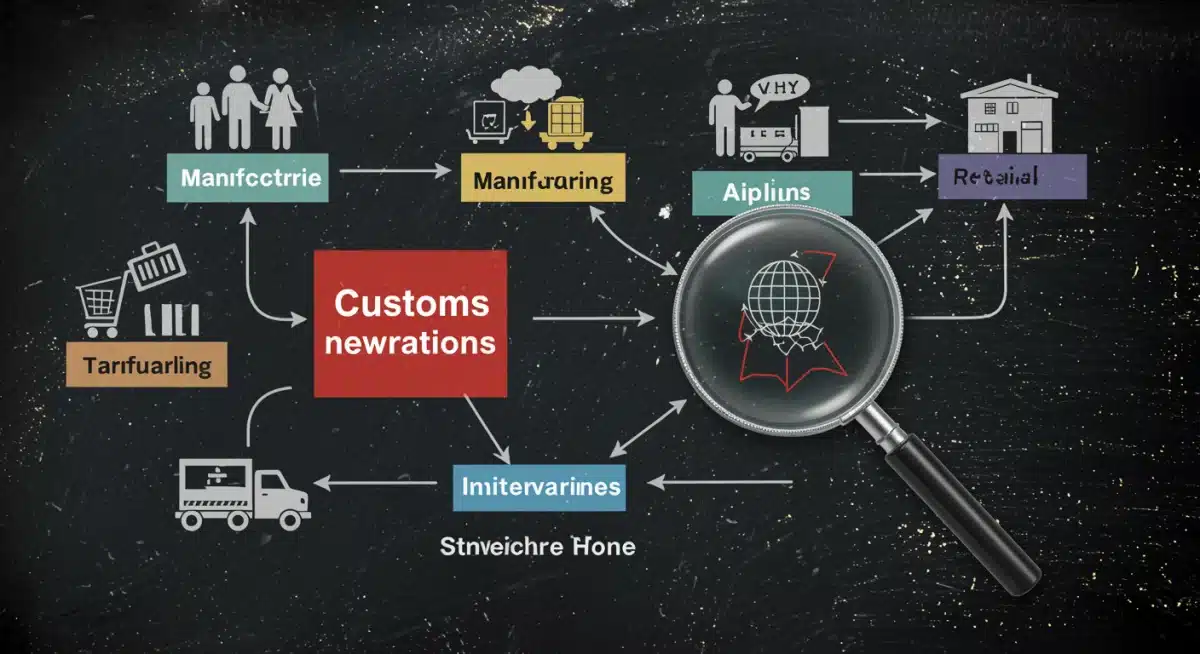
The implementation of new tariff adjustments on 20% of imported goods in 2025 is expected to send significant ripple effects throughout the US economy. These effects will extend beyond the immediate impact on importing businesses, influencing consumer behavior, inflation, and broader economic growth. Understanding these interconnected consequences is vital for policymakers and businesses alike.
One of the most direct consequences will likely be an increase in consumer prices. When tariffs make imported goods more expensive, these costs are often passed on to consumers. This can lead to higher prices for a wide range of products, from electronics and apparel to certain food items, potentially eroding purchasing power and impacting household budgets.
Impact on inflation and consumer spending
Increased prices due to tariffs contribute to inflationary pressures. If inflation rises unchecked, it could prompt central banks to take measures like increasing interest rates, which can slow down economic activity. Consumer spending, a major driver of the US economy, could also see a downturn if prices increase significantly and wages do not keep pace.
- Potential for reduced consumer confidence and discretionary spending.
- Shift in consumer preferences towards domestically produced goods, if available and competitively priced.
- Increased demand for cheaper alternatives or second-hand goods.
Supply chain restructuring and investment
Businesses facing higher import costs will be compelled to re-evaluate their supply chains. This could lead to a significant push towards reshoring or nearshoring production, bringing manufacturing back to the US or to closer, politically aligned countries. While this could stimulate domestic investment and job creation, it also involves substantial transition costs and time.
Furthermore, the tariffs could trigger retaliatory measures from trading partners, leading to a broader escalation of trade tensions. This could harm US exporters, making their goods more expensive in foreign markets and potentially reducing their competitiveness. Such a scenario would impact various sectors, including agriculture and advanced manufacturing, which rely heavily on international markets.
The economic ripple effects are complex and interconnected. While tariffs aim to protect domestic industries, they also carry the risk of higher costs for consumers, inflationary pressures, and potential trade wars. Businesses must model various scenarios and develop agile strategies to navigate this evolving economic landscape effectively.
Strategic responses for businesses to mitigate tariff impacts
Facing the prospect of new US tariff adjustments impacting 20% of imported goods in 2025, businesses cannot afford to remain passive. Proactive and strategic responses are essential to mitigate potential financial losses, maintain competitiveness, and ensure supply chain resilience. A multi-pronged approach encompassing sourcing, pricing, and operational adjustments will be critical.
One immediate strategy is to conduct a thorough audit of existing supply chains. This involves identifying all points of origin for raw materials, components, and finished goods that might fall under the new tariff categories. Understanding the precise exposure allows for targeted interventions rather than broad, costly overhauls.
Diversifying supply chains
Reducing reliance on single-country sourcing is a paramount strategy. Diversifying suppliers across multiple countries, especially those not subject to the new tariffs, can significantly reduce risk. This might involve exploring new markets, building relationships with alternative manufacturers, or even investing in production capabilities in different regions.
- Identifying and vetting new suppliers in tariff-exempt or lower-tariff countries.
- Negotiating new contracts and terms with existing suppliers to share tariff burdens.
- Exploring regional sourcing hubs to shorten lead times and reduce geopolitical risks.
Reshoring or nearshoring operations
For some businesses, reshoring (bringing production back to the US) or nearshoring (moving production to neighboring countries like Mexico or Canada) might become a viable option. While this often involves significant upfront investment and logistical challenges, it can eliminate tariff costs and potentially improve supply chain control and speed to market. This decision requires a careful cost-benefit analysis.
Furthermore, businesses should explore opportunities for tariff exemptions or exclusions. Some trade agreements or specific product categories may qualify for relief. Engaging with trade consultants and legal experts can help identify and pursue these avenues. Re-evaluating product design to use alternative materials or components not subject to tariffs is another innovative approach.
Ultimately, a robust mitigation strategy will involve a combination of these approaches. Flexibility, continuous monitoring of trade policies, and a willingness to adapt operations will be the hallmarks of successful businesses navigating the 2025 tariff landscape.
The global trade landscape: how other nations might react
The US tariff adjustments for 2025, impacting a significant portion of imported goods, will undoubtedly provoke reactions from global trading partners. The interconnectedness of the global economy means that unilateral trade actions rarely occur in isolation; they often trigger responses, shaping a new and potentially more complex international trade landscape. Understanding these potential reactions is crucial for anticipating future challenges and opportunities.
Historically, when a major economic power like the US imposes tariffs, affected nations often consider retaliatory measures. These could take the form of reciprocal tariffs on US exports, aimed at pressuring the US to reconsider its policies or to protect their own domestic industries from the economic fallout.
Potential for retaliatory tariffs
Countries whose goods are directly impacted by the new US tariffs may impose their own tariffs on American products. This could affect US industries that rely heavily on exports, such as agriculture, aerospace, and certain technology sectors. Such a scenario can lead to a trade war, where escalating tariffs harm businesses and consumers in all involved nations.
- Increased costs for US exporters in foreign markets, reducing competitiveness.
- Disruption of global supply chains as countries seek alternative trade partners.
- Heightened diplomatic tensions and strained international relations.
Shifting trade alliances and patterns
Beyond direct retaliation, the new tariffs could accelerate shifts in global trade alliances and patterns. Countries affected by US tariffs might seek to strengthen trade ties with other nations, forming new economic blocs or diversifying their export markets away from the US. This could reshape global supply chains and lead to a more fragmented international trading system.
Some nations might also challenge the US tariffs through international bodies like the World Trade Organization (WTO). While WTO dispute resolution processes can be lengthy, they represent a formal avenue for countries to address what they perceive as unfair trade practices. The outcome of such challenges could influence the long-term legality and sustainability of the US tariff policy.
The global trade landscape is dynamic, and the US tariff adjustments are a significant variable. Businesses with international operations must monitor these geopolitical responses closely, as they will directly influence market access, supply chain stability, and overall international competitiveness. Adaptability and a global perspective will be more important than ever.
Long-term implications for consumers and businesses
The new US tariff adjustments, poised to impact 20% of imported goods in 2025, extend far beyond immediate cost increases; they carry significant long-term implications for both consumers and businesses. These changes could fundamentally reshape market dynamics, consumer expectations, and the operational strategies of companies for years to come. Understanding these enduring effects is essential for future planning.
For consumers, the most noticeable long-term effect could be a sustained increase in the prices of certain goods. While businesses may initially absorb some costs, over time, these are often passed on. This could lead to a permanent shift in consumer purchasing habits, with a greater emphasis on domestic products or more budget-friendly alternatives.
Evolving consumer preferences and market offerings
As prices for imported goods potentially rise, consumers might become more open to purchasing domestically produced items, provided they are competitive in terms of quality and price. This could lead to a resurgence in certain local industries and a shift in market offerings, with more emphasis on ‘Made in USA’ products. However, if domestic alternatives are not readily available or are significantly more expensive, consumers might face fewer choices or higher costs.
- Increased demand for locally sourced or produced goods.
- Potential for reduced variety in certain product categories if imports become too costly.
- Greater awareness among consumers regarding product origin and ethical sourcing.
Innovation and domestic manufacturing growth
For businesses, the long-term implications could include a significant push towards innovation in domestic manufacturing. Companies might invest more in automation, advanced technologies, and research and development to make local production more cost-effective and competitive. This could lead to new job opportunities in advanced manufacturing sectors and foster technological growth within the US.
However, businesses that fail to adapt could face sustained competitive disadvantages. Those heavily reliant on now-tariffed imports without viable alternatives may struggle with reduced profit margins or market share. The need for resilient and flexible supply chains will become a permanent fixture in business strategy, moving beyond short-term crisis management.
In essence, the 2025 tariff adjustments are not merely a temporary hurdle but a catalyst for long-term economic restructuring. Both consumers and businesses will need to adapt to a new normal, characterized by potentially higher prices, altered market choices, and a renewed focus on domestic production and supply chain security.
| Key Impact Area | Brief Description of Impact |
|---|---|
| Consumer Prices | Likely to increase for goods affected by tariffs, impacting household budgets. |
| Supply Chains | Requires diversification, reshoring, or nearshoring to mitigate risks and costs. |
| Trade Relations | Potential for retaliatory tariffs and shifts in global trade alliances. |
| Domestic Industries | Opportunity for growth and investment, but also potential for increased production costs. |
Frequently asked questions about 2025 US tariff adjustments
The main goals include rebalancing trade deficits, protecting specific domestic industries from foreign competition, and addressing perceived unfair trade practices by other nations. These measures aim to strengthen the US economy and create a more equitable global trading environment.
Sectors most vulnerable to the 2025 tariffs include high-tech manufacturing, consumer electronics, apparel, and industries relying heavily on imported raw materials and intermediate goods. Businesses in these areas should prepare for potential cost increases and supply chain disruptions.
Businesses can mitigate impacts by diversifying their supply chains to include suppliers from non-tariffed countries, exploring reshoring or nearshoring options, and actively seeking tariff exemptions or exclusions. Strategic planning and continuous monitoring are crucial for adaptation.
Yes, it is highly probable that consumers will face increased prices for a range of imported goods as businesses pass on higher tariff costs. This could lead to inflationary pressures and shifts in consumer purchasing behavior, favoring domestic or more affordable alternatives.
Global reactions could include retaliatory tariffs from affected trading partners, challenges through international bodies like the WTO, and shifts in global trade alliances as countries seek new partners. These responses could reshape international trade dynamics.
Conclusion
The impending US tariff adjustments in 2025 represent a significant shift in trade policy, with profound implications for 20% of imported goods and the broader economy. Businesses must proactively assess their exposure, diversify supply chains, and explore strategic alternatives to navigate these changes effectively. While aiming to bolster domestic industries, these tariffs will likely spark higher consumer prices and potentially trigger complex global trade responses. Both consumers and businesses will need to adapt to a new economic reality shaped by these crucial policy decisions.