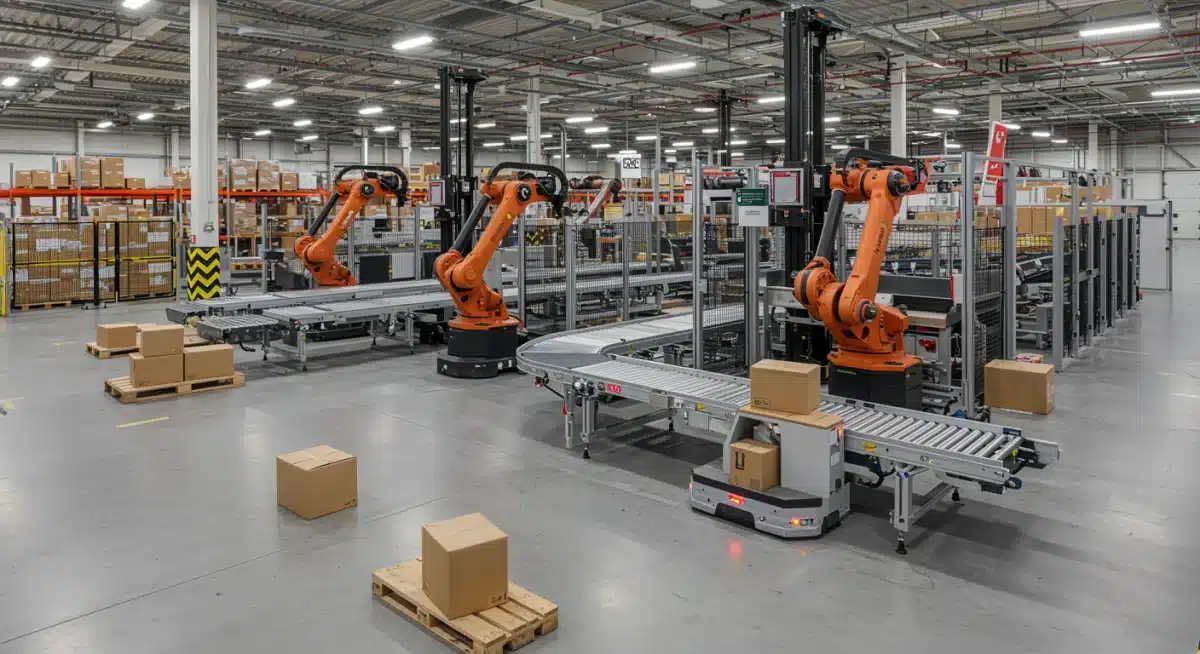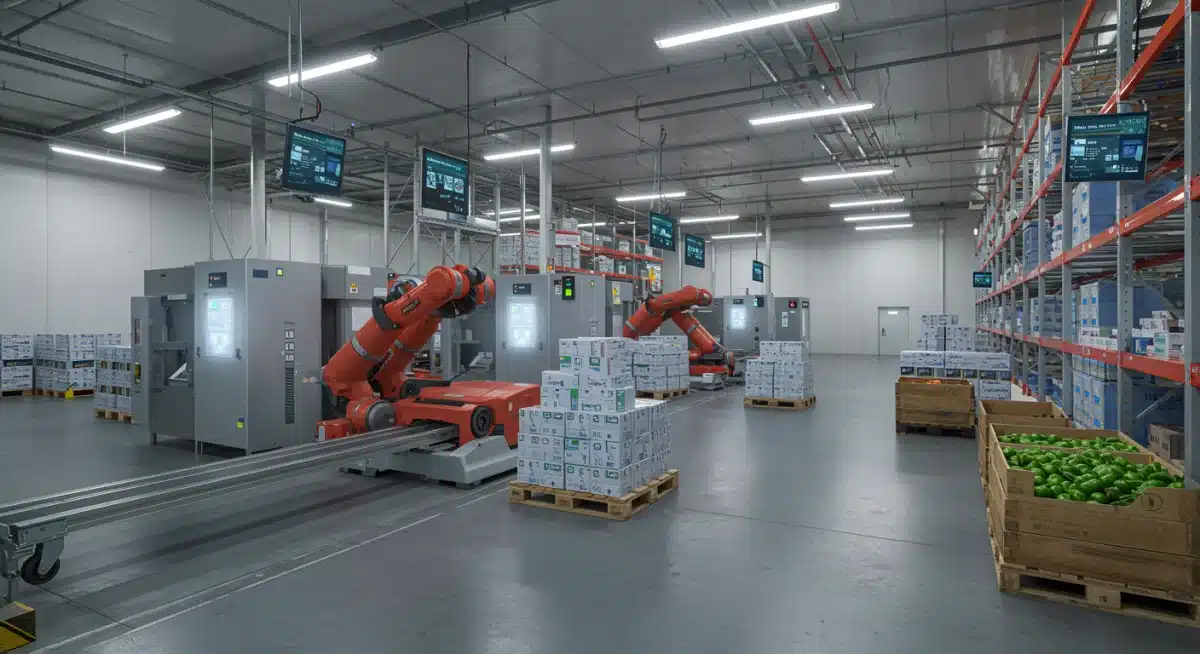
Safeguarding supply chains against evolving cyber threats is paramount in 2025, requiring proactive strategies to combat ransomware, IoT vulnerabilities, and third-party exposures for robust protection.
The intricate web of modern commerce, often referred to as the supply chain, is increasingly digitized and interconnected, making it a prime target for cybercriminals. As we approach 2025, the sophistication and frequency of these attacks are escalating, posing significant risks to businesses, governments, and consumers alike. Understanding and mitigating these threats is no longer optional but a critical imperative for operational continuity and trust. This article delves into the most pressing challenges in supply chain cybersecurity, focusing on the top three threats projected for 2025 and outlining essential protective measures.
The evolving landscape of supply chain cyber threats
The global supply chain has transformed dramatically, moving from localized, siloed operations to a complex, interconnected ecosystem. This evolution has brought unprecedented efficiency but also introduced new vectors for cyberattacks. Organizations are now more reliant on a vast network of suppliers, logistics providers, and technology partners, each representing a potential entry point for malicious actors. The sheer volume of data exchanged and the critical nature of the operations involved make these networks incredibly attractive targets for those seeking financial gain, intellectual property theft, or disruptive impact.
Cybercriminals are constantly refining their tactics, moving beyond simple malware to highly targeted and sophisticated campaigns. The convergence of operational technology (OT) with information technology (IT) within industrial control systems (ICS) further complicates the security posture. This integration, while offering efficiency, blurs the lines of traditional security perimeters, creating an expanded attack surface that demands a holistic and adaptive defense strategy. Organizations must recognize that a breach in one part of the chain can have catastrophic ripple effects across the entire network, impacting everything from manufacturing to delivery.
Increased sophistication of attack vectors
Attackers are leveraging advanced techniques, including AI-driven reconnaissance and polymorphic malware, to bypass traditional security defenses. They exploit human vulnerabilities through sophisticated phishing and social engineering, often targeting employees with access to critical supply chain systems.
- AI-powered phishing campaigns
- Zero-day exploits targeting obscure systems
- Supply chain specific malware variants
- Exploitation of human error and insider threats
In conclusion, the current cybersecurity landscape for supply chains is characterized by rapid change and increasing complexity. Businesses must move beyond reactive measures and embrace a proactive, adaptive security framework that can anticipate and counter emerging threats effectively. This requires continuous monitoring, collaboration, and a deep understanding of the unique vulnerabilities inherent in their extensive networks.
Threat 1: Ransomware’s relentless grip on logistics
Ransomware continues to be a dominant and devastating threat, and its impact on supply chains is projected to intensify significantly by 2025. These attacks, which encrypt critical data and systems until a ransom is paid, can bring entire logistics operations to a grinding halt. The interconnected nature of supply chains means that a ransomware attack on one key vendor can cascade, disrupting production, distribution, and ultimately, consumer access to goods and services. The financial repercussions are immense, encompassing not only ransom payments but also lost revenue, recovery costs, and reputational damage.
Attackers are increasingly targeting smaller, less-protected links in the supply chain, knowing that these entities often have weaker security postures but are crucial for the larger ecosystem. Once inside, they can move laterally to compromise larger organizations. The rise of Ransomware-as-a-Service (RaaS) models has also lowered the barrier to entry for cybercriminals, leading to a proliferation of attacks. Companies face the difficult choice of paying the ransom, which can fund future criminal activities, or enduring prolonged downtime and recovery efforts.
Proactive defense against ransomware
Effective ransomware defense requires a multi-layered approach, starting with robust backup and recovery strategies. Regular, immutable backups stored offline are essential to ensure business continuity even if primary systems are compromised. Furthermore, advanced endpoint detection and response (EDR) solutions can help detect and mitigate ransomware before it fully encrypts systems.
- Implement robust, immutable backup solutions
- Deploy advanced endpoint detection and response (EDR)
- Conduct regular security awareness training for all employees
- Enforce strong access controls and multi-factor authentication (MFA)
Ultimately, combating ransomware in the supply chain demands a blend of technological safeguards, employee education, and a well-rehearsed incident response plan. Organizations must prioritize these measures to protect their critical assets and maintain operational resilience against these persistent threats.
Threat 2: IoT vulnerabilities and the expanded attack surface
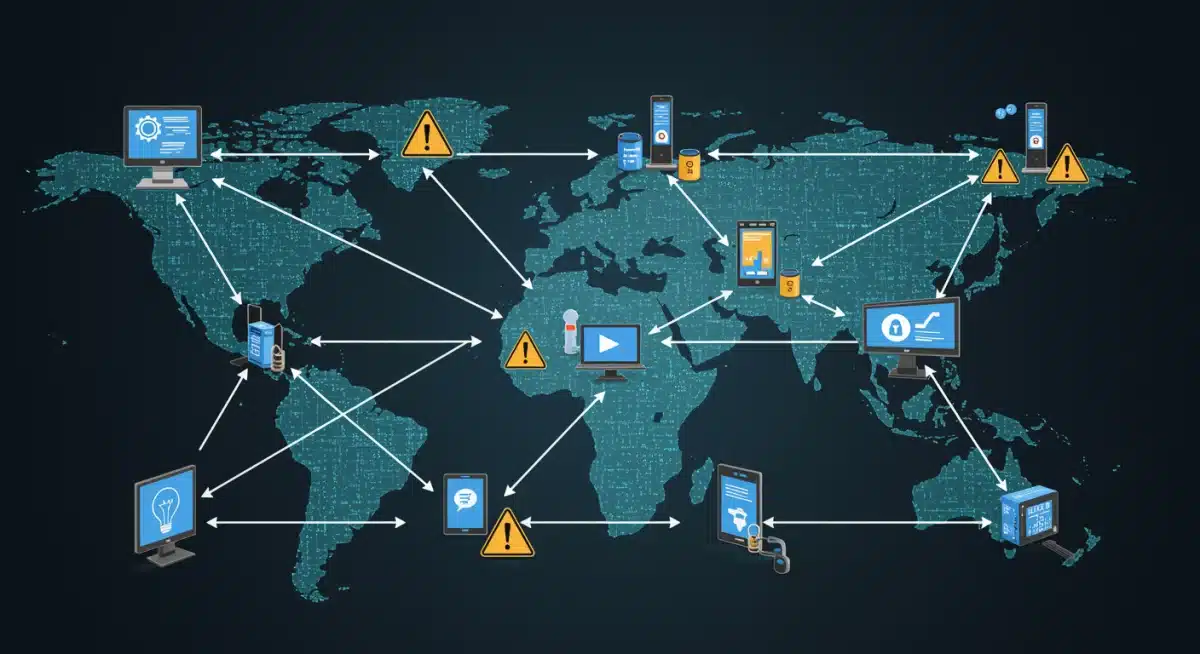
The proliferation of Internet of Things (IoT) devices across supply chains—from smart sensors tracking inventory to automated warehouse robots—has undeniably boosted efficiency. However, this vast network of connected devices also introduces a significant new attack surface that cybercriminals are eager to exploit. Many IoT devices are designed for functionality rather than security, often lacking robust authentication, encryption, or patching mechanisms. This makes them easy targets for attackers seeking to gain a foothold in a network, disrupt operations, or steal sensitive data.
By 2025, the sheer volume of IoT devices in supply chain operations will make securing them an enormous challenge. A compromised IoT device could provide an entry point for lateral movement within a network, allowing attackers to access more critical systems. Imagine a smart thermostat in a cold storage facility being manipulated to spoil goods, or a compromised RFID reader providing false inventory data. The potential for disruption and economic damage is substantial, highlighting the urgent need for a dedicated IoT security strategy.
Securing the IoT ecosystem
Addressing IoT vulnerabilities requires a comprehensive strategy that includes device-level security, network segmentation, and continuous monitoring. Organizations must ensure that all IoT devices are securely configured, regularly patched, and isolated on dedicated network segments to limit potential lateral movement in case of a breach.
- Implement strong authentication for all IoT devices
- Regularly patch and update IoT device firmware
- Segment IoT networks from critical IT/OT infrastructure
- Utilize IoT-specific security monitoring and anomaly detection
In essence, integrating IoT into supply chains demands a paradigm shift in security thinking. It’s not just about securing endpoints, but about securing an entire ecosystem of potentially vulnerable devices, ensuring that their benefits are not outweighed by the risks they introduce.
Threat 3: Third-party risk and supply chain compromise
The reliance on third-party vendors, suppliers, and partners is a cornerstone of modern supply chains, yet it also represents one of the most significant and often overlooked cybersecurity vulnerabilities. By 2025, attacks exploiting these third-party relationships are expected to be a primary vector for large-scale breaches. Organizations often have limited visibility into the security practices of their vast network of partners, creating blind spots that cybercriminals eagerly exploit. A single weak link in the chain—a poorly secured vendor, a compromised software provider, or an unvetted service provider—can open the door to an entire ecosystem.
The SolarWinds attack serves as a stark reminder of how a compromise in a widely used software provider can lead to widespread infiltration of numerous high-profile organizations. Such attacks leverage trust relationships, making them incredibly difficult to detect and defend against using traditional perimeter security alone. Managing third-party risk effectively requires continuous diligence, clear contractual obligations, and a proactive approach to assessing and monitoring the security posture of every entity within the extended supply chain.
Mitigating third-party cyber risks
Effective third-party risk management involves thorough due diligence, contractual security requirements, and ongoing monitoring. Organizations must assess the cybersecurity maturity of all their partners, ensuring they meet established security standards and comply with relevant regulations. This process should not be a one-time event but an continuous program.
- Conduct rigorous cybersecurity due diligence on all third-party vendors
- Include strong security clauses in all vendor contracts
- Implement continuous monitoring of third-party security postures
- Require third parties to report security incidents promptly
Ultimately, managing third-party risk is about extending your security perimeter to encompass your entire ecosystem. This requires collaboration, transparency, and a shared commitment to cybersecurity across all partners to build a resilient and trustworthy supply chain.
Building a resilient cyber-secure supply chain
Beyond addressing specific threats, organizations must focus on building an inherently resilient supply chain cybersecurity framework. This involves moving from a reactive stance to a proactive, adaptive, and continuously improving security posture. Resilience isn’t just about preventing attacks; it’s also about the ability to quickly detect, respond to, and recover from incidents with minimal disruption. A truly resilient supply chain can absorb shocks, adapt to new threats, and maintain its core functions even under duress.
This holistic approach encompasses technological solutions, policy implementation, and human factors. It requires leadership commitment, cross-functional collaboration, and an understanding that cybersecurity is a shared responsibility across the entire organization and its partners. Investing in advanced threat intelligence, automation, and skilled personnel will be crucial for staying ahead of sophisticated adversaries in 2025 and beyond.
Key pillars of resilience
A resilient supply chain relies on several fundamental pillars that work in concert to create a robust defense. These include comprehensive risk assessments, a strong security culture, and flexible incident response capabilities. Each pillar strengthens the overall ability of the supply chain to withstand and recover from cyberattacks.
- Conduct regular, in-depth supply chain risk assessments
- Foster a strong culture of cybersecurity awareness
- Develop and regularly test comprehensive incident response plans
- Invest in advanced threat intelligence and security automation
In essence, building a resilient cyber-secure supply chain is an ongoing journey, not a destination. It requires continuous adaptation, learning from new threats, and strengthening defenses to ensure the continuity and integrity of global commerce.
Strategic imperatives for 2025 and beyond
As we look towards 2025, the strategic imperatives for supply chain cybersecurity are clear: proactive defense, continuous adaptation, and collaborative security. Organizations can no longer afford to treat cybersecurity as an afterthought or a mere IT function. It must be integrated into every aspect of supply chain planning, operations, and risk management. This means embedding security-by-design principles into new technologies and processes, and fostering a culture where every stakeholder understands their role in protecting the ecosystem.
Furthermore, information sharing and collaboration across industries and with government agencies will become increasingly vital. The nature of supply chain attacks means that a threat to one organization can quickly become a threat to many. By sharing intelligence, best practices, and even resources, the collective defense can be significantly strengthened. This collaborative approach creates a stronger, more informed front against a common adversary, ensuring that the entire supply chain ecosystem is better prepared for future challenges.
Future-proofing your supply chain
To future-proof supply chains against evolving cyber threats, organizations must focus on continuous improvement and innovation in security practices. This includes embracing emerging technologies and methodologies that can provide predictive capabilities and automated responses. Staying static in the face of dynamic threats is a recipe for disaster.
- Embrace Zero Trust architectures for granular access control
- Leverage AI and machine learning for predictive threat detection
- Actively participate in industry-specific threat intelligence sharing groups
- Regularly audit and update security policies and technologies
Ultimately, the future of supply chain cybersecurity lies in proactive engagement, constant vigilance, and a concerted effort from all participants to create a secure, resilient, and trustworthy global commerce environment.
| Key Threat | Brief Description & Impact |
|---|---|
| Ransomware Attacks | Encrypts data and systems, disrupting logistics and causing significant financial losses and operational downtime across the supply chain. |
| IoT Vulnerabilities | Weak security in connected devices creates entry points for attackers, leading to data theft, operational disruption, or network compromise. |
| Third-Party Risk | Compromised vendors or partners can serve as entry points for attacks on the primary organization, leveraging trust relationships for widespread infiltration. |
| Lack of Visibility | Insufficient insight into the security postures of all supply chain partners creates blind spots that attackers can exploit easily. |
Frequently Asked Questions About Supply Chain Cybersecurity
While multiple threats exist, ransomware is projected to remain the most devastating in 2025 due to its direct impact on operational continuity and significant financial consequences. Its ability to spread rapidly through interconnected networks makes it particularly dangerous for complex supply chains.
IoT devices often lack robust security features, making them easy targets for attackers. A compromised IoT device can serve as an entry point into the broader network, enabling data theft, operational disruption, or lateral movement to more critical systems within the supply chain.
Third-party risk refers to the cybersecurity vulnerabilities introduced by external vendors, suppliers, and partners. A security breach in one of these entities can compromise the entire supply chain, as attackers exploit the trust relationship to access primary organizations’ systems.
Businesses should implement immutable backups, deploy advanced endpoint detection and response (EDR) solutions, conduct regular security awareness training, and enforce strong access controls with multi-factor authentication (MFA) to effectively combat ransomware attacks.
Collaboration is crucial because supply chain attacks often affect multiple entities. Sharing threat intelligence, best practices, and resources across industries and with government agencies strengthens collective defense, enabling faster detection and more effective response to widespread threats.
Conclusion
As the digital landscape evolves, the threats to supply chain cybersecurity become increasingly sophisticated and pervasive. The top challenges for 2025—ransomware, IoT vulnerabilities, and third-party risks—underscore the critical need for a proactive, multi-layered defense strategy. Organizations must embrace continuous risk assessment, invest in advanced security technologies, foster a strong security culture, and prioritize collaborative efforts across their entire ecosystem. By doing so, they can build resilient supply chains capable of withstanding future cyberattacks, ensuring operational continuity, and safeguarding global commerce.