
A 1.8% GDP growth in 2025 is projected to result in a moderate but positive financial impact on US retail sales, driven by enhanced consumer confidence and employment rates.
Understanding the intricate relationship between macroeconomic factors and consumer behavior is paramount for any retail business. As we look towards the future, the projected economic indicators for retail: projecting the financial impact of a 1.8% GDP growth on US retail sales in 2025 stands as a critical benchmark. This moderate growth rate, while not a boom, signals a steady expansion that will undoubtedly ripple through the retail sector, influencing everything from inventory management to marketing strategies. How will retailers adapt, and what opportunities will emerge from this anticipated economic landscape?
Understanding GDP Growth and its Retail Implications
Gross Domestic Product (GDP) serves as a fundamental barometer of a nation’s economic health, representing the total monetary value of all finished goods and services produced within its borders over a specific period. A projected 1.8% GDP growth for the US in 2025 suggests a stable, albeit not rapid, expansion of the economy. For the retail sector, this figure is far more than just a statistic; it’s a foundational element influencing consumer spending power, employment levels, and overall market confidence. When GDP grows, it typically indicates a healthier job market, higher disposable incomes, and a greater willingness among consumers to spend, directly translating into increased retail activity.
The relationship between GDP growth and retail sales is not always linear, but a positive correlation is undeniable. A growing economy generally fosters an environment where businesses can thrive, invest, and expand, leading to more competitive pricing and innovative product offerings. Conversely, a stagnant or declining GDP often results in consumers tightening their belts, prioritizing essential purchases over discretionary ones. Therefore, a 1.8% growth rate requires retailers to be agile, balancing cautious optimism with strategic planning to capture their share of the expanding market.
Key Economic Drivers Influencing Retail
- Consumer Confidence: Higher GDP often correlates with increased consumer optimism about future economic conditions, leading to more spending.
- Employment Rates: A stronger economy typically means lower unemployment, putting more money into consumers’ pockets.
- Wage Growth: Sustained GDP growth can lead to higher wages, further boosting purchasing power.
- Inflation Control: Stable GDP growth often accompanies manageable inflation, preserving the value of consumer spending.
Navigating this economic forecast demands a nuanced understanding of how each component interacts. Retailers must look beyond the headline GDP number and delve into the underlying trends to accurately predict consumer behavior. This includes monitoring sector-specific growth, regional economic disparities, and shifts in demographic spending patterns to tailor their strategies effectively.
In conclusion, a 1.8% GDP growth for 2025 paints a picture of steady economic advancement for the US. For the retail industry, this signifies a period of potential growth, contingent upon their ability to interpret these economic signals and adapt their business models. Understanding these drivers is the first step toward projecting and capitalizing on the financial impact.
Consumer Spending Trends Amidst Moderate Growth
Consumer spending is the lifeblood of the retail sector, and its trajectory is inextricably linked to the broader economic climate. With a projected 1.8% GDP growth in 2025, we can anticipate certain shifts and continuities in how Americans choose to spend their money. This moderate growth suggests that while consumers may not be embarking on lavish spending sprees, they will likely maintain a steady pace of purchases, particularly in areas perceived as value-driven or essential.
The post-pandemic landscape has already reshaped many spending habits, with a notable emphasis on digital convenience and sustainability. These trends are expected to persist and even intensify under a moderate growth scenario. Retailers who have invested in robust e-commerce platforms, efficient supply chains, and environmentally conscious practices are likely to be better positioned to meet evolving consumer expectations. The challenge lies in identifying which categories will see the most significant uplift and which might face continued headwinds, even within a growing economy.
Shifts in Consumer Priorities
- Value-driven Purchases: Consumers will continue to seek out products offering the best balance of quality and price.
- Experiences Over Goods: While retail goods remain important, spending on experiences (travel, entertainment) may see a proportional increase.
- Digital Dominance: The convenience of online shopping will continue to drive purchasing decisions across various demographics.
- Sustainability Focus: Products and brands with strong environmental and social governance (ESG) credentials will attract more conscious consumers.
Furthermore, demographic shifts, such as the increasing purchasing power of Gen Z and millennials, will play a crucial role. These younger generations often prioritize different values and shopping channels compared to older cohorts, demanding personalized experiences and authentic brand engagement. Retailers must therefore tailor their marketing and product offerings to resonate with these emerging consumer segments, ensuring their strategies are inclusive and forward-looking.
In essence, the 1.8% GDP growth in 2025 will likely foster an environment of considered consumer spending. Retailers who can align their offerings with evolving consumer priorities, particularly those emphasizing value, digital convenience, and ethical practices, will be best equipped to capture a significant share of the market. Understanding these nuances is crucial for projecting and capitalizing on the financial impact.
Sector-Specific Retail Projections
While a 1.8% GDP growth offers a general economic outlook, its impact is rarely uniform across all retail sectors. Some segments are inherently more sensitive to economic fluctuations, while others exhibit greater resilience or even counter-cyclical growth. Analyzing these sector-specific projections is crucial for retailers to refine their strategies and allocate resources effectively for 2025.
Discretionary spending categories, such as luxury goods and high-end electronics, might see more modest growth compared to essential sectors like groceries and healthcare products. However, even within discretionary categories, innovation and perceived value can drive demand. For instance, tech gadgets offering significant improvements or unique features could still attract buyers, even if overall spending on non-essentials is tempered.
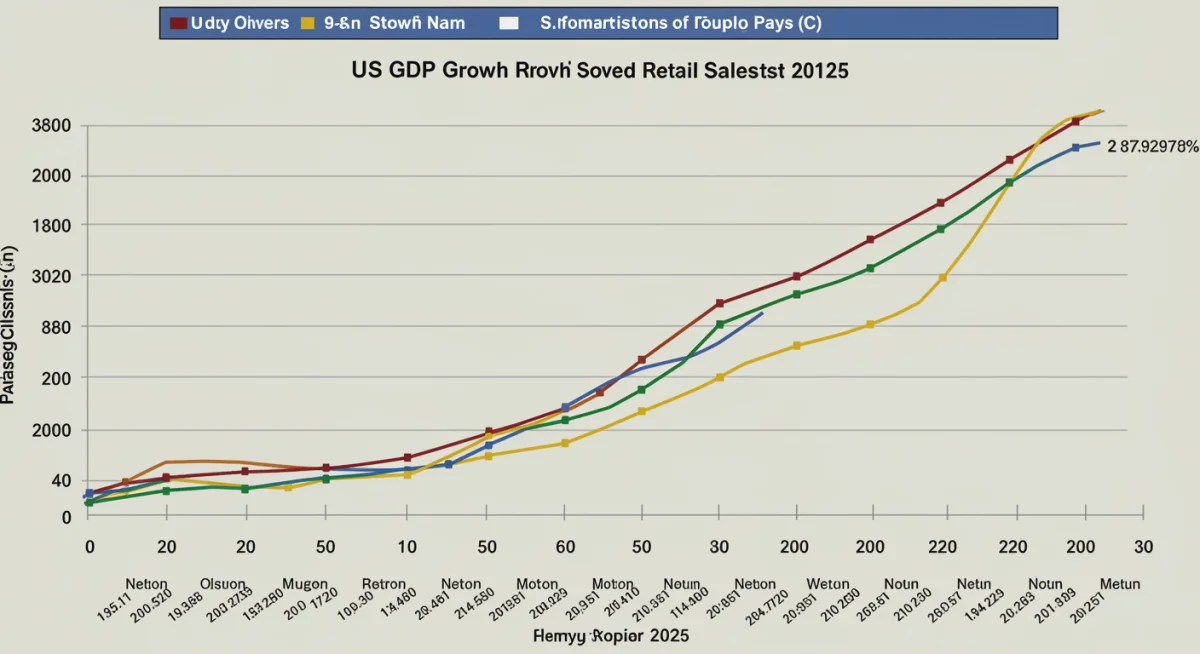
Anticipated Performance by Retail Segment
The varying responses of different retail segments to economic growth highlight the need for tailored strategies. Groceries and health-related retail, for example, tend to be more stable due to their essential nature, while sectors like apparel and home furnishings might experience more pronounced shifts based on consumer confidence and disposable income.
- Grocery & Essential Goods: Expected to maintain steady growth, driven by necessity and population increase.
- Home Improvement: Moderate growth anticipated, influenced by housing market stability and consumer willingness to invest in homes.
- Apparel & Accessories: Growth will likely be tied to fashion trends and disposable income, with a strong emphasis on value and sustainability.
- Electronics & Appliances: Dependent on product innovation cycles and consumer upgrade sentiment, potentially seeing moderate but selective growth.
- E-commerce: Continues to outpace traditional retail across most sectors, benefiting from convenience and broader selection.
Moreover, the rise of omnichannel retail means that the distinction between online and brick-and-mortar sales is increasingly blurred. Retailers who can seamlessly integrate their physical and digital channels will likely capture a larger share of consumer spending, regardless of the specific product category. This adaptability is paramount in a market characterized by moderate but consistent growth, where every competitive edge counts.
In summary, while a 1.8% GDP growth provides a positive backdrop, successful retailers in 2025 will be those who deeply understand the specific dynamics of their sectors. Tailoring strategies to align with segment-specific consumer behavior and embracing omnichannel approaches will be critical for maximizing financial impact.
Technological Innovations Driving Retail Forward
The retail landscape is in a constant state of evolution, with technological innovations acting as a primary catalyst. Even with a moderate 1.8% GDP growth projected for 2025, the imperative for retailers to embrace and leverage new technologies will remain as strong as ever. These advancements are not merely about efficiency; they are about enhancing the customer experience, optimizing operations, and ultimately driving sales in an increasingly competitive environment.
From artificial intelligence (AI) and machine learning (ML) powering personalized recommendations to augmented reality (AR) transforming the try-on experience, technology is reshaping every facet of the retail journey. Retailers who strategically invest in these areas can differentiate themselves, build stronger customer loyalty, and capture a larger share of consumer spending. The challenge lies in discerning which technologies offer the most significant return on investment and how to integrate them seamlessly into existing business models.
Key Technological Trends Reshaping Retail
The adoption of these technologies is not just about keeping pace; it’s about setting new standards for interaction and service. Personalization, in particular, will be a non-negotiable expectation for consumers, driven by AI’s ability to analyze vast data sets and predict preferences.
- Artificial Intelligence (AI) & Machine Learning (ML): Enhancing personalization, demand forecasting, inventory management, and customer service chatbots.
- Augmented Reality (AR) & Virtual Reality (VR): Offering immersive shopping experiences, virtual try-ons, and product visualization.
- Seamless Omnichannel Integration: Unifying online and offline experiences, including buy online, pick up in-store (BOPIS), and endless aisle capabilities.
- Data Analytics & Business Intelligence: Providing actionable insights into consumer behavior, market trends, and operational efficiency.
- Sustainable Technology: Innovations aimed at reducing environmental impact throughout the supply chain and product lifecycle.
Furthermore, the focus on sustainable and ethical practices is increasingly intertwined with technology. Blockchain, for instance, offers transparency in supply chains, allowing consumers to verify the origin and ethical sourcing of products. This convergence of technology and values will appeal to a growing segment of conscious consumers, providing a competitive advantage to retailers who embrace it.
In essence, technology will continue to be a primary driver of success in US retail in 2025. Retailers who strategically adopt and integrate innovations that enhance customer experience, optimize operations, and align with evolving consumer values will be best positioned to thrive, regardless of the moderate GDP growth. Leveraging these tools is fundamental to projecting and maximizing their financial impact.
Strategic Adaptations for Retailers in 2025
In an economic climate characterized by a 1.8% GDP growth, retailers cannot afford to remain static. Strategic adaptation becomes not just an advantage, but a necessity for survival and prosperity. The moderate growth rate implies a competitive landscape where efficiency, customer focus, and innovative approaches will be key differentiators. Retailers must move beyond traditional models and embrace agility to respond to evolving market demands and consumer behaviors.
This involves a holistic approach, encompassing everything from supply chain optimization to customer engagement strategies. The goal is to maximize sales potential within the existing economic framework, ensuring that every dollar spent by consumers translates into profitable revenue. This often means re-evaluating long-held practices and being open to new methodologies that can deliver tangible results.
Key Strategic Imperatives
Adapting to the 2025 landscape means focusing on areas that directly influence profitability and customer loyalty. Personalization, efficient operations, and a strong brand narrative will be paramount.
- Personalized Customer Experiences: Tailoring product recommendations, marketing messages, and service interactions based on individual customer data to foster loyalty.
- Supply Chain Resilience & Efficiency: Investing in robust, agile supply chains that can withstand disruptions and optimize inventory levels to reduce costs and prevent stockouts.
- Data-Driven Decision Making: Utilizing analytics to understand market trends, consumer preferences, and operational performance, guiding strategic choices.
- Sustainability & Ethical Sourcing: Integrating environmentally friendly practices and transparent sourcing into business models to appeal to conscious consumers.
- Omnichannel Excellence: Providing a seamless and consistent customer experience across all sales channels, both online and in-store.
Furthermore, investing in employee training and development is critical. A knowledgeable and empowered workforce can significantly enhance the customer experience, turning casual shoppers into loyal advocates. This human element, combined with technological advancements, creates a powerful synergy that drives sustained growth even in a moderately expanding economy.
In conclusion, strategic adaptation is non-negotiable for retailers looking to thrive amidst a 1.8% GDP growth in 2025. By focusing on personalization, supply chain resilience, data utilization, sustainability, and omnichannel excellence, retailers can position themselves for success. These proactive measures are essential for effectively projecting and capitalizing on the financial impact.
Potential Challenges and Risk Mitigation
Even with a projected 1.8% GDP growth for 2025, the retail sector is not immune to potential challenges and risks. A moderate growth rate, while positive, still necessitates a cautious and strategic approach to navigate economic uncertainties. Retailers must identify these potential headwinds early and develop robust mitigation strategies to safeguard their operations and ensure sustained profitability.
Inflation, even if controlled, can still erode consumer purchasing power if wage growth doesn’t keep pace. Geopolitical events can disrupt supply chains and consumer confidence, leading to unpredictable shifts in demand. Additionally, intense competition, both from established players and emerging disruptors, will continue to pressure profit margins. Addressing these challenges requires foresight and a flexible business model.
Key Challenges and Mitigation Strategies
Proactive risk management is essential. Retailers must analyze their vulnerabilities and build resilience into their operations, ensuring they can adapt quickly to unforeseen circumstances.
- Inflationary Pressures: Implement dynamic pricing strategies, optimize costs, and communicate value clearly to consumers.
- Supply Chain Disruptions: Diversify suppliers, invest in inventory management technology, and build buffer stock for critical items.
- Intensified Competition: Differentiate through unique product offerings, superior customer service, and innovative marketing campaigns.
- Evolving Consumer Preferences: Conduct ongoing market research, leverage data analytics, and maintain agile product development cycles.
- Cybersecurity Threats: Strengthen data protection measures, invest in employee training, and regularly audit security protocols to protect customer information.
Moreover, regulatory changes, particularly concerning data privacy and environmental standards, can impose new compliance costs and operational adjustments. Retailers must stay abreast of these developments and integrate compliance into their strategic planning. Failure to do so can result in significant penalties and reputational damage, undermining even the most robust growth strategies.
In summary, while a 1.8% GDP growth offers a positive outlook for 2025, retailers must remain vigilant against potential challenges. By proactively addressing issues such as inflation, supply chain vulnerabilities, competition, and cybersecurity, businesses can mitigate risks and ensure that the projected economic expansion translates into tangible financial success. Robust risk management is crucial for successfully navigating the retail landscape.
Maximizing Opportunities in a Growing Economy
A projected 1.8% GDP growth in 2025 presents distinct opportunities for US retailers, even if the expansion is moderate rather than explosive. The key lies in identifying and aggressively pursuing these avenues for growth, transforming economic stability into tangible financial gains. Retailers who adopt an proactive stance, focusing on innovation, market expansion, and enhanced customer engagement, will be best positioned to capitalize on the positive economic momentum.
This involves not just reacting to market trends but actively shaping them through strategic investments and forward-thinking initiatives. Opportunities often arise from shifts in consumer demographics, technological advancements, and unmet market needs. By carefully analyzing these factors, retailers can unlock new revenue streams and strengthen their market position.
Strategies for Opportunity Maximization
To fully leverage the 1.8% GDP growth, retailers should focus on expanding their reach, deepening customer relationships, and optimizing their product and service offerings. This multifaceted approach ensures sustainable growth.
- Market Expansion: Explore new geographical markets, both domestically and internationally, or target underserved consumer segments.
- Product Innovation: Introduce new products or services that align with evolving consumer needs and preferences, focusing on sustainability, personalization, and convenience.
- Enhanced Customer Loyalty Programs: Develop robust loyalty programs that offer personalized rewards, exclusive access, and exceptional service to retain existing customers and attract new ones.
- Strategic Partnerships: Collaborate with complementary businesses, influencers, or technology providers to expand reach and create unique value propositions.
- Investment in Digital Transformation: Continuously upgrade e-commerce platforms, mobile experiences, and in-store digital tools to meet modern consumer expectations.
Furthermore, focusing on the employee experience can also be a significant opportunity. A highly engaged and skilled workforce is more productive, provides better customer service, and contributes to a positive brand image. Investing in training, fair wages, and a supportive work environment can lead to higher retention rates and a stronger, more resilient retail operation.
In conclusion, while a 1.8% GDP growth in 2025 might seem modest, it provides a solid foundation for retailers to achieve significant success. By actively pursuing market expansion, product innovation, stronger customer loyalty, strategic partnerships, and digital transformation, businesses can maximize their opportunities and ensure a robust financial impact. Proactive engagement with these strategies is paramount for thriving in the evolving retail landscape.
| Key Point | Brief Description |
|---|---|
| 1.8% GDP Growth | Indicates moderate economic expansion, fostering stable but not rapid retail sales growth. |
| Consumer Spending | Expected to be steady, with continued focus on value, digital convenience, and sustainability. |
| Retailer Adaptations | Requires agility, tech adoption, supply chain resilience, and personalized customer experiences. |
| Risk Mitigation | Proactive management of inflation, supply chain issues, and competition is crucial for success. |
Frequently Asked Questions About US Retail in 2025
Small retail businesses may experience a moderate increase in consumer spending, but they will need to focus on niche markets, local engagement, and efficient digital strategies to compete effectively with larger chains. Agility in adapting to local economic shifts will be key for their success.
E-commerce is expected to continue its upward trajectory, likely outpacing traditional brick-and-mortar growth. Its convenience, broader selection, and capacity for personalization will drive a significant portion of the overall retail sales increase, making digital presence crucial for all retailers.
Sectors like essential goods (groceries, healthcare) will likely see stable growth. Discretionary sectors, particularly those offering value, innovative technology, or sustainable products, could also perform well, provided they align with evolving consumer priorities and digital trends.
Retailers should prioritize data-driven inventory management, leveraging AI for demand forecasting to minimize overstocking and stockouts. Building resilient supply chains with diversified suppliers will also be crucial to mitigate potential disruptions and ensure product availability.
Despite positive GDP growth, retailers must be vigilant about inflationary pressures, potential supply chain vulnerabilities, intense market competition, and evolving consumer preferences. Cybersecurity threats also remain a significant concern, requiring robust protective measures to safeguard operations and customer data.
Conclusion
The projected 1.8% GDP growth for the US in 2025 sets a foundation for a moderately expanding retail market. This economic indicator, while not signaling a boom, offers a stable environment where strategic retailers can find significant opportunities for growth. Success will hinge on a deep understanding of evolving consumer behaviors, the judicious adoption of technological innovations, and the implementation of agile business strategies. By proactively addressing potential challenges and maximizing every opportunity, US retailers are well-positioned to navigate the coming year and achieve a positive financial impact.