Edge computing in retail is poised to deliver a significant 12% boost in customer engagement by 2025 through real-time insights, revolutionizing how businesses interact with their clientele and optimize store operations.
The retail sector is currently undergoing a profound transformation, driven by technological advancements that promise to reshape customer experiences and operational efficiencies. At the forefront of this revolution is edge computing in retail: delivering real-time insights for a 12% boost in customer engagement by 2025. This innovative approach moves data processing closer to the source, enabling instantaneous analysis and action, which is becoming increasingly critical in a fast-paced market.
Understanding edge computing in the retail landscape
Edge computing represents a paradigm shift in how data is processed, stored, and analyzed within the retail environment. Instead of sending all data to a centralized cloud for processing, edge computing brings computational power to the ‘edge’ of the network, often directly within the retail store itself. This proximity to the data source significantly reduces latency and enables real-time decision-making, which is invaluable for dynamic retail operations.
The traditional cloud-centric model, while powerful, can introduce delays that hinder agility in scenarios demanding immediate responses, such as inventory management, personalized customer interactions, or security monitoring. Edge computing addresses these challenges head-on by processing critical data locally, allowing retailers to respond to events as they happen, rather than after a delay.
The foundational principles of edge computing
At its core, edge computing relies on decentralized processing. This means that instead of a single, distant data center handling all computational tasks, smaller, localized servers and devices take on a significant portion of the workload. This distributed architecture offers several key advantages:
- Reduced Latency: Data doesn’t need to travel far, allowing for near-instantaneous processing and response.
- Enhanced Security: Local processing can keep sensitive data within the store’s network, reducing exposure to external threats.
- Improved Reliability: Operations can continue even if the connection to the central cloud is temporarily interrupted.
- Optimized Bandwidth: Only essential, summarized data is sent to the cloud, reducing network congestion and costs.
For retailers, this translates into a more responsive and resilient operation. From managing smart shelves to powering interactive digital signage, edge computing provides the underlying infrastructure necessary for a truly connected retail experience. Understanding these foundational principles is the first step toward leveraging its full potential.
Real-time insights: the core of enhanced customer engagement
The ability to gather and analyze data in real time is perhaps the most significant advantage edge computing offers to retail, directly impacting customer engagement. In today’s competitive market, customers expect personalized experiences and immediate gratification. Edge computing makes this possible by providing retailers with instantaneous insights into customer behavior, preferences, and needs.
Imagine a scenario where a customer enters a store, and sensors detect their presence. Edge devices can instantly analyze their past purchase history, loyalty program status, and even their current behavior within the store to offer targeted promotions or assistance. This level of responsiveness was previously unattainable or significantly delayed with traditional cloud computing.
Personalization at the point of interaction
Personalization is no longer a luxury; it’s an expectation. Edge computing allows retailers to deliver hyper-personalized experiences right at the moment of interaction. This can manifest in several ways:
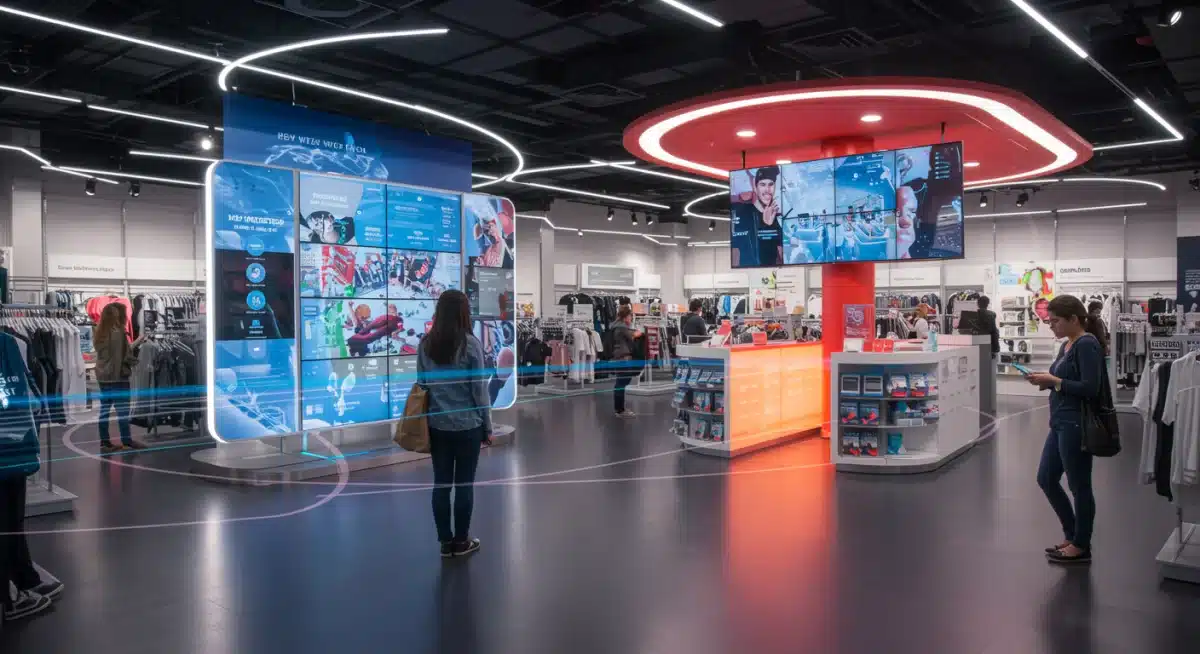
- Dynamic Digital Signage: Displays can change content based on who is viewing them, offering relevant products or promotions.
- Contextual Recommendations: Sales associates, equipped with edge-powered devices, can provide tailored product suggestions based on real-time customer data.
- Seamless Checkout: Self-checkout systems can process transactions faster and offer personalized upsells or cross-sells.
These real-time insights empower retailers to move beyond generic marketing and create truly engaging, individualized shopping journeys. The result is not just increased sales, but also a stronger connection with the customer, fostering loyalty and repeat business. The immediacy of these interactions is key to capturing customer attention in a world saturated with information.
Operational efficiency: streamlining retail processes with edge
Beyond customer engagement, edge computing significantly enhances operational efficiency across various retail functions. By processing data locally, retailers can optimize inventory management, improve supply chain logistics, and streamline in-store operations, leading to substantial cost savings and improved productivity. The immediate availability of data allows for proactive problem-solving rather than reactive measures.
Consider inventory management: traditional systems often rely on periodic updates, leading to potential stockouts or overstocking. With edge computing, sensors on shelves can provide real-time inventory levels, triggering automatic reorders or alerts to staff for restocking. This minimizes lost sales due to unavailability and reduces waste from excess inventory.
Key operational benefits of edge computing
The impact of edge computing on retail operations is multifaceted, touching nearly every aspect of the business:
- Optimized Inventory: Real-time tracking reduces stockouts and overstocking, improving product availability and reducing carrying costs.
- Predictive Maintenance: Sensors on equipment (e.g., HVAC, refrigerators) can detect anomalies and predict failures, allowing for proactive maintenance and minimizing downtime.
- Enhanced Security: Real-time video analytics can detect suspicious activity, prevent theft, and improve store safety.
- Workforce Optimization: Analyzing customer traffic patterns and staff activity can help optimize staffing levels and task assignments.
These efficiencies not only save money but also free up staff to focus on higher-value tasks, such as assisting customers, further contributing to improved engagement. The ability to make data-driven decisions instantly transforms how retailers manage their physical and digital assets, creating a more agile and efficient enterprise.
The customer journey redefined: from online to in-store
Edge computing plays a pivotal role in creating a seamless and integrated customer journey, bridging the gap between online and in-store experiences. Modern consumers expect consistency and convenience, whether they are browsing products on a website or physically shopping in a store. Edge technology facilitates this by ensuring that customer data and preferences are accessible and actionable across all touchpoints.
For instance, a customer might begin their shopping journey online, adding items to a wish list. When they enter a physical store, edge-powered systems can recognize them, access their online wish list, and guide them to the relevant products, or even suggest complementary items. This eliminates the frustration of having to start over or repeat information in different channels.

Creating a unified retail experience
A unified customer experience is characterized by consistency, personalization, and convenience. Edge computing enables retailers to achieve this by:
- Cross-Channel Personalization: Ensuring that personalized recommendations and offers are consistent across online, mobile, and in-store channels.
- Click-and-Collect Optimization: Streamlining the process for customers to order online and pick up in-store, with real-time updates on order status and availability.
- Interactive In-Store Experiences: Powering augmented reality (AR) mirrors, smart dressing rooms, and interactive product displays that enhance the physical shopping experience.
By leveraging edge computing, retailers can provide a cohesive and delightful experience that meets the expectations of today’s omnichannel consumers. This not only improves customer satisfaction but also encourages them to engage more deeply with the brand, regardless of the channel they choose.
Security and privacy considerations in edge retail environments
While the benefits of edge computing in retail are undeniable, it also introduces critical considerations regarding data security and customer privacy. Processing sensitive customer data at the edge requires robust security protocols and strict adherence to privacy regulations. Retailers must ensure that their edge infrastructure is resilient against cyber threats and that customer data is handled responsibly.
The distributed nature of edge computing means there are more potential points of entry for attackers, making comprehensive security measures essential. This includes encrypting data at rest and in transit, implementing strong access controls, and regularly patching software vulnerabilities. Additionally, compliance with regulations like GDPR and CCPA is paramount.
Mitigating risks and building trust
Addressing security and privacy concerns is crucial for building customer trust and ensuring the long-term success of edge computing initiatives. Retailers should focus on:
- End-to-End Encryption: Protecting data from the moment it’s collected to its final destination.
- Access Control and Authentication: Limiting who can access sensitive data and ensuring only authorized personnel or systems can do so.
- Regular Audits and Penetration Testing: Proactively identifying and addressing security weaknesses.
- Privacy by Design: Integrating privacy considerations into the design of edge systems from the outset.
- Transparency with Customers: Clearly communicating how data is collected, used, and protected.
By prioritizing security and privacy, retailers can harness the power of edge computing while safeguarding customer information and maintaining their reputation. A proactive approach to these challenges will differentiate leading retailers and foster greater consumer confidence.
The future of retail: projecting a 12% boost in engagement by 2025
The trajectory of edge computing in retail points towards a future where hyper-personalized, ultra-efficient, and highly secure shopping experiences are the norm. The projected 12% boost in customer engagement by 2025 is not merely an optimistic forecast but a tangible outcome of strategically implemented edge solutions. This enhancement will stem from a combination of factors, including more meaningful interactions, faster service, and a truly unified brand experience.
Retailers who embrace edge computing early are likely to gain a significant competitive advantage. They will be better equipped to adapt to evolving consumer expectations, manage complex operational demands, and innovate rapidly. The continuous feedback loop enabled by real-time insights will allow for constant refinement of strategies, ensuring sustained growth and customer satisfaction.
Innovations driving future engagement
Several emerging innovations, powered by edge computing, are set to further drive customer engagement:
- AI-Powered Virtual Assistants: Providing instant support and personalized recommendations in-store.
- Robotics for Inventory and Service: Automating tasks to free up human staff for more complex customer interactions.
- Immersive Shopping Experiences: Leveraging AR/VR technologies for virtual try-ons and interactive product exploration.
- Proactive Customer Service: Identifying potential issues before they impact the customer and offering timely solutions.
The synergy between edge computing and these advanced technologies will create a retail environment that is not only highly efficient but also deeply engaging. The future of retail is dynamic, responsive, and intensely focused on the individual customer, with edge computing serving as the critical enabler for this transformation.
| Key Aspect | Benefit to Retail |
|---|---|
| Real-time Insights | Enables immediate personalized customer interactions and dynamic promotions. |
| Operational Efficiency | Optimizes inventory, streamlines supply chains, and reduces operational costs. |
| Enhanced Customer Journey | Creates seamless online-to-offline experiences and consistent brand interactions. |
| Security & Privacy | Local processing can improve data security and compliance with regulations. |
Frequently asked questions about edge computing in retail
Edge computing in retail involves processing data closer to its source, such as within a store, rather than sending it all to a distant cloud server. This reduces latency, enabling real-time analysis of customer behavior, inventory, and other operational data to enhance responsiveness.
By providing real-time insights, edge computing allows for instant personalization. Retailers can offer dynamic promotions, contextual recommendations, and seamless cross-channel experiences, making interactions more relevant and engaging for individual customers.
Edge computing streamlines operations by optimizing inventory management, enabling predictive maintenance for equipment, enhancing in-store security through real-time video analytics, and improving workforce efficiency. These lead to cost savings and increased productivity.
Yes, security is a critical consideration. While local processing can enhance some aspects of data privacy, it also creates more potential points of attack. Robust encryption, access controls, and compliance with privacy regulations are essential to mitigate risks effectively.
Forecasts suggest that edge computing could drive a 12% boost in customer engagement by 2025. This will be achieved through hyper-personalization, seamless omnichannel experiences, and the integration of advanced technologies like AI and robotics in retail environments.
Conclusion
The relentless pace of technological evolution continues to reshape the retail landscape, and edge computing stands as a cornerstone of this transformation. By bringing data processing power closer to the customer, retailers can unlock unparalleled real-time insights, driving significant improvements in both customer engagement and operational efficiency. The projected 12% boost in customer engagement by 2025 is a testament to the profound impact this technology will have, enabling businesses to deliver hyper-personalized experiences, streamline complex operations, and build stronger, more lasting relationships with their clientele. As the industry moves forward, embracing edge computing will not merely be an advantage but a fundamental necessity for staying competitive and relevant in an increasingly data-driven world.