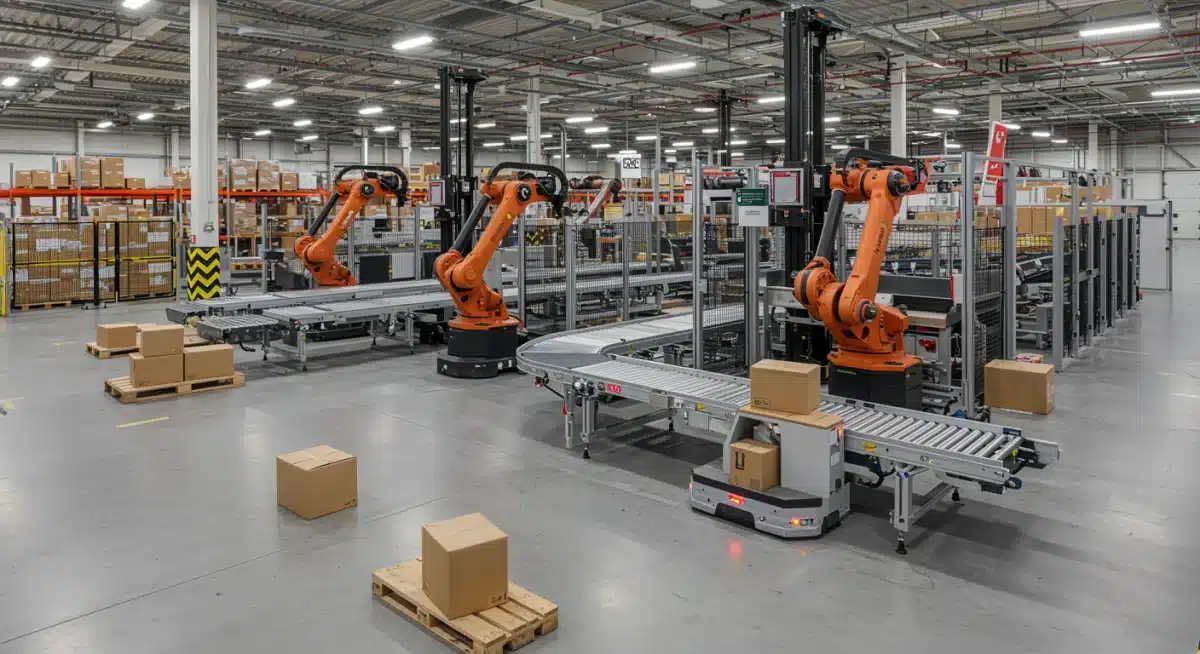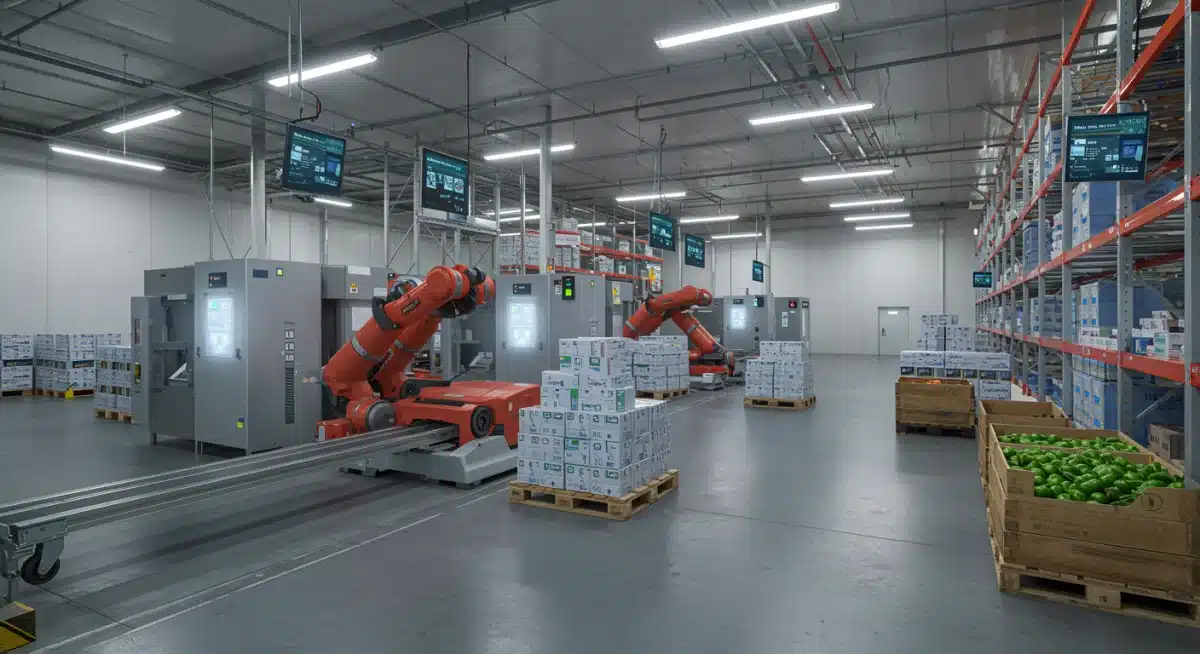
Real-time visibility solutions are revolutionizing supply chain management by providing immediate, granular insights into operations, enabling businesses to proactively address disruptions, optimize inventory, and achieve a significant 12% boost in efficiency within the next six months.
In today’s fast-paced global economy, the ability to see and react to every nuance of a supply chain is no longer a luxury but a necessity. Companies are increasingly turning to real-time visibility solutions to gain unparalleled insights, promising a remarkable 12% boost in supply chain efficiency within a mere six months. This article explores how these innovative technologies are reshaping logistics and operations, offering a competitive edge in an ever-evolving market.
Understanding the imperative for real-time visibility
The modern supply chain is a complex web of interconnected processes, stakeholders, and geographic locations. Without a clear, up-to-the-minute view of this intricate network, businesses operate with significant blind spots, leading to inefficiencies, delays, and increased costs. The imperative for real-time visibility stems from the dynamic nature of global commerce, where disruptions can emerge without warning, from geopolitical events to natural disasters or sudden shifts in consumer demand.
Traditional supply chain management often relies on fragmented data, manual updates, and retrospective analysis, which by their very nature are reactive. This outdated approach leaves companies vulnerable to unforeseen challenges, making it difficult to optimize operations, manage inventory effectively, or meet customer expectations consistently. The push towards real-time solutions is a direct response to these limitations, offering a proactive stance that transforms potential problems into opportunities for swift mitigation and continuous improvement.
The cost of delayed information
Every minute of delayed information in the supply chain can translate into significant financial losses. Consider a shipment held up at a port due to unexpected customs issues or a manufacturing line idled because of a missing component. Without immediate notification, the ripple effects can be catastrophic, impacting production schedules, delivery times, and customer satisfaction. The financial implications extend beyond direct costs, encompassing reputational damage and lost future business.
- Increased inventory holding costs: Overstocking to compensate for uncertainty.
- Expedited shipping fees: Paying extra to mitigate unforeseen delays.
- Production downtime: Lost revenue and idle labor due to material shortages.
- Customer churn: Dissatisfied customers seeking more reliable suppliers.
These tangible and intangible costs underscore why businesses are aggressively pursuing solutions that provide instantaneous data, enabling them to make informed decisions and pivot quickly when circumstances change. Real-time visibility is not just about tracking; it’s about empowering decision-makers with the intelligence needed to maintain fluidity and resilience across the entire supply chain.
Ultimately, understanding the imperative for real-time visibility means recognizing that an informed supply chain is an efficient and competitive one. It’s about moving from a reactive firefighting mode to a proactive, strategic approach that anticipates and navigates challenges with agility and precision.
Key technologies driving real-time visibility
The transformation of supply chain visibility is powered by a convergence of advanced technologies. These innovations work in concert to collect, process, and present data in a way that was previously unimaginable, offering an end-to-end view of goods in transit and at rest. Understanding these key technologies is crucial for businesses looking to implement effective real-time visibility solutions.
At the core are IoT (Internet of Things) devices, which serve as the primary data collectors. These sensors can be attached to products, containers, or vehicles, continuously transmitting information about location, condition, and environment. Beyond IoT, sophisticated data analytics and artificial intelligence (AI) play a pivotal role in interpreting this vast amount of raw data, transforming it into actionable insights that can predict potential disruptions or optimize routes.
IoT sensors and GPS tracking
IoT sensors are the eyes and ears of real-time visibility. These small, often inexpensive devices can monitor a variety of parameters critical to supply chain operations. GPS tracking, a foundational element, provides precise location data, allowing companies to know exactly where their shipments are at any given moment. However, IoT goes far beyond simple location.
- Temperature sensors: Essential for perishable goods, ensuring cold chain integrity.
- Humidity sensors: Protecting sensitive electronics or textiles from moisture damage.
- Shock sensors: Detecting impacts that could damage fragile items during transit.
- Light sensors: Identifying if a container has been opened unexpectedly.
These sensors transmit data wirelessly, often via cellular networks, satellite, or Bluetooth, to a central platform. The continuous stream of information allows for proactive intervention if conditions deviate from acceptable parameters, preventing spoilage, damage, or theft. The combination of GPS and environmental monitoring provides a comprehensive picture of a shipment’s journey and well-being.
Furthermore, the integration of these technologies with cloud-based platforms allows for seamless data aggregation and accessibility from anywhere in the world. This distributed architecture ensures that all relevant stakeholders, from warehouse managers to customer service representatives, have access to the same, up-to-date information, fostering collaboration and informed decision-making across the entire organization. The continuous evolution of these technologies promises even greater granularity and predictive capabilities in the future.
Benefits beyond mere tracking: enhanced efficiency
While tracking goods is a fundamental aspect of real-time visibility, the true value of these solutions extends far beyond simple location monitoring. The data collected and analyzed by these systems unlocks a multitude of benefits that directly contribute to enhanced efficiency across the entire supply chain. This holistic improvement is what enables businesses to target and achieve significant gains, such as the promised 12% boost in efficiency.
One of the primary benefits is the ability to move from reactive problem-solving to proactive management. Instead of responding to issues after they occur, real-time insights allow for the anticipation of potential disruptions. This foresight enables companies to re-route shipments, adjust production schedules, or reallocate resources before problems escalate, minimizing their impact and maintaining operational flow.
Optimized inventory management and reduced waste
Real-time visibility provides an unprecedented level of insight into inventory levels across the entire network, from raw materials to finished goods in transit and in warehouses. This granular view allows for far more accurate forecasting and demand planning. By understanding exactly what is where, and when it will arrive, businesses can significantly optimize their inventory management strategies.
- Reduced safety stock: Less need for buffer inventory, freeing up capital and warehouse space.
- Minimized obsolescence: Better management of perishable or time-sensitive goods.
- Improved order fulfillment rates: Ensuring products are available when and where customers need them.
- Lower carrying costs: Direct financial savings from holding less inventory.
This optimization directly translates into reduced waste, not just in terms of spoiled or expired products, but also in the inefficient use of resources and capital tied up in excess stock. The ability to maintain leaner inventory levels while still meeting demand is a cornerstone of modern supply chain efficiency, directly supported by real-time data.

Furthermore, the data from real-time visibility solutions can be used to identify bottlenecks and inefficiencies in logistics operations. By analyzing transit times, dwell times, and carrier performance, companies can pinpoint areas for improvement, negotiate better terms with logistics partners, and continuously refine their operational processes. This continuous feedback loop is crucial for sustaining long-term efficiency gains and adapting to market changes.
Implementing real-time visibility: a strategic roadmap
Implementing real-time visibility solutions is not merely a technological upgrade; it’s a strategic transformation that requires careful planning and execution. A well-defined roadmap is essential to ensure a smooth transition, maximize adoption, and realize the promised efficiency gains. This roadmap typically involves several key stages, from initial assessment to ongoing optimization.
The journey begins with a thorough assessment of the current supply chain landscape, identifying existing pain points, data silos, and areas where visibility is most lacking. This initial phase helps in defining clear objectives and setting realistic expectations for what real-time solutions can achieve. It’s also crucial to involve key stakeholders from across the organization early in the process to foster buy-in and ensure the solution addresses diverse departmental needs.
Phased approach and vendor selection
A phased approach is often recommended for implementing real-time visibility, starting with a pilot program in a specific segment of the supply chain before rolling it out enterprise-wide. This allows for testing, learning, and refinement without disrupting the entire operation. Selecting the right technology vendor is equally critical, as their platform will be the backbone of the visibility solution.
- Define clear requirements: What data needs to be collected? What insights are critical?
- Evaluate vendor capabilities: Look for scalability, integration ease, and robust analytics.
- Prioritize integration: Ensure compatibility with existing ERP, TMS, and WMS systems.
- Consider data security: Protect sensitive supply chain information.
The chosen vendor should offer not just the technology but also comprehensive support, training, and a clear roadmap for future enhancements. A strong partnership with the vendor is instrumental for long-term success and continuous innovation.
Once the solution is implemented, continuous monitoring and optimization are key. The real-time data generated by the system should be regularly analyzed to identify new opportunities for efficiency, refine processes, and adapt to evolving market conditions. This iterative approach ensures that the investment in real-time visibility continues to deliver value and contributes to sustained competitive advantage.
Overcoming common challenges in adoption
While the benefits of real-time visibility solutions are compelling, their adoption is not without challenges. Businesses often encounter hurdles ranging from technological complexities to organizational resistance. Successfully navigating these obstacles is crucial for unlocking the full potential of these transformative tools and achieving significant efficiency improvements.
One of the most significant challenges is data integration. Modern supply chains often involve numerous legacy systems, disparate data formats, and multiple external partners, each with their own technological infrastructure. Harmonizing this fragmented data into a single, cohesive visibility platform requires considerable effort and expertise, often necessitating robust API integrations and data standardization protocols.
Ensuring data quality and stakeholder buy-in
The adage “garbage in, garbage out” holds particularly true for real-time visibility. The accuracy and reliability of insights are directly dependent on the quality of the data being fed into the system. Poor data quality can lead to erroneous decisions, eroding trust in the solution and undermining its effectiveness. Establishing clear data governance policies and implementing automated data validation processes are essential.
- Data cleansing: Removing inaccuracies and inconsistencies from existing datasets.
- Standardization: Implementing common data formats and definitions across all partners.
- Continuous monitoring: Regularly auditing data inputs for quality and integrity.
- Training: Educating users on the importance of accurate data entry and usage.
Equally important is securing stakeholder buy-in across the organization. Resistance to change is a natural human tendency, and new technologies can be perceived as disruptive or threatening. Effective communication, demonstrating the tangible benefits to different departments, and providing adequate training are vital for fostering acceptance and encouraging active participation.
Overcoming these challenges requires a combination of strategic planning, technological expertise, and strong change management. By proactively addressing potential integration issues, prioritizing data quality, and engaging stakeholders throughout the implementation process, businesses can pave the way for successful adoption and realize the profound efficiency gains offered by real-time visibility solutions.
Measuring success: quantifying the 12% efficiency boost
The promise of a 12% efficiency boost within six months from implementing real-time visibility solutions is an ambitious yet achievable goal. However, realizing and quantifying this success requires a clear understanding of what efficiency means in the context of a supply chain and how to effectively measure the impact of the new technologies. Metrics must be established before implementation to provide a baseline for comparison.
Measuring success goes beyond anecdotal evidence; it demands a data-driven approach that tracks key performance indicators (KPIs) directly affected by enhanced visibility. These KPIs should be aligned with the strategic objectives of the business, encompassing financial, operational, and customer-centric measures. A comprehensive measurement framework ensures that the true value of the investment is accurately captured and communicated.
Key performance indicators for efficiency gains
Several KPIs are particularly effective in demonstrating the efficiency improvements driven by real-time visibility. Tracking these metrics over the six-month period post-implementation allows businesses to quantitatively assess the impact and identify areas for further optimization. The 12% target can be a composite of improvements across various operational aspects.
- On-time delivery rate: Improvement in meeting scheduled delivery times.
- Inventory turnover: How quickly inventory is sold and replaced, indicating efficient stock management.
- Logistics costs as a percentage of sales: Reduction in transportation, warehousing, and administrative costs.
- Order-to-delivery cycle time: Decrease in the total time from order placement to customer receipt.
- Dwell time reduction: Less time goods spend waiting at ports, warehouses, or transfer points.
By meticulously tracking these and other relevant KPIs, companies can gain a clear picture of how real-time visibility is translating into tangible efficiency gains. It’s important to note that the 12% boost might manifest differently across various segments of the supply chain, and a holistic view is necessary to fully appreciate the overall impact.
Regular reporting and analysis of these metrics are crucial not only for validating the initial investment but also for identifying ongoing opportunities for process refinement and strategic adjustments. The data provided by real-time visibility solutions serves as a powerful tool for continuous improvement, ensuring that the supply chain remains agile, responsive, and optimally efficient in the long term.
The future of supply chain: intelligent and predictive
The journey towards real-time visibility is just one step in the broader evolution of supply chain management. The future promises an even more intelligent and predictive landscape, where supply chains are not only responsive to current events but also capable of anticipating future disruptions and opportunities. This next phase will be driven by further advancements in artificial intelligence, machine learning, and advanced analytics.
Imagine a supply chain that can dynamically re-route shipments based on real-time traffic, weather patterns, and even geopolitical forecasts, all without human intervention. This level of autonomy and foresight will redefine efficiency, minimize risks, and unlock unprecedented levels of optimization. The foundational data collected by today’s real-time visibility solutions will be the fuel for these future intelligent systems.
Leveraging AI for predictive insights and automation
Artificial intelligence and machine learning are poised to transform real-time data into predictive intelligence. Instead of merely showing what is happening, future systems will be able to forecast what is likely to happen, enabling truly proactive decision-making. This includes predicting demand fluctuations, potential equipment failures, and even the likelihood of customs delays.
- Predictive maintenance: Anticipating when vehicles or equipment might need servicing.
- Dynamic pricing and demand forecasting: Adjusting strategies based on anticipated market shifts.
- Automated risk mitigation: Systems autonomously identifying and proposing solutions to disruptions.
- Optimized network design: AI continuously analyzing and recommending improvements to logistics networks.
The integration of AI will also lead to greater automation, reducing the need for human intervention in routine tasks and allowing supply chain professionals to focus on more strategic initiatives. From automated order fulfillment to self-optimizing transportation networks, the human-machine collaboration will reach new levels of sophistication.
Ultimately, the future of the supply chain is one where information flows seamlessly, decisions are data-driven and predictive, and operations are highly automated and resilient. Real-time visibility solutions are laying the groundwork for this future, empowering businesses to build supply chains that are not just efficient but also intelligent, adaptable, and robust enough to thrive in an increasingly complex world.
| Key Aspect | Brief Description |
|---|---|
| Proactive Management | Shifts from reactive problem-solving to anticipating and mitigating disruptions before they impact operations. |
| Inventory Optimization | Reduces safety stock, minimizes waste, and improves fulfillment rates through accurate, real-time data. |
| Technology Integration | Leverages IoT, AI, and cloud platforms for comprehensive data collection and advanced analytics. |
| Measurable Impact | Quantifies success through KPIs like on-time delivery, reduced costs, and faster cycle times. |
Frequently asked questions about real-time supply chain visibility
Real-time visibility solutions provide continuous, up-to-the-minute data on the location, status, and condition of goods and assets across the entire supply chain. They use technologies like IoT sensors, GPS, and AI to offer a comprehensive, actionable view of operations, enabling proactive decision-making and improved responsiveness.
By eliminating blind spots, businesses can optimize routes, reduce inventory holding costs, minimize delays, and proactively address disruptions. This leads to faster order fulfillment, lower operational expenses, and improved resource utilization, collectively contributing to significant efficiency gains that can reach 12% within half a year.
Key technologies include Internet of Things (IoT) sensors for data collection (e.g., GPS, temperature, shock), cloud-based platforms for data aggregation and storage, and artificial intelligence (AI) and machine learning (ML) for advanced analytics, predictive insights, and automation. These work together to provide a holistic view.
Common challenges include integrating disparate legacy systems, ensuring high data quality from various sources, securing buy-in from different departments, and managing the initial cost of technology adoption. Overcoming these requires careful planning, robust data governance, and effective change management strategies.
By enabling more reliable on-time deliveries, providing accurate delivery estimates, and quickly resolving shipping issues, real-time visibility significantly enhances the customer experience. This leads to increased trust, improved brand loyalty, and ultimately, higher customer satisfaction, which is crucial for business growth.
Conclusion
The integration of real-time visibility solutions into supply chain management marks a pivotal shift towards greater efficiency, resilience, and responsiveness. As global markets continue to evolve with unpredictable challenges, the ability to see, understand, and act upon immediate data is no longer a competitive advantage but a fundamental requirement for survival and growth. The promise of a 12% efficiency boost within six months highlights the tangible and rapid returns on investment these technologies offer. By embracing these advancements, companies can transform their operations, deepen customer trust, and build a supply chain fit for the future.