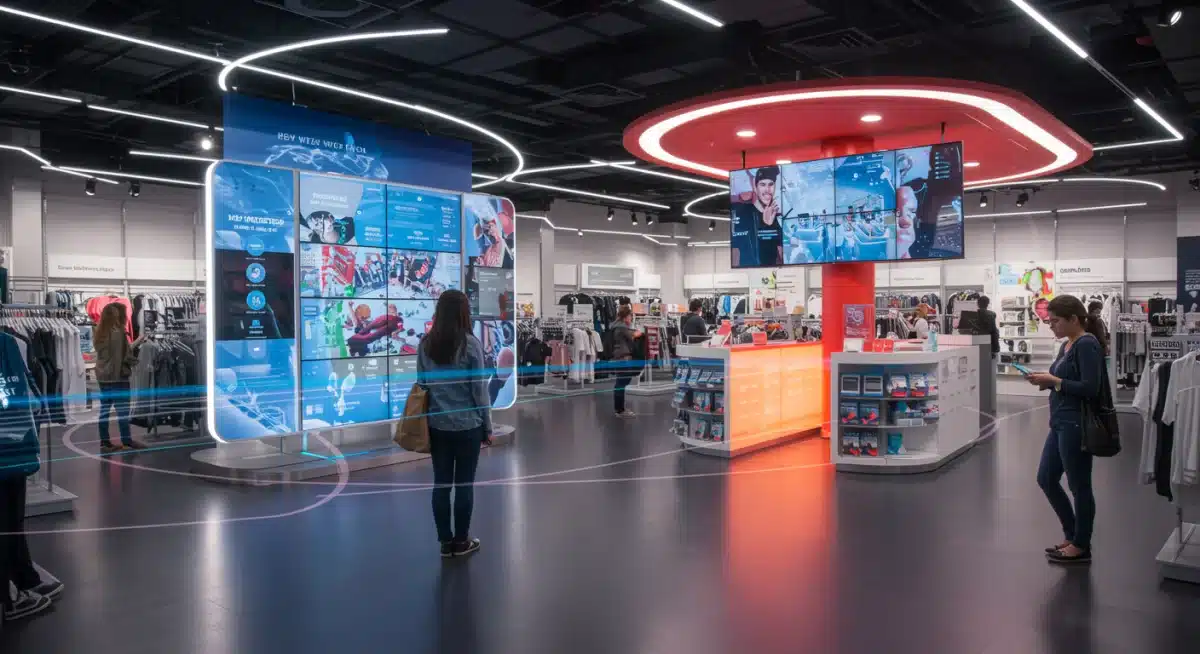
Micro-fulfillment centers are transforming US retail by enabling 50% faster online order delivery by 2025, strategically positioning inventory closer to consumers for enhanced speed and efficiency in the competitive e-commerce market.
The landscape of online retail in the United States is undergoing a profound transformation, driven by an insatiable consumer demand for speed and convenience. In this evolving environment, the role of micro-fulfillment centers: delivering 50% faster online orders for US retail in 2025 has emerged as a critical game-changer. These compact, highly automated facilities are strategically located closer to urban centers, bridging the gap between traditional warehouses and the customer’s doorstep. This innovative approach promises not just accelerated delivery times, but a comprehensive redefinition of retail logistics, impacting everything from inventory management to customer satisfaction.
The rise of micro-fulfillment centers in US retail
The rapid expansion of e-commerce has put immense pressure on traditional supply chains. Consumers now expect their online orders to arrive not just quickly, but almost instantly. This expectation has propelled the adoption of micro-fulfillment centers (MFCs) across the US retail sector.
MFCs represent a pivotal shift from large, centralized distribution hubs to smaller, decentralized facilities. These centers are often integrated within existing retail stores or located in urban storefronts, allowing for significantly reduced last-mile delivery times. Their strategic placement minimizes transit distances, directly addressing the core challenge of fast delivery in densely populated areas.
Strategic location and operational efficiency
One of the primary advantages of MFCs is their ability to leverage existing retail footprints. By converting backroom spaces or adjacent properties into automated fulfillment hubs, retailers can tap into prime urban locations without the exorbitant costs associated with building new, large-scale warehouses. This proximity to the customer base is vital for meeting aggressive delivery windows.
- Reduced last-mile delivery costs
- Faster order processing and dispatch
- Improved inventory accuracy and management
- Enhanced customer satisfaction through quicker service
The operational efficiency gained through automation within MFCs is equally significant. Robotics and advanced software streamline picking, packing, and sorting processes, leading to fewer errors and increased throughput. This automation is key to handling the high volume of online orders with the speed and precision that modern consumers demand.
Ultimately, the rise of MFCs is a direct response to market forces demanding greater agility and speed. These centers enable retailers to not only survive but thrive in an intensely competitive digital commerce landscape, setting new benchmarks for delivery performance and customer experience.
Automation and robotics: the heart of MFC operations
At the core of every efficient micro-fulfillment center lies a sophisticated ecosystem of automation and robotics. These technologies are not merely supplementary; they are the fundamental drivers that enable MFCs to achieve their promise of significantly faster order processing and delivery.
The integration of automated storage and retrieval systems (AS/RS), robotic picking arms, and intelligent conveyor systems transforms a compact space into a highly productive fulfillment engine. These systems work in concert, minimizing human intervention and maximizing the speed and accuracy of order preparation.
Key automated technologies in MFCs
Various robotic solutions are deployed to optimize different stages of the fulfillment process. Goods-to-person robotics, for instance, bring inventory directly to human operators for picking, drastically reducing travel time within the facility. This approach not only speeds up the process but also enhances ergonomic conditions for employees.
- Automated storage and retrieval systems (AS/RS)
- Robotic picking and sorting arms
- Autonomous mobile robots (AMRs) for transport
- Advanced warehouse management software (WMS)
Beyond physical automation, sophisticated software plays a crucial role. Warehouse management systems (WMS) and order fulfillment software orchestrate the entire operation, from receiving inventory to dispatching orders. These systems use data analytics and artificial intelligence to optimize workflows, predict demand, and manage inventory levels with unparalleled precision.
The synergy between hardware and software automation allows MFCs to operate 24/7 with minimal staffing, ensuring a continuous flow of orders. This level of automation is indispensable for retailers aiming to achieve the ambitious goal of 50% faster online order delivery by 2025, providing a scalable and reliable solution for the escalating demands of e-commerce.
Impact on last-mile delivery and consumer expectations
The strategic deployment of micro-fulfillment centers has a profound and direct impact on the critical aspect of last-mile delivery, fundamentally reshaping consumer expectations. By bringing inventory closer to the end-customer, MFCs dramatically reduce the time and cost associated with the final leg of the delivery journey.
This proximity allows retailers to offer a wider array of expedited delivery options, including same-day and even sub-hour delivery, which were once considered luxury services. Consumers, having experienced the convenience of rapid delivery, are increasingly making it a non-negotiable factor in their purchasing decisions.
Meeting the demand for instant gratification
The modern consumer lives in an on-demand world, where patience for online orders is dwindling. MFCs are perfectly positioned to cater to this desire for instant gratification, transforming it from a niche offering to a standard expectation. This shift forces competitors to adapt or risk losing market share.
- Enables same-day and express delivery options
- Reduces delivery errors and transit damage
- Increases customer loyalty and repeat purchases
- Provides a competitive edge in crowded markets
Furthermore, MFCs can support innovative delivery models such as curbside pickup and buy online, pick up in store (BOPIS) with greater efficiency. Orders prepared in a nearby MFC can be ready for customer collection within minutes, offering unparalleled convenience and flexibility. This integration of online and offline retail experiences is crucial for the omnichannel strategies of contemporary retailers.

The impact extends beyond just speed; it also affects the overall customer experience. Quicker, more reliable deliveries lead to higher satisfaction rates, fewer customer service inquiries related to shipping, and ultimately, stronger brand loyalty. MFCs are not just about faster delivery; they are about delivering on the promise of a superior customer journey.
Challenges and considerations for MFC implementation
While the benefits of micro-fulfillment centers are compelling, their implementation is not without its challenges and requires careful strategic consideration. Retailers embarking on this journey must navigate a complex landscape of technological, operational, and financial hurdles.
One primary concern is the initial capital investment. Setting up an MFC, even a smaller one, involves significant costs for automation hardware, software, and integration. This investment requires a clear return-on-investment (ROI) analysis and a long-term vision to justify the expenditure.
Overcoming operational complexities
Integrating MFCs into existing supply chain networks can be operationally complex. It demands seamless data exchange between various systems, including inventory management, order processing, and last-mile delivery platforms. Any disruption in this flow can negate the very speed advantages MFCs promise.
- High initial capital expenditure
- Integration challenges with legacy systems
- Need for specialized technical talent
- Optimizing inventory across multiple small sites
Another critical consideration is inventory management. With multiple, smaller fulfillment points, retailers must master the art of distributed inventory. This means accurately forecasting demand at a hyper-local level and efficiently replenishing stock in each MFC to prevent stockouts or overstocking, both of which can be costly.
Moreover, finding suitable urban locations that meet zoning requirements and offer adequate space can be difficult and expensive. The physical constraints of urban environments often dictate the size and layout of MFCs, requiring innovative design and efficient use of vertical space. Addressing these challenges effectively is crucial for realizing the full potential of MFCs and achieving the ambitious goal of 50% faster online order delivery.
The economic advantages of localized fulfillment
Beyond the undeniable speed benefits, micro-fulfillment centers offer significant economic advantages that contribute to a healthier bottom line for US retailers. By localizing fulfillment, businesses can unlock efficiencies that reduce operational costs and enhance profitability in the long run.
A primary economic driver is the reduction in last-mile delivery expenses. Traditional fulfillment models often involve longer delivery routes from distant warehouses, incurring higher fuel costs, labor wages, and vehicle maintenance. MFCs shorten these routes dramatically, leading to substantial savings.
Cost savings and increased profitability
The decrease in delivery distance directly translates into lower transportation costs per order. This is particularly impactful for retailers dealing with high volumes of online sales. Furthermore, the ability to offer faster delivery without incurring premium shipping costs allows retailers to maintain competitive pricing or even increase margins on certain products.
- Reduced transportation and fuel costs
- Lower labor costs for last-mile delivery
- Optimized inventory holding costs
- Potential for increased sales due to faster service
Another economic benefit stems from optimized inventory management. While balancing inventory across multiple MFCs can be challenging, successful implementation allows for more precise stock allocation. This reduces the need for costly transfers between facilities and minimizes the risk of obsolescence, tying up less capital in slow-moving stock.
The improved customer satisfaction and loyalty driven by faster delivery also have an economic ripple effect. Happy customers are more likely to make repeat purchases and recommend the retailer to others, leading to higher customer lifetime value. In essence, localized fulfillment through MFCs is not just about speed; it’s about building a more financially resilient and responsive retail operation.
Future outlook: MFCs shaping US retail in 2025 and beyond
As we look towards 2025 and beyond, micro-fulfillment centers are poised to play an increasingly central role in shaping the future of US retail. Their ability to deliver online orders 50% faster is not just a temporary trend but a fundamental shift in how goods are moved from seller to consumer.
The ongoing evolution of automation technology will further enhance the capabilities of MFCs, making them even more efficient and cost-effective. Expect to see greater integration of artificial intelligence and machine learning for predictive analytics, further optimizing inventory and operational workflows.
Expanding applications and evolving models
The application of MFCs will likely expand beyond general merchandise. Specialty retailers, grocery stores, and even quick-service restaurants are exploring and adopting similar models to speed up their delivery services. This diversification will solidify MFCs as a versatile solution across various retail segments.
- Increased adoption across diverse retail sectors
- Further technological advancements in automation
- Integration with broader smart city logistics
- Evolution of hybrid retail models (store-as-fulfillment)
Moreover, the concept of the ‘dark store’ – retail locations converted entirely into MFCs – will become more prevalent, blurring the lines between physical retail and pure e-commerce fulfillment centers. This hybrid model allows retailers to maintain a physical presence while maximizing efficiency for online orders.
Ultimately, MFCs are not just a technological upgrade; they represent a strategic imperative for retailers aiming to remain competitive in a rapidly changing market. By 2025, those who have successfully integrated and scaled micro-fulfillment solutions will be best positioned to meet the escalating demands of consumers, defining the new standard for speed and convenience in online retail.
| Key Aspect | Impact on US Retail |
|---|---|
| Faster Delivery | Enables 50% faster online order delivery by 2025, meeting consumer demand for speed. |
| Cost Efficiency | Reduces last-mile delivery costs and optimizes inventory management, boosting profitability. |
| Customer Experience | Enhances satisfaction and loyalty through quick, reliable service and flexible pickup options. |
| Technological Advantage | Leverages automation and AI to streamline operations and maintain competitive edge. |
Frequently asked questions about micro-fulfillment centers
An MFC is a compact, automated warehouse typically located in urban areas or within existing retail stores. It uses robotics and advanced software to quickly process online orders, significantly reducing delivery times by being closer to the end customer.
MFCs achieve faster delivery by minimizing last-mile transit distances and employing high levels of automation. Robotics accelerate picking and packing, while proximity to customers allows for rapid dispatch and shorter delivery routes, often enabling same-day service.
Retailers benefit from reduced last-mile delivery costs, improved inventory management, enhanced customer satisfaction through quicker service, and a competitive advantage in the e-commerce market. MFCs also support efficient curbside pickup options.
Key challenges include the high initial capital investment, complex integration with existing supply chains, the need for specialized technical talent, and optimizing inventory across multiple distributed sites. Finding suitable urban locations can also be difficult.
MFCs are not likely to entirely replace large warehouses but rather complement them. Large warehouses will continue to serve as central hubs for bulk storage and replenishment, while MFCs handle rapid, localized fulfillment for immediate customer needs.
Conclusion
The advent and rapid adoption of micro-fulfillment centers are unequivocally reshaping the retail landscape across the United States. As consumer expectations for instantaneous gratification continue to escalate, the strategic placement and automated efficiency of MFCs offer a vital solution. By promising and delivering 50% faster online orders by 2025, these innovative facilities are not just optimizing logistics; they are redefining competitive advantage, enhancing customer loyalty, and ultimately driving the future growth of e-commerce. Retailers who embrace this transformative technology will undoubtedly be better positioned to thrive in the dynamic and demanding market of tomorrow.