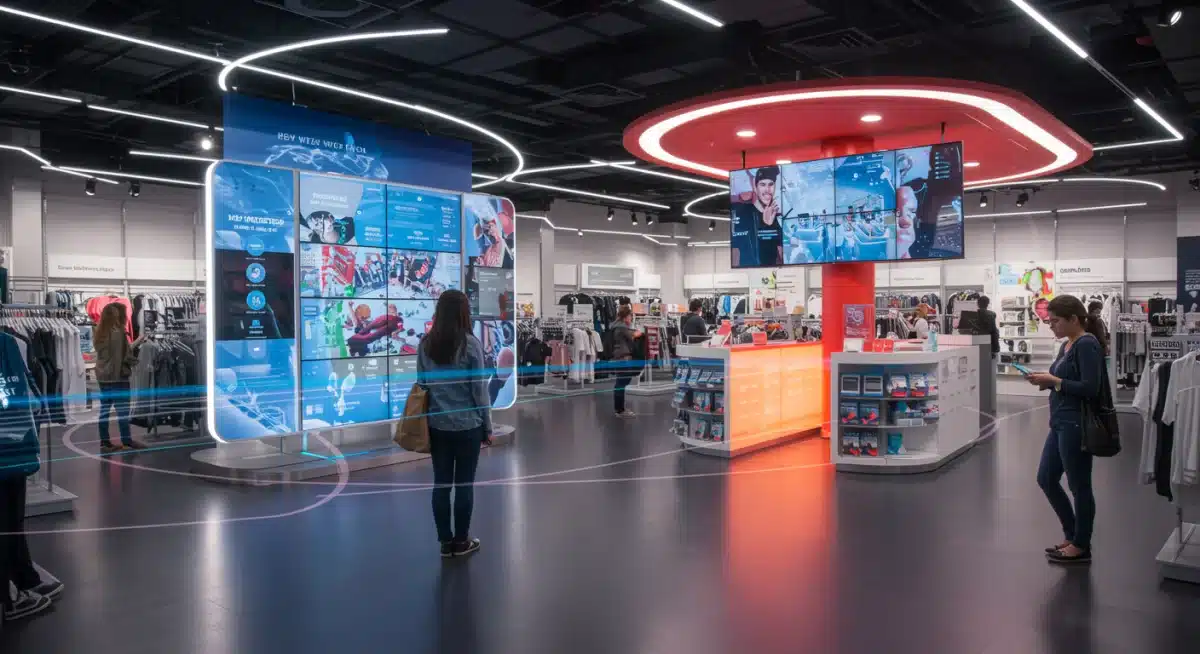
Implementing IoT for inventory management is crucial for US retailers aiming to reduce shrinkage by 5% by mid-2025, offering real-time visibility and proactive loss prevention strategies.
The retail landscape is constantly evolving, presenting both opportunities and challenges for businesses. One persistent challenge, however, remains inventory shrinkage – a problem that costs US retailers billions annually.
However, with the advent of advanced technologies, a significant solution is emerging:
implementing IoT for inventory management: reducing shrinkage by 5% in US retail by mid-2025. This strategic shift promises to revolutionize how retailers protect their assets and enhance operational efficiency.
Understanding the Scope of Retail Shrinkage in the US
Retail shrinkage, often defined as the loss of inventory due to factors like theft, administrative errors, vendor fraud, and damage, represents a substantial drain on profitability for businesses across the United States.
Historically, combating shrinkage has been a reactive endeavor, relying on surveillance cameras, security guards, and periodic inventory counts.
These methods, while valuable, often address the symptoms rather than the root causes, and their effectiveness can be limited.
The financial impact of shrinkage is staggering. According to recent industry reports, US retailers lose an estimated 1.4% of their sales to shrinkage annually.
For a sector with already thin margins, this percentage translates into billions of dollars that could otherwise be reinvested into growth, innovation, or passed on as savings to consumers.
The challenge extends beyond just financial loss; it also impacts customer satisfaction due to out-of-stock items and strains employee morale.
The multifaceted causes of shrinkage
- External Theft: Shoplifting and organized retail crime groups contribute significantly to losses, often targeting high-value items.
- Internal Theft: Employee theft, though sensitive, is a persistent issue, ranging from direct product pilferage to fraudulent returns.
- Administrative Errors: Mistakes in receiving, shipping, pricing, or data entry can lead to discrepancies between physical and recorded inventory.
- Vendor Fraud: Deceptive practices by suppliers, such as short-shipping or billing for unreceived goods, also contribute to shrinkage.
Addressing these diverse causes requires a comprehensive and technologically advanced approach. Traditional methods are increasingly proving insufficient against sophisticated theft operations and the sheer volume of transactions in modern retail.
Therefore, a paradigm shift towards proactive, data-driven solutions is not just beneficial but essential for retailers aiming to thrive in a competitive market.
The goal of reducing shrinkage by 5% by mid-2025 is ambitious but achievable, provided retailers leverage the transformative power of IoT. This reduction would free up significant capital, allowing businesses to invest in better customer experiences, expand product offerings, and improve overall operational resilience.
The Transformative Power of IoT in Inventory Management
The Internet of Things (IoT) is rapidly changing how businesses operate, and its application in inventory management is particularly revolutionary.
By embedding sensors, tags, and connectivity into physical items, IoT enables real-time tracking, monitoring, and analysis of inventory from the moment it enters the supply chain until it leaves the store.
This level of visibility was previously unattainable, offering unprecedented control and insight.
At its core, IoT for inventory management involves a network of interconnected devices that collect and exchange data.
These devices can range from RFID (Radio-Frequency Identification) tags and smart shelves to environmental sensors and video analytics systems.
Each piece of data contributes to a holistic view of inventory movement and status, allowing retailers to identify anomalies and potential shrinkage events as they happen, rather than after the fact.
Key IoT technologies for inventory control
- RFID Tags: These small, passive or active tags can be attached to individual products or packaging, allowing for rapid, accurate, and automated scanning of inventory without direct line of sight.
- Smart Shelves: Equipped with weight sensors or RFID readers, smart shelves can detect when items are removed or added, providing instant updates on stock levels and potential discrepancies.
- Beacons and GPS: For larger items or items in transit, beacons and GPS trackers offer location-based insights, ensuring products are where they should be at all times.
- Environmental Sensors: For perishable goods, sensors monitoring temperature and humidity prevent spoilage, a often overlooked form of shrinkage.
The integration of these technologies creates a powerful ecosystem that not only tracks inventory but also predicts potential issues.
For example, if a smart shelf detects an unusual number of items removed without a corresponding sale, it can trigger an alert, prompting immediate investigation.
This proactive capability is what truly sets IoT apart from traditional inventory management systems.
Beyond loss prevention, IoT also optimizes stock replenishment, reduces manual labor, and enhances overall supply chain efficiency.
By providing accurate, real-time data, retailers can make more informed decisions, leading to better stock rotation, reduced waste, and ultimately, a healthier bottom line.
Strategies for Successful IoT Implementation in Retail
Successfully implementing IoT for inventory management requires a well-thought-out strategy that considers both technological integration and operational changes.
It’s not merely about deploying devices; it’s about transforming processes, training personnel, and leveraging data effectively to achieve the desired reduction in shrinkage.
A phased approach often yields the best results, allowing retailers to learn and adapt as they go.
The first step involves a thorough assessment of current inventory management processes and identifying key pain points where shrinkage is most prevalent.
This diagnostic phase helps in prioritizing which IoT solutions will deliver the most impact.
For instance, if external theft of high-value electronics is a major concern, RFID tagging combined with smart shelf technology might be the initial focus.
Critical steps for effective deployment
- Pilot Programs: Start with a smaller scale implementation in a few stores or a specific product category to test the technology, identify challenges, and refine processes before a full rollout.
- Data Integration: Ensure that IoT data can seamlessly integrate with existing enterprise resource planning (ERP) and point-of-sale (POS) systems for a unified view of operations.
- Employee Training: Proper training is crucial for staff to understand how to use new IoT tools, interpret data, and follow updated protocols for inventory handling and loss prevention.
- Scalability Planning: Design the IoT infrastructure with scalability in mind, allowing for future expansion as the business grows and technology evolves.
Another vital aspect is vendor selection. Choosing reliable IoT solution providers with proven track records and strong support is paramount.
The technology must be robust, secure, and capable of handling the volume and velocity of data generated in a busy retail environment.
Security considerations are also critical, as IoT systems can be vulnerable to cyber threats if not properly secured.
Finally, continuous monitoring and optimization are essential.
The IoT system should be regularly reviewed for performance, and data analytics should be used to identify new patterns of shrinkage or areas where processes can be further improved.
This iterative approach ensures that the investment in IoT continues to deliver maximum value over time.
Measuring Impact: Achieving 5% Shrinkage Reduction by Mid-2025
The ambitious target of reducing shrinkage by 5% by mid-2025 requires not only effective IoT implementation but also a robust framework for measuring its impact.
Defining clear key performance indicators (KPIs) and establishing baseline metrics are crucial for tracking progress and demonstrating the return on investment (ROI) of IoT initiatives.
Without precise measurement, it’s impossible to confirm success or identify areas needing adjustment.
Before deploying any IoT solution, retailers must accurately measure their current shrinkage rates.
This involves meticulous inventory counts, analysis of sales data, and review of loss prevention reports.
This baseline provides the benchmark against which future reductions will be measured.
Once IoT systems are in place, continuous monitoring of inventory discrepancies, sales figures, and identified loss events becomes critical.
Key metrics for tracking shrinkage reduction
- Shrinkage Percentage: Calculate the total value of lost inventory as a percentage of total sales over a specific period.
- Inventory Accuracy: Measure the discrepancy between recorded inventory and physical inventory counts, aiming for higher accuracy with IoT.
- Stockout Rates: Monitor the frequency of out-of-stock items, as reduced shrinkage often correlates with better inventory visibility and fewer stockouts.
- LP Event Frequency: Track the number of detected and prevented loss prevention incidents, such as shoplifting or internal theft, directly attributable to IoT alerts.
The 5% reduction goal is not arbitrary; it represents a significant financial gain for most retailers.
For a retailer with $1 billion in annual sales, a 1.4% shrinkage rate means $14 million in losses.
A 5% reduction on this figure would save $700,000 annually, demonstrating the tangible benefits of IoT investment.
These savings can then be channeled into other strategic initiatives, enhancing competitiveness.
Beyond direct financial metrics, qualitative benefits like improved employee morale (due to reduced pressure from inventory discrepancies) and enhanced customer satisfaction (fewer out-of-stock items) also contribute to the overall success of IoT implementation.
Regular reporting and transparent communication of these results across the organization can foster a culture of vigilance and continuous improvement.
Overcoming Challenges in IoT Adoption for Retail Inventory
While the benefits of IoT in inventory management are clear, implementing these technologies is not without its challenges.
Retailers must proactively address these hurdles to ensure a smooth transition and maximize the potential for shrinkage reduction.
Careful planning and a willingness to adapt are crucial for overcoming these obstacles and realizing the full promise of IoT.
One of the primary challenges is the initial investment cost.
Deploying a comprehensive IoT system, including sensors, tags, readers, and software, can represent a significant upfront expenditure.
Retailers must conduct thorough cost-benefit analyses and build compelling business cases to justify these investments, focusing on the long-term ROI from reduced shrinkage and improved operational efficiency.
Common hurdles and solutions
- Data Security and Privacy: IoT systems collect vast amounts of data, raising concerns about security breaches and customer privacy. Implement robust encryption, access controls, and comply with all relevant data protection regulations.
- Integration Complexity: Integrating new IoT systems with legacy IT infrastructure can be complex. Choose solutions that offer flexible APIs and work with experienced integration partners.
- Technical Expertise: Retail staff may lack the technical skills to manage and troubleshoot IoT devices. Invest in comprehensive training programs and ensure readily available technical support.
- Scalability Issues: Without proper planning, an IoT system might struggle to scale with business growth. Design the architecture to be modular and flexible from the outset.
Another challenge lies in managing the sheer volume of data generated by IoT devices.
Without proper analytics tools and expertise, this data can become overwhelming and fail to provide actionable insights.
Investing in data analytics platforms and potentially hiring data scientists can help retailers extract maximum value from their IoT data, turning raw information into strategic intelligence.
Resistance to change from employees can also be a factor.
Introducing new technologies often requires adjustments to established routines and workflows.
Engaging employees early in the process, explaining the benefits, and providing adequate training can help mitigate resistance and foster enthusiastic adoption.
The Future of Retail: IoT Beyond Shrinkage Reduction
While reducing shrinkage is a compelling immediate benefit, the true potential of IoT in retail extends far beyond loss prevention.
As retailers become more adept at leveraging IoT for inventory management, they will unlock a myriad of opportunities to enhance customer experience, optimize operations, and drive future growth.
The journey towards a 5% shrinkage reduction by mid-2025 is just the beginning of a broader digital transformation.
One significant future application is personalized shopping experiences.
By combining real-time inventory data with customer behavior analytics (collected through other IoT devices like smart cameras or beacons), retailers can offer highly relevant product recommendations, manage dynamic pricing, and even guide customers to specific items in-store.
This level of personalization can significantly boost sales and customer loyalty.
Expanding horizons with IoT in retail
- Predictive Analytics for Demand: IoT data, combined with AI, can enable highly accurate demand forecasting, allowing retailers to optimize stock levels, prevent overstocking, and reduce waste.
- Automated Checkout and Payments: Technologies like smart carts and cashier-less stores, powered by IoT sensors, offer seamless shopping experiences, reducing wait times and improving efficiency.
- Supply Chain Optimization: Real-time tracking of goods from factory to store ensures transparency, reduces transit times, and allows for proactive responses to supply chain disruptions.
- Enhanced Store Operations: IoT can monitor store conditions (e.g., foot traffic, queue lengths, equipment performance), enabling real-time adjustments to staffing, merchandising, and maintenance.
Moreover, IoT plays a crucial role in creating truly omnichannel retail experiences.
By providing a single, accurate view of inventory across all channels – online, in-store, and warehouse – retailers can fulfill orders more efficiently, offer services like click-and-collect, and reduce instances of lost sales due to inaccurate stock information.
The integration of IoT with other emerging technologies like artificial intelligence (AI) and machine learning (ML) will further amplify its impact.
AI can analyze vast IoT datasets to identify complex patterns of fraud or inefficiency that would be impossible for humans to detect, offering even more sophisticated loss prevention and operational optimization capabilities.
The future retail store will be a highly intelligent, interconnected ecosystem, driven by IoT.
| Key Aspect | Description |
|---|---|
| Shrinkage Challenge | US retail loses billions annually to theft, errors, and fraud; IoT offers a proactive solution. |
| IoT Solution | Real-time inventory tracking, smart shelves, and sensors for enhanced visibility and loss prevention. |
| Implementation Goal | Targeting a 5% reduction in retail shrinkage across the US by mid-2025 through IoT adoption. |
| Future Impact | Beyond shrinkage, IoT drives personalized experiences, predictive analytics, and omnichannel efficiency. |
Frequently Asked Questions About IoT and Retail Shrinkage
Inventory shrinkage refers to the loss of inventory that occurs between the point of manufacture or purchase from a supplier and the point of sale. Common causes include shoplifting, employee theft, administrative errors, and vendor fraud. It directly impacts a retailer’s profitability and operational efficiency.
IoT reduces shrinkage by providing real-time visibility into inventory movement and location. Technologies like RFID tags and smart shelves track items continuously, immediately alerting staff to discrepancies or unauthorized removals. This proactive monitoring helps identify and prevent theft or errors before they escalate, significantly enhancing loss prevention efforts.
Key IoT technologies include RFID tags for precise item tracking, smart shelves with weight sensors for real-time stock level updates, beacons and GPS for location monitoring of larger assets or goods in transit, and environmental sensors to prevent spoilage of perishable products. These tools create a comprehensive inventory ecosystem.
Retailers may encounter challenges such as high initial investment costs for hardware and software, complexity in integrating new IoT systems with existing IT infrastructure, ensuring data security and privacy, and the need for comprehensive employee training. Overcoming these requires careful planning, pilot programs, and strong vendor partnerships.
Beyond shrinkage reduction, IoT can optimize demand forecasting through predictive analytics, enable automated checkout systems, enhance overall supply chain transparency and efficiency, and improve in-store operations by monitoring foot traffic and queue lengths. It also facilitates personalized shopping experiences and robust omnichannel fulfillment strategies.
Conclusion
The journey towards implementing IoT for inventory management: reducing shrinkage by 5% in US retail by mid-2025 is not just a technological upgrade; it’s a strategic imperative for the modern retailer.
By embracing the power of interconnected devices, retailers can move beyond reactive loss prevention to a proactive, data-driven approach that safeguards profits and enhances operational efficiency.
While challenges exist, the significant ROI and the broader benefits of IoT, from improved customer experiences to optimized supply chains, make it an undeniable force in shaping the future of retail.
The commitment to harnessing this technology will distinguish leading retailers and ensure their resilience in an ever-evolving market.