
Small retailers must proactively prepare for the new FTC Regulations by Q2 2025, focusing on consumer data protection, pricing transparency, and ethical marketing practices to ensure compliance and avoid significant penalties.
As a small retailer, understanding and adapting to the upcoming FTC Regulations 2025 is not just good practice, it’s essential for your business’s future. These changes, set to be fully implemented by Q2 2025, will significantly impact how you operate, from customer data handling to advertising practices. Are you ready to navigate this new landscape?
Understanding the New FTC Landscape for Small Retailers
The Federal Trade Commission (FTC) is continually updating its regulations to protect consumers in an evolving marketplace. For small retailers, these updates, particularly those slated for Q2 2025, represent both challenges and opportunities. Ignoring them is not an option; proactive understanding and implementation are key to maintaining compliance and fostering consumer trust.
These new regulations often stem from growing concerns regarding data privacy, deceptive marketing, and fair competition in the digital age. Small businesses, despite their size, are not exempt from these rules and must dedicate resources to comprehending their scope and impact. The goal is to ensure a level playing field and safeguard consumer interests against potentially harmful business practices.
Key areas of focus
- Data Privacy Enhancements: Stricter rules on how consumer data is collected, stored, and utilized.
- Pricing Transparency: Requirements for clear and unambiguous pricing, especially for online sales.
- Marketing Claims: Increased scrutiny on advertising and promotional statements to prevent deception.
- Subscription Services: Clearer guidelines on auto-renewal and cancellation processes.
Ultimately, a thorough understanding of the new FTC landscape enables small retailers to not only avoid penalties but also to build stronger, more trustworthy relationships with their customer base. Compliance should be viewed as an investment in your brand’s reputation and long-term viability.
Impact on Consumer Data Protection and Privacy
One of the most significant aspects of the upcoming FTC Regulations by Q2 2025 centers on consumer data protection and privacy. Small retailers, particularly those operating online or collecting customer information through loyalty programs, need to reassess their data handling practices. The FTC aims to give consumers greater control over their personal information and hold businesses more accountable for its security.
This includes clearer consent requirements for data collection, robust security measures to prevent breaches, and transparent policies on how data is used and shared. Businesses that fail to meet these standards risk not only hefty fines but also a severe loss of customer confidence, which can be devastating for a small entity.
Implementing robust data security
To comply, small retailers should consider implementing advanced encryption for customer data, regularly updating security software, and training employees on best practices for data handling. A data breach can be catastrophic, making preventative measures paramount.
- Review data collection forms: Ensure explicit consent checkboxes are present and easy to understand.
- Update privacy policies: Make sure your privacy policy clearly outlines data usage, storage, and consumer rights.
- Invest in cybersecurity: Utilize reputable antivirus software, firewalls, and secure payment gateways.
- Employee training: Educate staff on data privacy protocols and the importance of protecting customer information.
The shift towards enhanced data protection is a global trend, and the FTC’s regulations reflect this. For small retailers, this means a commitment to safeguarding customer data must become a core part of their operational strategy. It’s about respecting privacy and building a foundation of trust with every transaction.
Navigating New Regulations on Pricing and Advertising Transparency
The FTC’s focus on transparency extends significantly to pricing and advertising practices, areas where small retailers can inadvertently fall afoul of regulations. The new guidelines, effective by Q2 2025, aim to eliminate deceptive practices, ensuring consumers receive clear, honest information about costs and product claims. This means retailers must be meticulous in how they present prices and market their goods and services.
Hidden fees, misleading discounts, and unsubstantiated claims are all under increased scrutiny. Small businesses often rely on creative marketing, but this creativity must now be firmly grounded in accuracy and honesty. Adherence to these rules not only prevents legal issues but also enhances customer loyalty by fostering an environment of trust and clarity.
Ensuring clear pricing displays
For online retailers, this means ensuring that the final price, including all taxes and shipping costs, is clearly displayed before checkout. Brick-and-mortar stores must ensure price tags accurately reflect what customers will pay. Any additional charges must be explicitly stated, not buried in fine print.
In advertising, all claims about product benefits, performance, or ingredients must be truthful and substantiated. If you claim a product is ‘eco-friendly,’ you must have evidence to back it up. Testimonials must be genuine and reflect typical results, not just exceptional cases.
The new regulations demand a proactive review of all marketing materials and pricing structures. Small retailers should audit their websites, advertisements, and in-store signage to identify and rectify any potential areas of non-compliance. Transparency is no longer just a buzzword; it’s a legal requirement that underpins consumer protection.
Strategies for Compliance: A Step-by-Step Guide for Small Retailers
With the Q2 2025 deadline approaching, small retailers need a clear, actionable plan for compliance with the new FTC regulations. This isn’t a one-time fix but an ongoing commitment to ethical and legal business practices. Developing a structured approach will help alleviate the burden and ensure all necessary changes are implemented effectively.
The first step involves education: understanding precisely what the new regulations entail for your specific business model. This might require consulting legal counsel or industry associations. Once informed, you can then begin to audit your current practices against these new standards, identifying gaps and areas requiring adjustment.
Developing a compliance roadmap
Creating a detailed roadmap with assigned responsibilities and deadlines is crucial. This roadmap should cover all aspects of your operations affected by the FTC changes, from marketing and sales to customer service and data management.
- Conduct a thorough audit: Review existing policies, marketing materials, and data handling procedures.
- Update policies and procedures: Revise privacy policies, terms of service, and advertising guidelines to reflect new requirements.
- Train your team: Educate all employees, especially those interacting with customers or handling data, on the new regulations.
- Implement new technologies: Consider tools for consent management, data encryption, and secure payment processing.
- Regular monitoring: Establish a system for ongoing review and adaptation to any future regulatory changes.
Compliance is an evolving process. By adopting a proactive and systematic approach, small retailers can transform potential challenges into opportunities to strengthen their business, enhance their reputation, and build lasting customer relationships.
Potential Penalties and Risks of Non-Compliance
For small retailers, the consequences of failing to comply with the new FTC Regulations by Q2 2025 can be severe, extending far beyond monetary fines. The FTC has broad enforcement powers, and even unintentional violations can lead to significant penalties, reputational damage, and operational disruptions. Understanding these risks is a powerful motivator for prompt and thorough compliance efforts.
Monetary penalties can range from thousands to millions of dollars, depending on the nature and scope of the violation. For a small business, such fines can be crippling, potentially leading to bankruptcy. Beyond direct financial costs, non-compliance can trigger investigations, consent decrees requiring specific actions, and public enforcement actions that damage consumer trust.
Beyond financial repercussions
The damage to a small retailer’s reputation can be long-lasting. In today’s interconnected world, news of regulatory violations spreads quickly, eroding customer loyalty and making it difficult to attract new business. Consumers are increasingly valuing transparency and ethical conduct, making compliance a key differentiator.
Legal fees associated with defending against FTC actions can also be substantial, further draining resources. Furthermore, a business found in violation might be required to implement costly compliance programs or change fundamental aspects of its operations, disrupting workflow and potentially hindering growth.
- Financial fines: Significant penalties that can impact a small business’s solvency.
- Reputational damage: Loss of customer trust and negative public perception.
- Legal costs: Expenses associated with investigations and legal defense.
- Operational disruptions: Forced changes to business practices and potential suspension of services.
- Loss of business opportunities: Difficulty attracting new customers and partners due to compliance concerns.
Therefore, viewing compliance as an essential investment rather than a mere cost is critical. Proactive adherence to FTC regulations safeguards your business against these multifaceted risks, ensuring its long-term stability and success.
Preparing Your Business for Q2 2025: A Timeline and Checklist
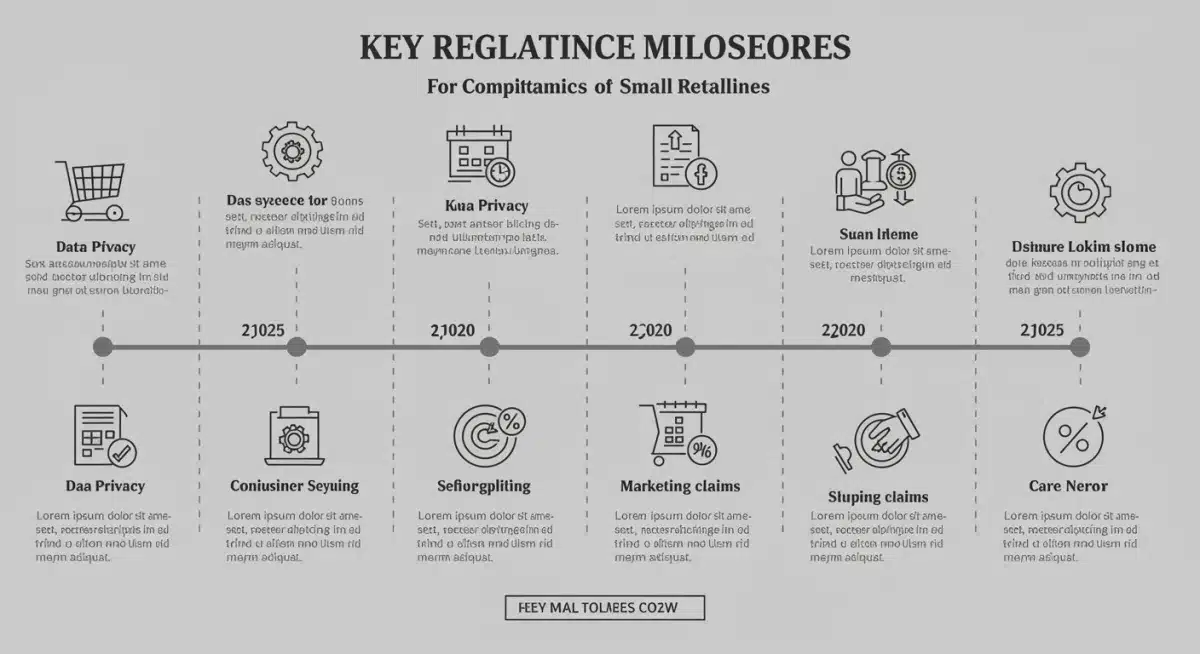
The countdown to Q2 2025 is on, and small retailers must use this time wisely to prepare for the new FTC regulations. A structured timeline and comprehensive checklist can help break down the seemingly daunting task into manageable steps, ensuring a smooth transition and full compliance. Early preparation is key to avoiding last-minute rushes and potential oversights.
Start by designating a compliance officer or team within your business, even if it’s just one dedicated individual. This person will be responsible for overseeing the entire compliance process, from information gathering to implementation and ongoing monitoring. Without clear ownership, tasks can fall through the cracks.
Essential preparation checklist
Your preparation should involve a phased approach, tackling different aspects of your business over time. Don’t try to change everything at once; instead, prioritize based on the most significant impacts on your operations.
- By Q4 2024:
- Identify all new FTC regulations relevant to your business.
- Conduct an initial assessment of current practices against new requirements.
- Allocate budget and resources for compliance efforts.
- By Q1 2025:
- Update privacy policies, terms of service, and website disclaimers.
- Implement necessary technological upgrades for data security and consent management.
- Begin internal training for all relevant staff members.
- By Q2 2025 (Deadline):
- Ensure all marketing materials and advertising campaigns are fully compliant.
- Verify pricing transparency across all sales channels.
- Conduct a final compliance review and establish ongoing monitoring procedures.
By following a clear timeline and utilizing a detailed checklist, small retailers can systematically address the new FTC Regulations, turning a potential compliance headache into a strategic advantage for their business.
| Key Compliance Area | Brief Description for Retailers |
|---|---|
| Data Privacy | Stricter rules for collecting, storing, and using customer data; explicit consent required. |
| Pricing Transparency | Clear display of all costs, including hidden fees, before purchase; no misleading discounts. |
| Advertising Accuracy | All product claims must be truthful and substantiated with evidence. |
| Subscription Services | Clear guidelines for auto-renewal and cancellation processes for recurring services. |
Frequently Asked Questions About FTC Regulations 2025
The main areas include enhanced consumer data protection, stricter rules on pricing and advertising transparency, and clearer guidelines for subscription services. These aim to prevent deceptive practices and ensure fair treatment for consumers across all retail channels, both online and physical.
To ensure compliance, small retailers should update their privacy policies, obtain explicit consent for data collection, implement robust cybersecurity measures, and regularly train employees on data handling protocols. Secure storage and transparent usage of customer information are paramount.
Deceptive advertising includes any misleading claims about product benefits, performance, or pricing. All advertising statements must be truthful, substantiated by evidence, and clearly communicate the actual cost and conditions of a product or service to the consumer.
Non-compliance can lead to significant financial fines, legal investigations, and severe damage to a retailer’s reputation. These consequences can be detrimental to a small business, highlighting the importance of proactive and thorough preparation for the Q2 2025 deadline.
Retailers can consult the official FTC website for detailed guidelines, seek advice from legal professionals specializing in business law, and utilize resources from small business associations. Industry-specific trade groups often provide tailored compliance information and support.
Conclusion
The upcoming FTC Regulations by Q2 2025 represent a critical juncture for small retailers across the United States. While the changes demand careful attention and adaptation, they also offer an opportunity to reinforce consumer trust and build more resilient business practices. By prioritizing data privacy, ensuring pricing and advertising transparency, and implementing a robust compliance strategy, small businesses can not only navigate this new regulatory landscape successfully but also emerge stronger, more credible, and better positioned for future growth in an ever-evolving marketplace.