Cold Chain Logistics 2025: 99% Product Integrity for Perishables

Achieving 99% product integrity in cold chain logistics by 2025 demands cutting-edge technology, stringent protocols, and seamless integration across the entire supply network for perishable goods.
The intricate world of supply chains is constantly evolving, but few sectors face challenges as critical as the transportation and storage of temperature-sensitive goods. By 2025, the goal of achieving a 99% product integrity rate within cold chain logistics 2025 is not just ambitious; it’s an imperative driven by consumer demand, regulatory pressures, and technological advancements. This article delves into the strategies, innovations, and operational shifts necessary to meet this demanding benchmark, ensuring that everything from pharmaceuticals to fresh produce arrives in optimal condition.
The evolving landscape of cold chain logistics
The cold chain industry is undergoing a profound transformation, propelled by global health crises, increasing demand for fresh and organic products, and the rapid expansion of e-commerce. These factors collectively necessitate a more resilient, efficient, and transparent cold chain infrastructure than ever before. The traditional linear model is giving way to a complex, interconnected ecosystem.
Meeting the 99% product integrity target by 2025 requires a holistic approach that addresses every touchpoint in the cold chain. This includes not only the physical transportation and storage but also the data flow, regulatory compliance, and human element. The stakes are incredibly high, with product spoilage leading to significant financial losses, reputational damage, and, most importantly, potential health risks to consumers.
Technological acceleration and data integration
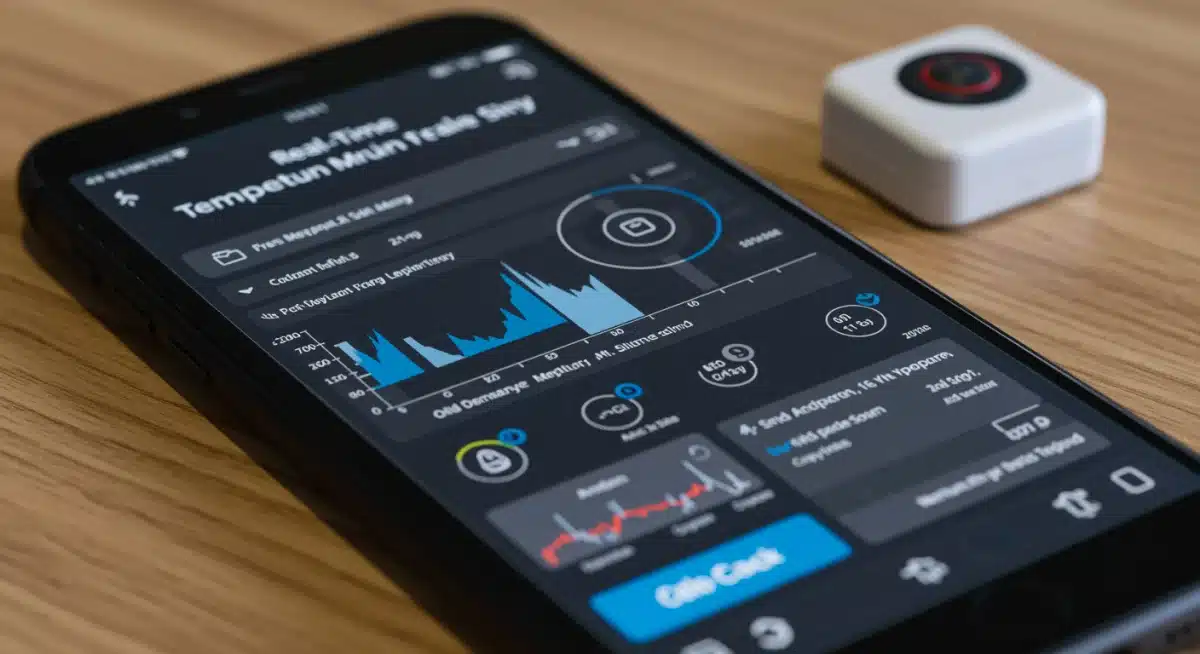
Technology is at the heart of this evolution, offering solutions that were once considered futuristic. Real-time monitoring, predictive analytics, and automation are no longer luxuries but essential tools for maintaining temperature control and product quality. Integrating these technologies across the supply chain creates a single, unified view, enabling proactive decision-making.
- IoT sensors: These devices provide continuous data on temperature, humidity, and location, transmitting information wirelessly to central platforms.
- Cloud-based platforms: Centralized data storage and analytics allow for comprehensive oversight and immediate alerts when deviations occur.
- AI and machine learning: Predictive models can anticipate potential risks, such as equipment failure or route delays, before they impact product integrity.
The integration of these technologies ensures that every stakeholder, from the grower to the retailer, has access to critical information. This transparency fosters greater accountability and allows for rapid intervention, significantly reducing the likelihood of product compromise.
Precision temperature control: beyond basic refrigeration
Achieving 99% product integrity demands more than just keeping things cold; it requires precision temperature control tailored to the specific needs of each perishable item. Different products have varying optimal temperature ranges, and even slight fluctuations can lead to degradation. The focus is shifting from broad temperature zones to micro-environments.
This granular approach involves advanced refrigeration systems, specialized packaging, and climate-controlled transportation units that can maintain specific conditions. The goal is to eliminate temperature excursions entirely, safeguarding the quality and efficacy of sensitive goods throughout their journey.
Advanced cooling technologies
Innovations in cooling technology are playing a crucial role in enhancing precision. These advancements are designed to be more energy-efficient and offer greater control, contributing to both product integrity and sustainability goals.
- Phase change materials (PCMs): These materials absorb and release latent heat to maintain a constant temperature for extended periods, ideal for last-mile delivery.
- Cryogenic freezing: Using liquid nitrogen or carbon dioxide, this method rapidly freezes products, preserving their cellular structure and extending shelf life.
- Vacuum insulation panels (VIPs): Offering superior thermal performance, VIPs are used in specialized containers to minimize heat transfer.
Beyond the technology itself, the operational protocols surrounding temperature control are equally vital. Regular calibration of sensors, stringent maintenance schedules for refrigeration units, and continuous training for personnel are non-negotiable elements in achieving high integrity rates.
Enhanced visibility and traceability
In the quest for 99% product integrity, knowing where a product is and its condition at any given moment is paramount. Enhanced visibility and traceability systems provide an unbroken chain of custody, offering peace of mind to both businesses and consumers. These systems leverage a combination of hardware and software to track products from origin to destination.
The ability to trace products back to their source not only helps in identifying points of failure but also significantly aids in recall management, ensuring that compromised goods can be removed from the market swiftly and efficiently. This level of transparency builds trust and reinforces brand reputation.
Blockchain and digital ledgers
Blockchain technology is emerging as a powerful tool for enhancing traceability within the cold chain. Its decentralized and immutable nature makes it ideal for recording every transaction and condition update, creating a secure and transparent ledger.
- Secure data records: Each entry on the blockchain is timestamped and tamper-proof, providing an unalterable history of the product’s journey.
- Smart contracts: Automated agreements can trigger actions, such as payments or alerts, when predefined conditions are met (e.g., temperature staying within range).
- Reduced fraud: The transparency of blockchain helps in authenticating products and preventing counterfeiting, especially critical for pharmaceuticals.
Implementing these advanced traceability solutions requires collaboration among all supply chain partners. Standardized data formats and interoperable systems are essential to ensure seamless information exchange and a truly comprehensive view of product movement and condition.
Automation and robotics in cold chain operations
The labor-intensive nature of traditional cold chain operations presents numerous challenges, especially in controlled environments. Automation and robotics are transforming warehouses and distribution centers, improving efficiency, accuracy, and safety while minimizing human error and exposure to extreme temperatures. These advancements are critical for scaling operations while maintaining high integrity standards.
From automated storage and retrieval systems (AS/RS) to robotic forklifts and drones for inventory management, these technologies are streamlining processes. They ensure faster throughput, reduce product damage, and optimize space utilization, all contributing to a more robust and reliable cold chain.
Key automated solutions
Robotic solutions are becoming increasingly sophisticated, capable of handling a wide range of tasks within cold storage facilities. Their precision and tireless operation are invaluable for maintaining consistent conditions and preventing product mishandling.
- Automated guided vehicles (AGVs): These vehicles transport goods autonomously within warehouses, reducing manual handling and labor costs.
- Robotic picking systems: Robots can accurately pick and pack orders in refrigerated environments, minimizing human presence in cold areas.
- Automated sorting systems: High-speed sorting ensures that products are directed to the correct outbound lanes efficiently, reducing dwell times.
The integration of automation requires careful planning and significant initial investment, but the long-term benefits in terms of operational efficiency, reduced waste, and enhanced product integrity are substantial. It’s a strategic move towards a more future-proof cold chain.
Risk management and compliance in a complex environment
Operating within cold chain logistics 2025 demands a robust approach to risk management and strict adherence to a myriad of regulatory requirements. Perishable goods, particularly pharmaceuticals and certain food items, are subject to stringent regulations designed to protect public health. Any deviation can lead to severe penalties, product recalls, and erosion of public trust.
Effective risk management involves identifying potential threats, implementing preventative measures, and having contingency plans in place for unexpected events. This proactive stance is essential for maintaining the target 99% product integrity rate, even in the face of unforeseen challenges.
Navigating regulatory frameworks
Compliance is a continuous process, requiring constant monitoring and adaptation to evolving standards. Staying informed about local and international regulations is crucial for businesses operating in the cold chain sector.
- FDA regulations: For food and pharmaceuticals, the FDA sets strict guidelines for storage, transportation, and handling to ensure safety and efficacy.
- USDA standards: Pertaining to agricultural products, these standards ensure quality and prevent the spread of diseases.
- International agreements: For global supply chains, adherence to international standards like those from the WHO or IATA is critical.
Developing a comprehensive risk management strategy involves not only understanding these regulations but also integrating them into every operational procedure. Regular audits, employee training, and a culture of compliance are fundamental to mitigating risks and ensuring product integrity.
Sustainability and efficiency in cold chain operations
As the cold chain industry strives for higher product integrity, there’s an increasing emphasis on sustainability and operational efficiency. The energy consumption associated with refrigeration and transportation is substantial, making it a key area for innovation. Balancing the need for precise temperature control with environmental responsibility is a growing challenge.
Achieving a 99% product integrity rate cannot come at the expense of environmental stewardship. Sustainable practices not only reduce the carbon footprint but also often lead to cost savings and improved public perception, making them a win-win for businesses.
Green initiatives and energy optimization
Many cold chain operators are adopting green technologies and practices to reduce their environmental impact. These initiatives range from optimizing transportation routes to investing in renewable energy sources for facilities.
- Eco-friendly refrigerants: Transitioning to refrigerants with lower global warming potential (GWP) is a significant step.
- Route optimization software: Minimizing mileage and fuel consumption through intelligent route planning.
- Renewable energy sources: Utilizing solar panels or wind power for cold storage facilities to reduce reliance on fossil fuels.
The pursuit of sustainability in cold chain logistics also involves reducing waste, both in terms of energy and spoiled products. By improving efficiency and product integrity, companies can contribute to a more sustainable future while simultaneously enhancing their bottom line. This integrated approach is essential for the long-term viability of the industry.
| Key Aspect | Impact on 99% Integrity |
|---|---|
| Advanced IoT & AI | Enables real-time monitoring and predictive analytics, minimizing temperature excursions. |
| Precision Temperature Control | Maintains specific micro-environments for diverse perishables, preventing degradation. |
| Blockchain Traceability | Provides immutable, transparent records for end-to-end product journey and recall efficiency. |
| Automation & Robotics | Increases efficiency, reduces human error, and optimizes handling in cold storage facilities. |
Frequently asked questions about cold chain integrity
The main challenge is consistently maintaining precise temperature control across diverse product types and complex global routes, especially with increasing demand and stringent regulatory requirements, to achieve near-perfect product integrity without compromising sustainability or cost-efficiency.
IoT sensors provide real-time data on critical environmental conditions such as temperature, humidity, and location. This continuous monitoring allows for immediate detection of any deviations, enabling prompt corrective actions and preventing spoilage or efficacy loss in sensitive products.
Blockchain creates an immutable and transparent digital ledger of every step a product takes, from origin to destination. This enhances trust, reduces fraud, and provides undeniable proof of compliance and condition, which is crucial for high-value and sensitive goods like pharmaceuticals.
Automation minimizes human error and reduces exposure of products to uncontrolled environments. Robotic systems can handle, sort, and store goods with greater precision and speed in refrigerated settings, leading to fewer damages, increased efficiency, and consistent temperature maintenance.
Sustainability efforts, such as using eco-friendly refrigerants and optimizing routes, contribute to efficiency and cost reduction while minimizing environmental impact. By reducing waste and improving energy use, these practices indirectly support product integrity by fostering more robust and resilient operational frameworks.
Conclusion
The ambitious target of a 99% product integrity rate in cold chain logistics by 2025 is a testament to the industry’s commitment to quality, safety, and efficiency. Achieving this benchmark hinges on the strategic integration of advanced technologies like IoT, AI, and blockchain, coupled with sophisticated precision temperature control and widespread automation. Furthermore, a proactive approach to risk management, strict regulatory compliance, and a strong focus on sustainability are indispensable. As these elements converge, the future of cold chain logistics promises a more reliable, transparent, and resilient ecosystem, ultimately benefiting consumers and businesses alike by ensuring that perishable goods arrive exactly as intended.