Autonomous stores are poised to deliver a crucial 10% efficiency gain for US retailers by 2025, leveraging cutting-edge technology to revolutionize operations and enhance customer experiences.
The retail sector in the United States is on the cusp of a profound transformation. The emergence and rapid adoption of autonomous stores efficiency are not merely a futuristic concept but a tangible reality promising significant operational improvements. This shift demands that retailers understand the underlying technologies and strategic implications to secure a substantial competitive advantage, aiming for a remarkable 10% efficiency gain by 2025.
Understanding the Autonomous Store Revolution
Autonomous stores represent a paradigm shift in retail, moving beyond traditional models to fully automated environments. These stores leverage a combination of artificial intelligence (AI), computer vision, sensor fusion, and advanced robotics to create a seamless, cashier-less shopping experience. The core idea is to eliminate friction points, reduce operational overheads, and enhance customer satisfaction through innovative technology.
This revolution is driven by consumer demand for convenience and speed, coupled with retailers’ continuous pursuit of greater efficiency and cost reduction. Early adopters are already demonstrating the viability and profitability of these models, setting a new benchmark for retail operations.
Key Technologies Powering Autonomous Retail
Several sophisticated technologies converge to make autonomous stores a reality. Understanding these components is crucial for any retailer considering this transition.
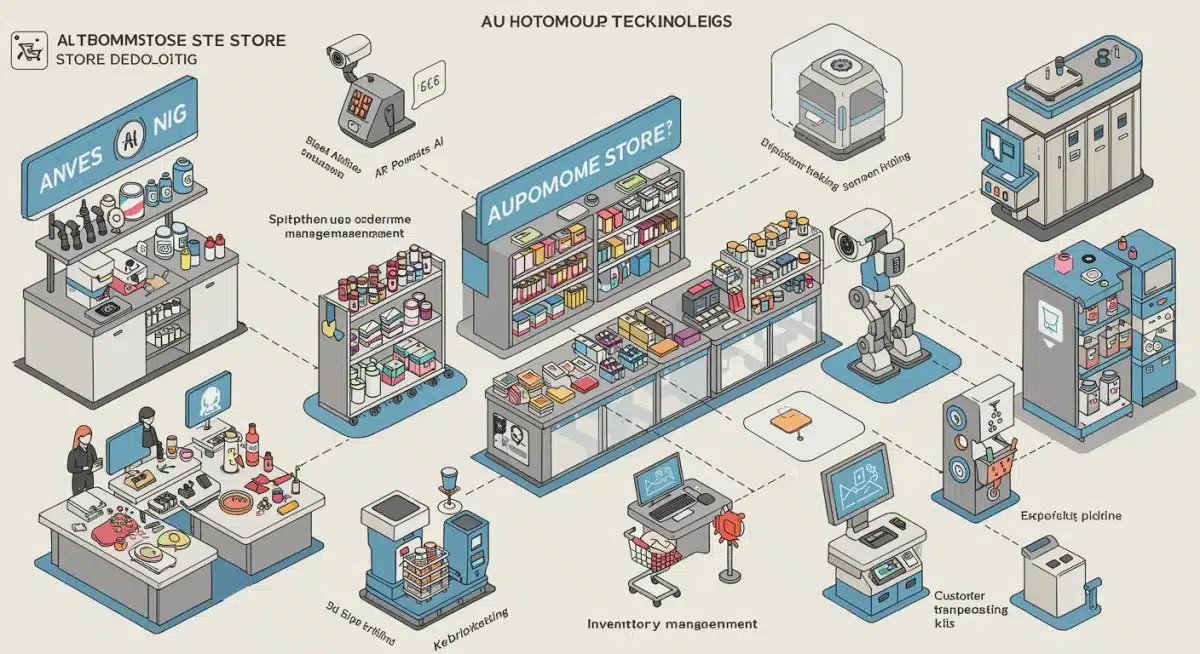
- Computer Vision: AI-powered cameras track customer movements and product interactions, identifying items picked up or put back.
- Sensor Fusion: A combination of shelf sensors, weight sensors, and other IoT devices accurately monitors inventory levels and customer selections.
- Artificial Intelligence (AI) and Machine Learning (ML): These technologies process vast amounts of data from sensors and cameras to manage inventory, personalize recommendations, and detect anomalies.
- Robotics: While not always front-facing, robots can handle tasks like inventory replenishment, cleaning, and security in the background, further boosting efficiency.
The integration of these technologies allows autonomous stores to operate with minimal human intervention, leading to significant reductions in labor costs and improved operational accuracy. This technological blend forms the backbone of the promised efficiency gains.
In essence, the autonomous store revolution is about creating a smarter, more responsive retail environment. It’s about moving from reactive problem-solving to proactive management, anticipating customer needs and optimizing store performance in real-time. This foundational understanding is the first step towards realizing the projected 10% efficiency gain.
Operational Efficiency: The 10% Gain Explained
The projected 10% efficiency gain by 2025 is not an arbitrary figure but a realistic target achievable through a multifaceted approach to automation. This gain stems from optimizing various aspects of retail operations, from labor management to inventory control and loss prevention. Retailers can expect to see improvements across the board, translating into healthier profit margins and enhanced customer experiences.
One of the most immediate benefits is the reduction in labor costs. With automated checkout processes and streamlined inventory management, the need for traditional store associates is significantly reduced. This allows existing staff to be redeployed to higher-value tasks, such as customer service or merchandising, further enhancing the shopping experience.
Streamlining Inventory and Supply Chain
Autonomous systems provide unparalleled accuracy in inventory tracking. Real-time data on product movement ensures shelves are always stocked, minimizing out-of-stock situations and reducing waste. This precision extends to the supply chain, allowing for more accurate forecasting and more efficient ordering processes.
- Real-time Inventory Tracking: Sensors constantly monitor product levels, triggering alerts for replenishment.
- Reduced Shrinkage: AI and computer vision significantly reduce theft by accurately tracking every item.
- Optimized Ordering: Data-driven insights lead to more precise purchasing, minimizing overstocking and expired goods.
This level of inventory control not only saves money but also improves customer satisfaction by ensuring product availability. The ability to manage inventory with such granularity is a cornerstone of the 10% efficiency target.
Beyond inventory, autonomous stores offer improved store layout optimization. By analyzing customer traffic patterns and purchase behaviors, AI can suggest optimal product placement and store configurations that maximize sales and minimize shopping time. This data-driven approach to store management ensures that every square foot of retail space is utilized to its full potential, contributing directly to operational efficiency.
Enhanced Customer Experience and Personalization
While efficiency often focuses on internal operations, autonomous stores significantly elevate the customer experience. The absence of checkout lines, personalized shopping journeys, and always-available inventory contribute to a frictionless and enjoyable visit. This customer-centric approach is vital for retaining loyalty and attracting new shoppers in a competitive market.
Imagine walking into a store, picking up what you need, and simply walking out. This level of convenience is a major draw for today’s time-conscious consumers. Autonomous technology makes this possible, removing one of the most frustrating aspects of traditional retail: waiting in line.
Personalized Shopping Journeys
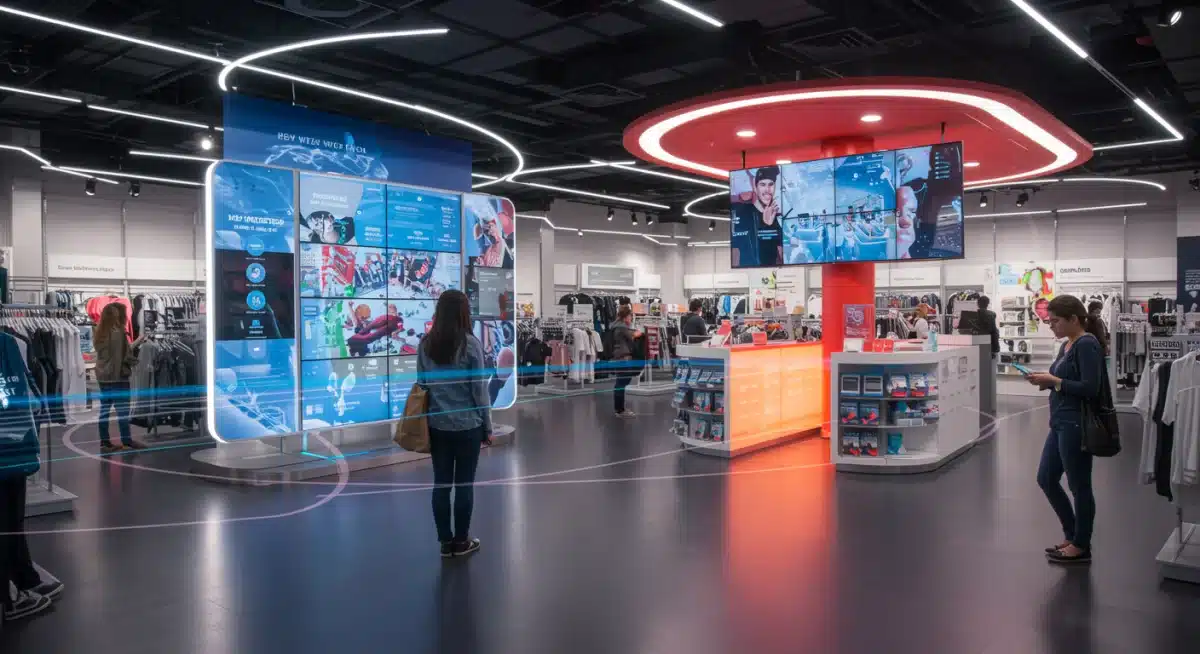
AI and machine learning algorithms analyze past purchase data and in-store behavior to offer highly personalized recommendations. Digital displays can showcase promotions relevant to the individual shopper, or even guide them to specific items based on their shopping history.
- Tailored Recommendations: AI suggests products based on individual preferences and past purchases.
- Frictionless Checkout: No queues, no scanning, just grab and go, saving valuable customer time.
- Optimized Product Discovery: Smart signage and in-app guidance help customers find what they need quickly.
This level of personalization not only enhances the shopping journey but also drives increased sales and customer loyalty. When customers feel understood and valued, they are more likely to return. The integration of advanced technology directly translates to a superior and more engaging shopping environment, contributing to the overall efficiency by boosting sales and reducing customer churn.
Addressing Challenges and Implementation Strategies
While the benefits of autonomous stores are compelling, implementing them is not without its challenges. Retailers must carefully consider the initial investment, technological integration complexities, and potential consumer apprehension. A well-defined strategy is crucial for a successful transition and to truly achieve the targeted 10% efficiency gain.
The upfront cost of installing advanced sensor systems, AI infrastructure, and computer vision technology can be substantial. However, these costs should be viewed as an investment that will yield significant returns in the long run through reduced operational expenses and increased sales.
Overcoming Implementation Hurdles
Successful deployment requires a phased approach, starting with pilot programs and gradually scaling up. Collaboration with technology providers is essential to ensure seamless integration and ongoing support.
- High Initial Investment: Plan for significant capital expenditure, offset by long-term savings.
- Data Security and Privacy Concerns: Implement robust data protection measures to build customer trust.
- Technological Integration: Ensure seamless interoperability between new autonomous systems and existing retail infrastructure.
- Consumer Adoption: Educate customers on how the new system works and highlight its benefits to alleviate apprehension.
Moreover, addressing potential job displacement concerns is important. While some roles may change, new opportunities in tech support, data analysis, and customer experience enhancement will emerge. Retailers should focus on retraining and upskilling their workforce to adapt to these new roles.
Ultimately, a successful implementation strategy involves careful planning, strategic partnerships, and a clear communication plan to both employees and customers. By proactively addressing these challenges, US retailers can pave the way for a smooth transition to autonomous operations and unlock the full potential of efficiency gains.
The Competitive Edge for US Retailers
In an increasingly competitive retail landscape, adopting autonomous store technology provides a significant competitive edge. Early movers can capture market share, differentiate their brand, and set new standards for customer experience. This proactive approach is not just about keeping up with trends but about leading the future of retail in the US.
The ability to offer a truly seamless and personalized shopping experience can be a powerful differentiator. Consumers are increasingly valuing convenience and innovation, and autonomous stores deliver on both fronts. This can attract a new demographic of tech-savvy shoppers and strengthen loyalty among existing customers.
Differentiating Through Innovation
- Brand Differentiation: Position your brand as a leader in retail innovation.
- Market Share Growth: Attract new customers seeking modern, convenient shopping experiences.
- Data-Driven Insights: Leverage extensive data to understand consumer behavior better than competitors.
Furthermore, the operational efficiencies gained directly impact the bottom line, allowing retailers to reinvest in other areas of their business, such as product development or marketing. This virtuous cycle of innovation and efficiency fuels sustainable growth and long-term success.
For US retailers, the move towards autonomous stores is not merely an option but a strategic imperative. Those who embrace this technology early will be best positioned to thrive in the evolving retail environment, securing their place as industry leaders and realizing the full potential of a 10% efficiency gain.
Future Outlook: Beyond 2025 for Autonomous Retail
The journey of autonomous retail doesn’t end in 2025 with a 10% efficiency gain; it’s merely the beginning. The continuous evolution of AI, robotics, and IoT will unlock even greater possibilities, pushing the boundaries of what a retail store can be. Retailers need to view this as an ongoing process of innovation and adaptation.
Looking beyond the immediate efficiency targets, future autonomous stores will likely integrate even more sophisticated features. Imagine stores that can predict your needs before you even realize them, or environments that dynamically change layouts based on real-time customer traffic and inventory levels. The potential is vast.
Emerging Technologies and Trends
Several emerging technologies are set to further enhance the capabilities of autonomous retail, driving even greater efficiency and personalization in the years to come.
- Edge Computing: Processing data closer to the source (the store) for faster decision-making and reduced latency.
- Advanced Robotics: More versatile robots capable of complex tasks like restocking shelves with irregular items.
- Hyper-Personalization: AI systems offering real-time, ultra-specific recommendations based on biometric data and mood analysis (with strict privacy controls).
- Sustainable Operations: Autonomous systems optimizing energy consumption and waste reduction through smart management.
The focus will increasingly shift towards creating hyper-personalized, ultra-efficient, and sustainable retail ecosystems. The data collected from autonomous operations will become an even more valuable asset, informing everything from product development to marketing strategies.
For US retailers, staying abreast of these future trends is crucial. Investing in flexible, scalable autonomous solutions today will ensure they are well-prepared for the innovations of tomorrow, securing long-term competitive advantage and continuing to redefine the shopping experience for consumers.
| Key Aspect | Description for US Retailers |
|---|---|
| Efficiency Goal | Target a 10% operational efficiency gain by 2025 through automation. |
| Core Technologies | Leverage AI, computer vision, sensor fusion, and robotics for automation. |
| Customer Experience | Provide frictionless, personalized shopping with no checkout lines. |
| Strategic Implementation | Address investment, data privacy, and integration with a phased approach. |
Frequently Asked Questions About Autonomous Stores
An autonomous store is a retail environment that operates without traditional checkout lines or cashiers. It uses AI, computer vision, and sensors to track items customers pick up, automatically charging their accounts when they exit. This technology creates a seamless and efficient shopping experience.
US retailers can expect significant benefits, including reduced labor costs, improved inventory management through real-time tracking, enhanced loss prevention, and a superior, frictionless customer experience. These factors collectively contribute to the projected 10% efficiency gain by 2025.
Challenges include the high initial investment in technology, ensuring data security and customer privacy, integrating new systems with existing infrastructure, and managing potential consumer apprehension. A phased implementation and clear communication strategy are vital for success.
Autonomous stores offer a highly convenient shopping experience by eliminating checkout lines and allowing customers to simply grab items and go. They also provide personalized recommendations and optimized product discovery, making shopping faster, more enjoyable, and tailored to individual preferences.
Beyond 2025, autonomous retail is projected to integrate advanced robotics for complex tasks, leverage edge computing for faster data processing, and offer hyper-personalization through more sophisticated AI. The focus will be on creating even more efficient, responsive, and sustainable retail ecosystems.
Conclusion
The trajectory of retail in the US is undeniably moving towards greater autonomy. The promise of a 10% efficiency gain by 2025 through the adoption of autonomous store technology is not just an aspiration but a strategic imperative for retailers aiming to thrive. By embracing AI, computer vision, and advanced sensors, businesses can unlock unparalleled operational efficiencies, significantly reduce costs, and deliver a superior, personalized customer experience that sets them apart in a competitive market. The future of retail is smart, seamless, and undeniably autonomous.