Personalized Marketing for Small Retailers: Boost Engagement 12% by 2025

Personalized marketing is crucial for small retailers, offering a direct path to significantly increase customer engagement and drive sales by tailoring experiences to individual preferences and behaviors.
In today’s competitive retail landscape, the ability to connect with customers on a deeper level is no longer a luxury but a necessity. This is precisely where the power of personalized marketing for small retailers: achieving a 12% customer engagement increase in 2025 becomes a game-changer. For small businesses, understanding individual customer needs and preferences can transform casual browsers into loyal advocates, directly impacting their bottom line and ensuring sustained growth.
Understanding personalized marketing in a small business context
Personalized marketing, at its core, involves tailoring marketing messages, products, and experiences to individual customers. For small retailers, this doesn’t necessarily mean complex AI systems or massive data warehouses. Instead, it often translates into leveraging existing customer relationships and readily available data to create more relevant and impactful interactions.
The beauty of personalized marketing for smaller operations lies in its scalability and the inherent advantage of often knowing customers on a first-name basis. This intimate understanding allows for genuine, human-centric personalization that larger corporations struggle to replicate. It’s about remembering a customer’s favorite product, celebrating their birthday with a special offer, or recommending items based on their past purchases and browsing habits.
The foundational elements of personalized marketing
Building a personalized marketing strategy begins with a few key components. Data collection, while sounding daunting, can start simply with point-of-sale systems, online sign-ups, and direct conversations. This data then informs how you segment your audience and craft targeted messages.
- Customer data collection: Gather information on purchase history, browsing behavior, demographics, and preferences.
- Audience segmentation: Group customers based on shared characteristics or behaviors to create more relevant campaigns.
- Content customization: Adapt marketing messages, product recommendations, and offers to fit specific customer segments.
- Channel optimization: Deliver personalized content through the most effective channels for each customer, whether it’s email, SMS, or in-store interactions.
Ultimately, personalized marketing for small retailers is about fostering stronger relationships. When customers feel understood and valued, their engagement naturally increases, leading to higher conversion rates and greater customer lifetime value. It’s an investment in the long-term health and profitability of the business.
The tangible benefits: why personalization drives engagement
The promise of a 12% customer engagement increase by 2025 isn’t an arbitrary figure; it’s a realistic goal rooted in the proven efficacy of personalized marketing. When customers receive messages or offers that resonate with their individual needs, they are far more likely to open, click, and convert. This heightened relevance cuts through the noise of generic advertising, making your small business stand out.
Beyond direct sales, personalized interactions build trust and loyalty. A customer who feels recognized and understood is more likely to return, recommend your business to others, and forgive occasional service hiccups. This emotional connection is invaluable, particularly for small retailers who thrive on community and repeat business.
Measuring engagement: key metrics for small retailers
To achieve and track that 12% increase, small retailers need to focus on specific engagement metrics. These include email open rates, click-through rates, website visit frequency, average order value, and customer retention rates. Monitoring these indicators will provide clear insights into the effectiveness of personalization efforts.
- Email open rates: Higher rates indicate that subject lines and sender names are relevant to the recipient.
- Click-through rates (CTR): A strong CTR suggests that the content within your personalized messages is compelling.
- Website visit frequency: Increased repeat visits show sustained interest and loyalty.
- Average order value (AOV): Personalized recommendations can lead customers to purchase more per transaction.
- Customer retention rate: A key indicator of long-term loyalty, directly influenced by personalized experiences.
The cumulative effect of these improvements contributes to the overall engagement increase. Personalized marketing isn’t just about making a sale; it’s about creating a holistic, positive customer journey that encourages them to stay connected with your brand. This continuous interaction fuels sustained growth and competitive advantage.
Strategies for effective data collection and segmentation
The foundation of any successful personalized marketing campaign is robust data. For small retailers, this doesn’t require sophisticated data science teams, but rather a strategic approach to gathering and utilizing customer information. Starting with what you already have – sales records, loyalty programs, and direct customer feedback – is a powerful first step.
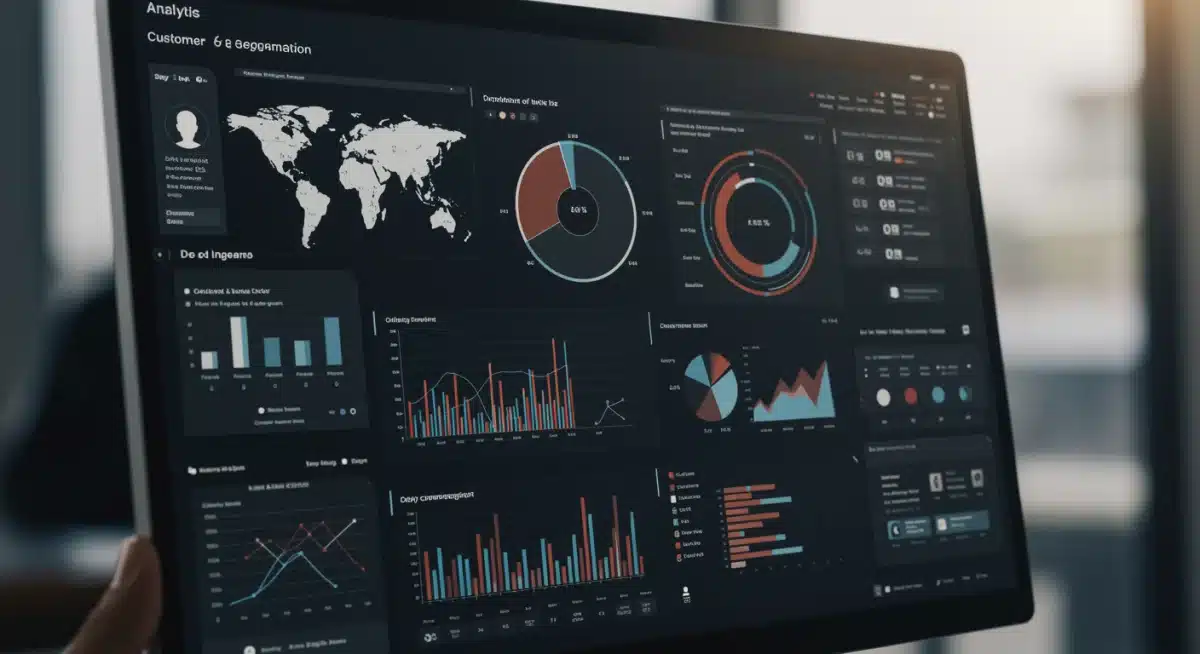
Beyond transactional data, consider collecting behavioral data from your website or social media interactions. Understanding how customers browse, what products they view, and even what they abandon in their carts provides rich insights. This information allows for more granular segmentation, moving beyond broad demographics to precise interest-based groups.
Leveraging existing tools and platforms
Many small businesses already use tools that can aid in data collection. E-commerce platforms often have built-in analytics. Email marketing services track engagement. Even simple customer surveys can provide qualitative data that informs personalization efforts. The key is to consolidate this information and use it to build comprehensive customer profiles.
- Point-of-sale (POS) systems: Capture purchase history and frequency.
- E-commerce analytics: Track website behavior, product views, and cart abandonment.
- Email marketing platforms: Monitor open rates, clicks, and subscriber preferences.
- Customer loyalty programs: Gather detailed demographic and preference data in exchange for rewards.
Once data is collected, effective segmentation becomes paramount. Instead of one-size-fits-all campaigns, segment customers based on purchasing habits (e.g., frequent buyers, lapsed customers), product interests, geographic location, or even their stage in the customer journey. This targeted approach ensures that every marketing dollar is spent more efficiently and effectively, driving the desired engagement increase.
Crafting compelling personalized messages and offers
With data and segmentation in place, the next step is to create marketing messages and offers that truly resonate. This is where the art of personalization comes into play, transforming raw data into meaningful customer experiences. Generic promotions are easily ignored, but a message that speaks directly to a customer’s known preferences or past behaviors grabs their attention.
Think beyond just adding a customer’s name to an email. Consider personalizing product recommendations based on their purchase history or browsing patterns. Offer discounts on items they’ve shown interest in but haven’t yet purchased. Send birthday greetings with a special gift. These small, thoughtful gestures make a big impact on how customers perceive your brand.
Examples of effective personalized communication
Personalized messaging can take many forms, from email to in-store interactions. The goal is always to make the customer feel seen and valued. This could mean a follow-up email after a purchase, suggesting complementary products, or an SMS alert about a sale on their favorite brand.
- Personalized product recommendations: “Customers who bought X also liked Y.”
- Abandoned cart reminders: “You left something behind!” with a gentle reminder and perhaps a small incentive.
- Birthday/anniversary offers: Special discounts or freebies to celebrate customer milestones.
- Exclusive content or early access: Reward loyal customers with sneak peeks or special privileges.
The key is consistency and relevance. Ensure that every personalized interaction adds value to the customer’s experience rather than feeling intrusive. When done right, these customized messages significantly boost engagement, making customers feel more connected to your small retail business and eager to continue their relationship.
Implementing personalization: practical steps for small retailers
Embarking on a personalized marketing journey doesn’t have to be overwhelming for small retailers. The most effective approach is to start small, leverage existing resources, and scale up as you gain confidence and see results. Prioritize strategies that offer the highest impact with the least amount of initial investment.
Begin by identifying your most valuable customer segments and focus your personalization efforts there. This might be your most frequent buyers, those who spend the most, or new customers you want to convert into regulars. Tailoring experiences for these groups first will yield quicker, more noticeable results, providing the motivation to expand your efforts.
Tools and technologies for streamlining personalization
While advanced AI might be out of reach for many small businesses, numerous affordable and user-friendly tools can facilitate personalization. Many e-commerce platforms offer basic segmentation and recommendation features. Email marketing services allow for dynamic content insertion and automated campaigns. Even CRM (Customer Relationship Management) systems designed for small businesses can help organize customer data for personalized outreach.
- Email marketing automation: Platforms like Mailchimp or Constant Contact offer segmentation and automated personalized campaigns.
- E-commerce platform features: Shopify, WooCommerce, and others often include recommendation engines and customer tagging.
- Small business CRMs: Tools like HubSpot for Small Business or Zoho CRM help manage customer interactions and data.
- Website personalization plugins: Add-ons that can dynamically change website content based on visitor behavior.
Remember that the goal is not to implement every possible personalization tactic at once. Instead, focus on a few key areas where you can make a significant difference. Educate your team on the importance of personalization and how to use the chosen tools effectively. Consistent effort and a customer-centric mindset will be the driving force behind achieving that 12% engagement increase by 2025.
Overcoming challenges and measuring success
Implementing personalized marketing is not without its challenges. Small retailers often face limitations in terms of budget, time, and technical expertise. Data privacy concerns are also paramount, requiring transparent practices and adherence to regulations. However, these hurdles can be overcome with careful planning and a focus on ethical data use.
The most significant challenge is often knowing where to start and how to measure the real impact of personalization. It’s essential to set clear, measurable goals from the outset, such as specific increases in email open rates, repeat purchases, or overall customer lifetime value. Regular review of these metrics will provide valuable insights and allow for continuous optimization.
Strategies for continuous improvement and adaptation
Personalized marketing is an ongoing process, not a one-time project. Customer preferences evolve, new technologies emerge, and market conditions shift. Small retailers must remain agile, continuously testing different personalization tactics, analyzing results, and adapting their strategies accordingly. A/B testing various personalized messages, offers, and delivery channels can help identify what resonates most with your audience.
- Start small and iterate: Don’t try to personalize everything at once; focus on a few key areas.
- Monitor key metrics regularly: Track engagement rates, conversion rates, and customer feedback.
- A/B test your campaigns: Experiment with different personalized messages and offers to see what performs best.
- Solicit customer feedback: Directly ask customers what kind of personalization they find most valuable.
By embracing a culture of continuous learning and adaptation, small retailers can fine-tune their personalized marketing efforts, ensuring they not only achieve but exceed their engagement goals. The journey to a 12% increase in customer engagement by 2025 is an achievable one, built on strategic data use, thoughtful communication, and unwavering dedication to the customer experience.
| Key Aspect | Description |
|---|---|
| Core Concept | Tailoring marketing messages and experiences to individual customer preferences. |
| Engagement Target | Achieve a 12% increase in customer engagement for small retailers by 2025. |
| Key Strategy | Effective data collection, customer segmentation, and customized communication. |
| Benefits | Increased loyalty, higher conversion rates, and stronger customer relationships. |
Frequently asked questions about personalized marketing
Personalized marketing for small retailers involves tailoring marketing efforts, product recommendations, and customer interactions based on individual customer data like purchase history, browsing behavior, and stated preferences. It aims to create a unique and relevant experience for each customer, fostering stronger relationships and increasing engagement.
Small retailers can collect data through various methods, including point-of-sale systems, website analytics, email sign-ups, loyalty programs, and direct customer feedback. Leveraging existing e-commerce platforms and simple surveys can provide valuable insights into customer preferences without requiring extensive resources.
The key benefits include increased customer loyalty, higher conversion rates due to relevant offers, improved customer retention, and a stronger emotional connection with the brand. Personalized experiences make customers feel valued, cutting through generic marketing noise and encouraging repeat business.
Small businesses can utilize email marketing platforms (e.g., Mailchimp), built-in features of e-commerce platforms (e.g., Shopify’s recommendation engines), and small business CRM systems (e.g., HubSpot). These tools help automate segmentation, dynamic content, and personalized communication at an affordable cost.
Success can be measured by tracking metrics such as email open and click-through rates, website visit frequency, average order value, and customer retention rates. Analyzing these indicators provides clear evidence of increased customer engagement and the overall effectiveness of personalized marketing strategies.
Conclusion
The journey towards achieving a 12% customer engagement increase by 2025 through personalized marketing is not just a strategic goal; it’s a fundamental shift in how small retailers can connect with their audience. By understanding and valuing individual customer needs, small businesses can cultivate loyalty, drive sales, and build a resilient brand presence. Embracing data-driven insights, even on a small scale, and consistently delivering relevant, thoughtful interactions will empower retailers to thrive in an increasingly competitive market, proving that personalization is indeed the future of retail success.