Computer Vision in Retail Security: 2025 Strategy to Cut Theft by 18%
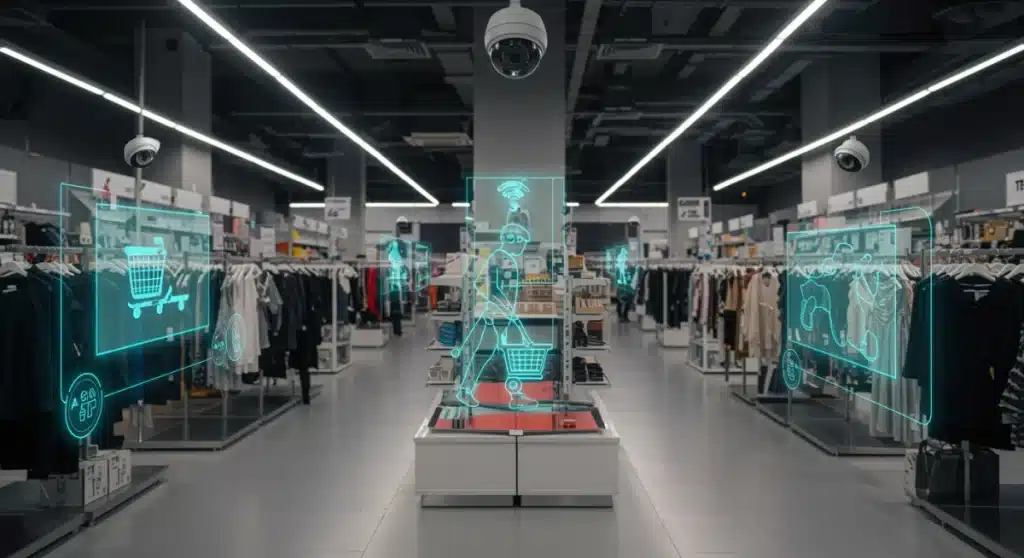
Implementing computer vision in retail security by 2025 is anticipated to strategically decrease theft by 18%, providing retailers with a powerful tool for proactive loss prevention and enhanced operational insights.
Retail theft remains a persistent challenge, eroding profits and impacting operational efficiency for businesses across the United States. However, the landscape of loss prevention is undergoing a significant transformation, driven by cutting-edge technological advancements. One such innovation, computer vision retail security, is emerging as a game-changer, promising a strategic reduction in theft by as much as 18% by 2025. This isn’t merely about surveillance; it’s about intelligent, proactive deterrence and detection, reshaping how retailers protect their assets and enhance the customer experience.
understanding the retail theft challenge
Retail theft, encompassing everything from shoplifting to organized retail crime and internal fraud, costs businesses billions annually. The traditional security measures, while foundational, often fall short in providing the real-time, granular insights needed to combat sophisticated criminal activities effectively. This persistent drain on resources necessitates a more intelligent and adaptive approach.
The financial impact of retail theft extends beyond lost merchandise. It includes the costs associated with security personnel, investigative resources, legal fees, and even increased insurance premiums. Moreover, the psychological impact on employees and the potential for a diminished customer experience can be substantial. Understanding the multifaceted nature of this challenge is the first step toward implementing truly effective countermeasures.
the evolving landscape of retail crime
Retail crime is not static; it constantly evolves, with criminals employing new tactics and technologies. Organized retail crime (ORC) groups, for example, often use sophisticated methods to bypass security, making detection difficult for human observers alone. This requires a security solution that can adapt and learn.
- Shoplifting: Often opportunistic, but can be systematic.
- Organized Retail Crime (ORC): Professional theft rings targeting high-value goods.
- Internal Theft: Employees stealing merchandise or manipulating systems.
- Return Fraud: Illegitimate returns of merchandise.
These varied forms of theft demand a comprehensive and intelligent security framework. Relying solely on human vigilance or basic CCTV monitoring is increasingly insufficient against these evolving threats. The sheer volume of data generated in a retail environment makes it impossible for humans to monitor every anomaly effectively, highlighting the need for automated assistance.
what is computer vision in retail security?
At its core, computer vision for retail security involves equipping cameras with the ability to ‘see’ and ‘understand’ their environment, much like humans do, but with far greater precision and consistency. This technology leverages artificial intelligence (AI) and machine learning (ML) algorithms to analyze video footage in real-time, identifying patterns, behaviors, and anomalies that might indicate theft or other security breaches.
Unlike traditional surveillance, which primarily records events for later review, computer vision systems are proactive. They can trigger alerts when suspicious activity is detected, allowing security personnel to intervene before a theft is completed. This shift from reactive investigation to proactive prevention is a fundamental change in retail security paradigms.
how computer vision works in practice
Computer vision systems are trained on vast datasets of images and videos to recognize specific objects, actions, and even nuanced human behaviors. In a retail setting, this means identifying items being concealed, individuals loitering suspiciously, or even unusual movements at checkout counters. The system continuously learns and refines its detection capabilities.
- Object Recognition: Identifying specific products, bags, or tools.
- Behavioral Analysis: Detecting unusual gestures, hurried movements, or concealment attempts.
- Facial Recognition: (Used cautiously and ethically) Identifying known offenders.
- Crowd Monitoring: Analyzing crowd density and flow for potential risks.
The integration of computer vision transforms passive surveillance cameras into intelligent sensors. These sensors can operate 24/7 without fatigue, providing an unwavering layer of protection. This technological leap allows retailers to move beyond merely documenting incidents to actively preventing them, significantly impacting loss prevention strategies.
the 2025 strategic vision: an 18% theft reduction target
The ambitious target of an 18% reduction in retail theft by 2025 through computer vision is not mere speculation; it’s a projection based on the rapid advancements in AI and the proven efficacy of early deployments. This strategic vision requires a multi-faceted approach, integrating technology with operational changes and employee training.
Achieving this goal means moving beyond pilot programs to widespread adoption. It implies a commitment from retailers to invest in these advanced systems and to integrate them seamlessly into their existing security infrastructure. The benefits, however, far outweigh the initial investment, offering a significant return through reduced losses and improved operational efficiency.
key pillars of the 2025 strategy
To realize the 18% reduction, retailers must focus on several critical areas. These include deploying high-definition cameras, investing in robust AI analytics platforms, ensuring proper integration with existing systems, and, crucially, training staff to work alongside these new technologies. The human element remains vital in responding to alerts and making informed decisions.
- Advanced Camera Deployment: Strategic placement and high-resolution imaging.
- AI-Powered Analytics: Sophisticated algorithms for real-time threat detection.
- Seamless Integration: Connecting computer vision with POS, access control, and alarm systems.
- Staff Training: Empowering security personnel to utilize the new tools effectively.
This holistic strategy ensures that computer vision is not just a standalone technology but a fully integrated component of a comprehensive security ecosystem. The synergy between technology and human expertise will be the driving force behind achieving the targeted theft reduction, creating a more secure and profitable retail environment.
benefits beyond theft prevention
While the primary aim of implementing computer vision in retail security is to decrease theft, the advantages extend far beyond loss prevention. These systems generate a wealth of data that can provide invaluable insights into customer behavior, store operations, and employee performance, leading to broader business improvements.
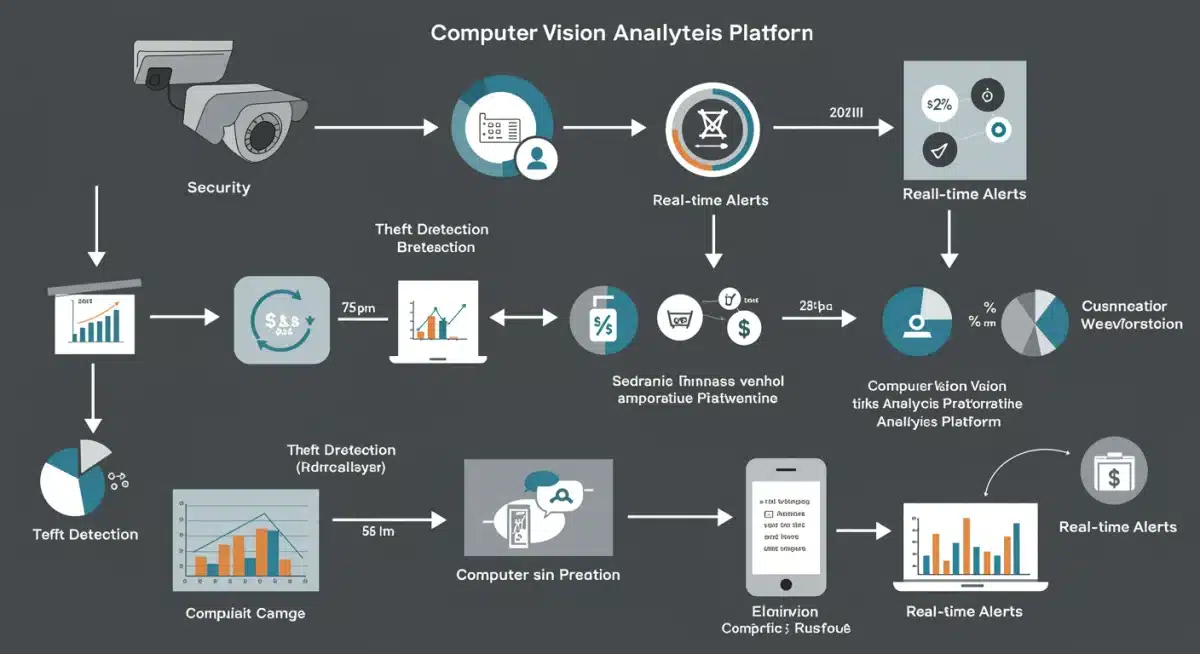
By analyzing traffic patterns, dwell times, and conversion rates, retailers can optimize store layouts, product placements, and staffing levels. This operational intelligence can lead to increased sales, improved customer satisfaction, and a more efficient use of resources. Thus, computer vision transforms from a security tool into a powerful business intelligence platform.
enhancing operational efficiency and customer experience
Computer vision can help identify bottlenecks in checkout lines, measure queue times, and even monitor cleanliness standards. This allows for proactive adjustments that improve the overall customer journey. A smoother, more enjoyable shopping experience can lead to increased loyalty and repeat business.
- Optimized Staffing: Adjusting employee presence based on real-time foot traffic.
- Improved Store Layout: Data-driven decisions on product placement and aisle design.
- Reduced Friction Points: Identifying and resolving areas causing customer frustration.
- Personalized Marketing: Tailoring offers based on observed customer behavior (with privacy considerations).
These operational enhancements contribute significantly to the bottom line, demonstrating that investment in computer vision is not just a cost for security, but an investment in overall business growth and customer satisfaction. The data-driven insights provided by these systems offer a competitive edge in a challenging retail landscape.
addressing ethical considerations and data privacy
As with any powerful technology, the implementation of computer vision in retail security raises important ethical and privacy concerns. Retailers must navigate these issues carefully, ensuring transparency, compliance with regulations, and a commitment to protecting customer and employee data. Building trust is paramount for successful adoption.
Regulations like GDPR and various state-level privacy laws in the United States, such as the California Consumer Privacy Act (CCPA), mandate strict guidelines for data collection and usage. Retailers must ensure their computer vision systems are designed and operated in full compliance with these laws, prioritizing individual rights and data security.
ensuring responsible deployment
Responsible deployment involves more than just legal compliance; it requires a proactive approach to ethical considerations. This includes clear signage informing customers about surveillance, anonymizing data where possible, and establishing strict access controls for video footage and analytical insights. Transparency fosters trust and mitigates potential backlash.
- Transparency: Clearly inform customers about the use of surveillance.
- Data Anonymization: Process data to remove personal identifiers where not needed.
- Access Control: Restrict who can view or access video footage and analytics.
- Compliance: Adhere to all relevant data privacy laws and regulations.
By proactively addressing these ethical and privacy concerns, retailers can harness the power of computer vision while maintaining customer confidence and upholding their commitment to responsible business practices. A thoughtful approach to these issues is crucial for the long-term success and public acceptance of these technologies.
the future outlook: beyond 2025
The journey of computer vision in retail security doesn’t end in 2025 with an 18% theft reduction; it’s merely a significant milestone. The technology is continuously evolving, promising even more sophisticated capabilities and broader applications in the years to come. Retailers who embrace this evolution will be better positioned for future success.
Future advancements may include more predictive analytics, where systems can forecast potential theft incidents based on complex environmental and behavioral factors. Integration with augmented reality (AR) for security personnel could provide real-time information overlays, enhancing situational awareness and response times. The possibilities are vast and exciting.
emerging trends and innovations
Looking ahead, we can anticipate even deeper integration of computer vision with other IoT devices and AI platforms. This will create hyper-connected retail environments where security is seamlessly interwoven with every aspect of store operations, from inventory management to personalized customer service. The role of AI will become even more central.
- Predictive Analytics: Forecasting potential incidents before they occur.
- AR Integration: Enhanced situational awareness for security teams.
- Robotics Integration: Autonomous security patrols and monitoring.
- Self-Learning Systems: AI that continuously improves its detection accuracy.
The future of retail security is undoubtedly intelligent, proactive, and deeply integrated. Computer vision will serve as a foundational technology, enabling retailers to not only mitigate theft but also to create safer, more efficient, and more engaging shopping experiences for everyone. The continuous innovation in this field promises a dynamic and secure retail landscape.
| Key Aspect | Description |
|---|---|
| Theft Reduction Goal | Aiming for an 18% decrease in retail theft by 2025 using computer vision. |
| Core Technology | AI and machine learning analyze video footage for real-time threat detection. |
| Beyond Security | Provides insights for operational efficiency and enhanced customer experience. |
| Ethical Deployment | Emphasizes privacy, transparency, and compliance with data protection laws. |
frequently asked questions about computer vision in retail security
Computer vision systems analyze real-time video feeds to detect suspicious behaviors like concealment, unusual loitering, or unauthorized access. By identifying these patterns, the system can alert security personnel instantly, allowing for proactive intervention before a theft is completed, significantly deterring potential criminals and reducing losses.
Beyond theft reduction, computer vision offers enhanced operational efficiency by optimizing staffing, improving store layouts based on customer flow, and identifying bottlenecks. It also contributes to a better customer experience by ensuring smoother operations and can even provide data for personalized marketing efforts, boosting overall business performance.
Responsible implementation of computer vision includes strict adherence to data privacy regulations like CCPA and GDPR. Retailers must ensure transparency through clear signage, anonymize data whenever possible, and establish robust access controls for video footage. This approach prioritizes ethical considerations and builds customer trust.
The investment involves high-definition cameras, AI analytics software, integration with existing security and POS systems, and staff training. While the initial outlay can be substantial, the return on investment comes from reduced theft losses, improved operational efficiency, and enhanced customer satisfaction, making it a valuable long-term strategy.
Beyond 2025, computer vision is expected to integrate further with IoT and AI, leading to predictive analytics and autonomous security measures. It will likely include augmented reality overlays for security personnel and self-learning systems that continuously improve detection accuracy, creating hyper-connected and intelligently secured retail environments.
conclusion
The strategic implementation of computer vision in retail security by 2025 represents a pivotal shift in how businesses combat theft and enhance their operational landscape. The projected 18% reduction in theft is a testament to the technology’s transformative power, moving beyond mere surveillance to intelligent, proactive prevention. As retailers navigate the complexities of modern commerce, embracing these AI-driven solutions will not only safeguard assets but also unlock new avenues for efficiency, customer engagement, and sustainable growth. The future of retail is secure, intelligent, and deeply connected, with computer vision at its core.