Retail Robotics: 2025 Blueprint for 25% Labor Cost Reduction
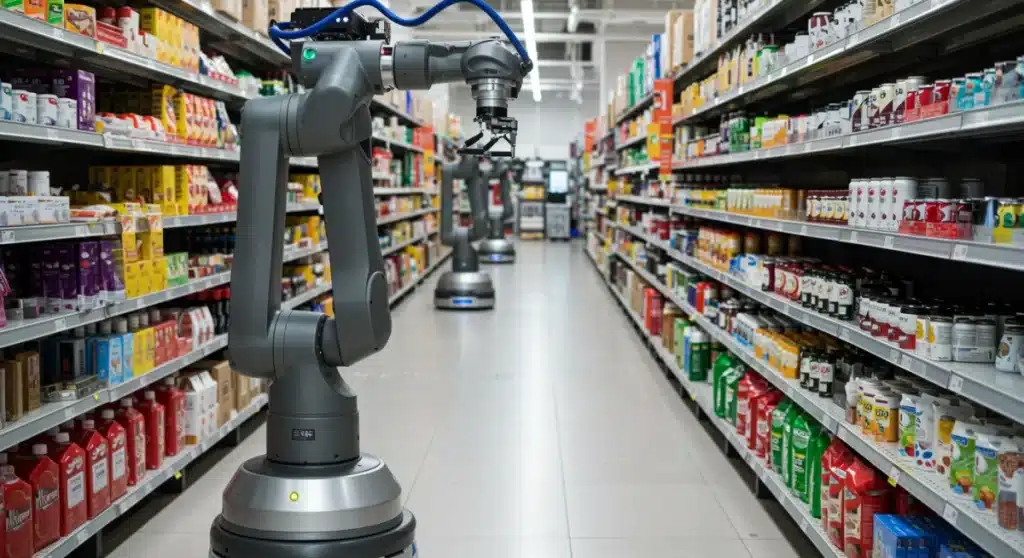
Retail robotics optimization provides a strategic framework for businesses to achieve a significant 25% reduction in labor costs by 2025, fundamentally reshaping operational efficiency and customer engagement.
The retail landscape is constantly evolving, driven by consumer demands and technological advancements. In this dynamic environment, achieving a substantial 25% labor cost reduction by 2025 through the strategic implementation of retail robotics optimization is not merely an aspiration but a tangible goal for forward-thinking businesses. This blueprint explores how integrating robotics can revolutionize operational efficiency, enhance customer experiences, and provide a significant competitive edge in the United States market.
The Imperative for Retail Robotics Adoption
The pressure on retail margins continues to mount, fueled by rising labor costs, supply chain complexities, and the relentless demand for faster, more personalized service. Traditional operational models are struggling to keep pace, making the adoption of robotics an economic necessity rather than a luxury.
Robotics offers a compelling solution by automating repetitive, labor-intensive tasks, thereby freeing human employees to focus on higher-value activities such as customer engagement and strategic decision-making. This shift not only addresses cost pressures but also improves overall operational resilience and agility, crucial factors in today’s unpredictable market.
Addressing Labor Shortages and Rising Wages
The retail sector frequently grapples with high employee turnover and difficulties in attracting and retaining staff, particularly for roles involving mundane or physically demanding tasks. Robotics can fill these gaps, ensuring consistent service levels and operational continuity.
- Automated Stocking: Robots can manage inventory replenishment, reducing the need for manual labor in back-of-store operations.
- Cleaning and Maintenance: Autonomous cleaning robots maintain store cleanliness without constant human supervision.
- Order Fulfillment: In e-commerce, robots accelerate picking and packing processes, addressing peak demand challenges.
By effectively mitigating the impact of labor shortages and rising minimum wages, retailers can reallocate budgets and workforce efforts to areas that directly enhance customer experience and drive growth. The strategic deployment of these automated systems allows for a more stable and predictable operational cost structure, enabling better financial planning.
Strategic Areas for Robotics Implementation
To achieve the ambitious goal of a 25% labor cost reduction by 2025, retailers must identify and prioritize key operational areas where robotics can deliver the most significant impact. These areas typically involve tasks that are repetitive, physically demanding, or require high precision and speed.
From the warehouse floor to the retail storefront, robots are increasingly capable of performing a wide array of functions, transforming how businesses manage inventory, fulfill orders, and even interact with customers. A phased approach to implementation often yields the best results, allowing organizations to learn and adapt.
Inventory Management and Stocking
Accurate inventory management is the backbone of efficient retail. Robotics can revolutionize this fundamental aspect by automating counting, tracking, and even shelf placement.
- Autonomous Inventory Robots: These robots can scan shelves, identify misplaced items, and report stock levels in real time, drastically reducing human error and time spent on manual audits.
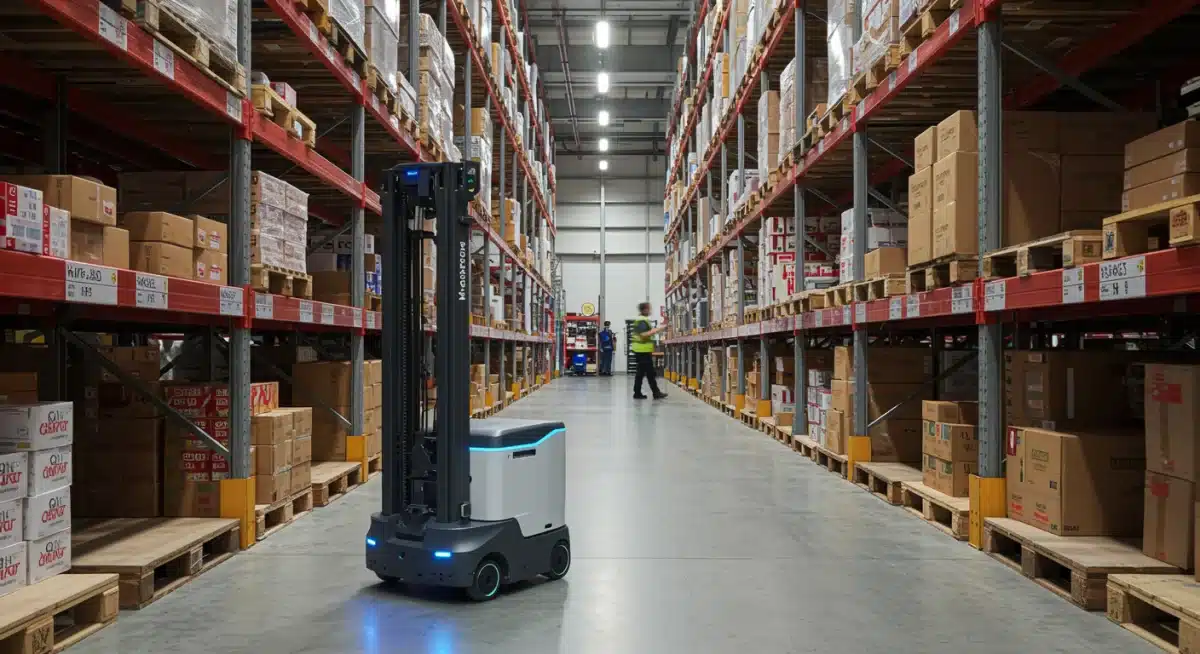
- Automated Guided Vehicles (AGVs) and Autonomous Mobile Robots (AMRs): Used in warehouses and larger retail spaces, these robots transport goods, replenish shelves, and organize backroom stock, optimizing flow and reducing manual lifting.
- Shelf-Scanning Technology: Robots equipped with vision systems can detect out-of-stock items, incorrect pricing, and planogram compliance, ensuring shelves are always well-presented and fully stocked.
The precision and speed of robotic inventory systems lead to fewer stockouts, improved sales, and a significant reduction in the labor hours traditionally dedicated to these tasks. This efficiency translates directly into cost savings and enhanced customer satisfaction.
Enhancing Customer Experience with Robotic Support
While often associated with back-end operations, robotics also play a crucial role in improving the front-end customer experience. By automating routine tasks, human staff can dedicate more time to personalized interactions and complex problem-solving, elevating the overall service quality.
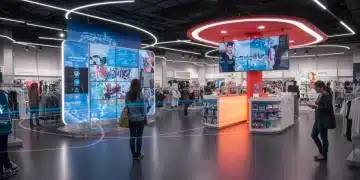
Integrating customer-facing robots can streamline processes like checkout, information provision, and even product recommendations, creating a modern and engaging shopping environment. These technologies are not meant to replace human interaction entirely but rather to augment it, making it more efficient and impactful.
Consider a scenario where a customer needs to quickly locate a specific item. A robotic assistant can guide them directly to the product, saving time and reducing frustration. This level of immediate service is increasingly expected by today’s tech-savvy consumers.
Robots as Customer Service Augmenters
Customer service robots, often equipped with AI, can handle frequently asked questions, provide product information, and even assist with navigation within large stores.
- Information Kiosks and Wayfinding: Interactive robots can direct customers to specific departments or products, improving store navigation.
- Personalized Recommendations: AI-powered robots can analyze customer preferences and suggest relevant products, enhancing the shopping experience.
- Checkout Assistance: Self-checkout systems, often integrated with robotic elements, speed up transactions and reduce queue times, offering a seamless conclusion to the shopping journey.
By offloading routine inquiries and tasks to robots, human associates are freed up to handle more complex customer issues, build relationships, and provide expert advice, ultimately leading to higher customer satisfaction and loyalty.
Robotics in Supply Chain and Logistics
The efficiency of the retail supply chain is paramount for profitability. Robotics offers transformative solutions for optimizing warehouse operations, transportation, and last-mile delivery, directly contributing to labor cost reduction and improved speed to market.
From automated storage and retrieval systems (AS/RS) to robotic parcel sorters, these technologies streamline every stage of the supply chain. The goal is to reduce manual handling, minimize errors, and accelerate throughput, ensuring products reach consumers quickly and cost-effectively.
Automated Warehousing Solutions
Modern warehouses are increasingly relying on robotics to manage vast inventories and process orders with unprecedented speed and accuracy. This automation significantly reduces the labor required for picking, packing, and sorting.
- Automated Storage and Retrieval Systems (AS/RS): Robots efficiently store and retrieve items, maximizing storage density and reducing retrieval times.
- Robotic Palletizers and Depalletizers: These machines automate the loading and unloading of pallets, reducing manual labor and improving safety.
- Sorting Robots: High-speed sorting robots categorize packages for different destinations, accelerating the distribution process.
The integration of these robotic solutions within the supply chain not only drives down labor costs but also enhances the overall reliability and responsiveness of the retail operation. This leads to quicker order fulfillment and a stronger competitive position.
Overcoming Implementation Challenges and Future Outlook
While the benefits of retail robotics are clear, successful implementation requires careful planning and consideration of potential challenges. Initial investment costs, integration complexities, and the need for a skilled workforce to manage these new technologies are significant hurdles.
However, with strategic foresight and a phased approach, these challenges can be effectively managed. The long-term returns on investment, particularly in labor cost reduction and improved operational efficiency, far outweigh the initial expenditures. The future of retail is undeniably intertwined with advanced automation.
Strategic Planning and Workforce Reskilling
A comprehensive strategy for robotics adoption must include a clear roadmap for implementation, addressing both technological and human resource aspects.
- Phased Rollout: Start with pilot programs in specific areas to test efficacy and fine-tune systems before a wider deployment.
- Workforce Training: Invest in reskilling current employees to manage, maintain, and interact with robotic systems, transforming their roles rather than eliminating them entirely.
- Scalability and Flexibility: Choose robotic solutions that can scale with business growth and adapt to changing retail demands.
By proactively addressing these challenges, retailers can ensure a smooth transition to a more automated future, maximizing the benefits of robotics while minimizing disruptions. The focus should be on creating a synergistic environment where humans and robots collaborate effectively.
Measuring ROI and Sustaining Savings
Achieving a 25% labor cost reduction by 2025 through retail robotics optimization is an ambitious goal that requires rigorous measurement and continuous optimization. Retailers must establish clear key performance indicators (KPIs) to track the financial and operational impact of their robotic investments.
Beyond initial cost savings, sustaining these benefits involves ongoing evaluation, adaptation of robotic systems, and a commitment to innovation. The true value of robotics extends beyond mere cost reduction to encompass enhanced productivity, improved accuracy, and a better overall customer experience.
Key Metrics for Success
To ensure robotics investments are delivering the desired labor cost reductions and operational improvements, a robust measurement framework is essential.
- Labor Hours Saved: Directly track the reduction in manual labor hours for automated tasks.
- Error Rate Reduction: Monitor the decrease in inventory discrepancies, picking errors, and other operational mistakes.
- Throughput Increase: Measure the boost in processing speed for tasks like order fulfillment and stocking.
- Employee Satisfaction: Assess the impact on human employee morale and engagement as mundane tasks are automated.
- Customer Satisfaction: Evaluate improvements in customer experience metrics, such as reduced wait times and increased product availability.
By consistently monitoring these metrics, retailers can validate their investments, identify areas for further optimization, and demonstrate the tangible benefits of their robotics strategy. This data-driven approach is critical for sustaining long-term savings and competitive advantage.
| Key Aspect | Brief Description |
|---|---|
| Operational Efficiency | Robotics automates repetitive tasks, reducing manual labor and increasing speed in inventory, stocking, and fulfillment. |
| Labor Cost Reduction | Strategic deployment aims for a 25% decrease in labor-related expenses by 2025 across various retail functions. |
| Enhanced Customer Experience | Robots free human staff for high-value interactions, offer quick assistance, and improve in-store navigation. |
| Supply Chain Optimization | Robotics streamline warehousing, sorting, and logistics, boosting accuracy and speed from supplier to shelf. |
Frequently Asked Questions About Retail Robotics Optimization
Retail robotics optimization involves strategically integrating robotic technologies into various retail operations to enhance efficiency, reduce costs, and improve customer experience. This includes automation in inventory, stocking, customer service, and supply chain logistics, aiming for significant operational improvements.
Robotics can achieve this by automating repetitive, time-consuming tasks like inventory tracking, shelf replenishment, and order fulfillment. This reduces the need for manual labor in these areas, allowing businesses to reallocate human resources to higher-value roles and directly impacting overall labor expenditure.
Common types include autonomous mobile robots (AMRs) for transporting goods and scanning inventory, robotic arms for picking and packing, and customer service robots for information and assistance. Each type addresses specific operational needs within the retail environment, from warehouses to storefronts.
Challenges include significant upfront investment costs, the complexity of integrating new technologies with existing systems, and the need to reskill or upskill the current workforce. Overcoming these requires careful planning, phased implementation, and a focus on long-term ROI.
Robotics enhance customer experience by ensuring shelves are always stocked, providing quick assistance for product location, speeding up checkout processes, and freeing human staff to offer more personalized and in-depth service. This leads to greater satisfaction and a more efficient shopping journey.
Conclusion
The journey towards optimizing retail operations with robotics is not just about adopting new technology; it’s about fundamentally rethinking how retail businesses operate. Achieving a 25% labor cost reduction by 2025 is an ambitious yet attainable goal for US retailers willing to invest in strategic automation. By embracing robotics in inventory management, supply chain logistics, and even customer interactions, businesses can unlock unparalleled efficiencies, enhance service quality, and secure a resilient, profitable future in an increasingly competitive market. The blueprint for success lies in careful planning, continuous innovation, and a commitment to integrating these powerful tools into the very fabric of retail.