Blockchain for Supply Chain Traceability: 15% Transparency by 2025
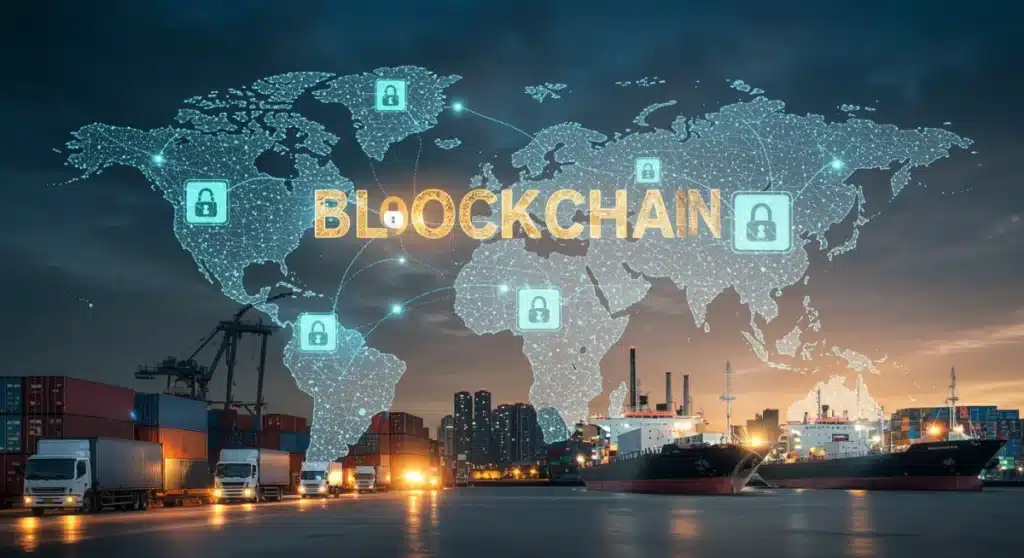
Blockchain for supply chain traceability is projected to achieve a 15% improvement in transparency by 2025, fundamentally transforming how goods are tracked and verified from origin to consumer.
The intricate web of global commerce often conceals more than it reveals, leading to inefficiencies, ethical concerns, and a lack of consumer trust. However, the advent of blockchain for supply chain traceability is rapidly changing this narrative. This revolutionary technology promises to unlock unprecedented levels of transparency, with projections indicating a substantial 15% improvement in supply chain visibility by 2025, fundamentally altering how products move from their origin to the end-user. This isn’t merely an incremental upgrade; it’s a paradigm shift that redefines accountability and efficiency across industries.
Understanding blockchain in supply chains
Blockchain technology, often synonymous with cryptocurrencies, extends far beyond digital currencies. At its core, it is a decentralized, distributed ledger that records transactions across many computers. This makes the data immutable and highly secure, as any change to one block must be verified by the entire network, making tampering virtually impossible.
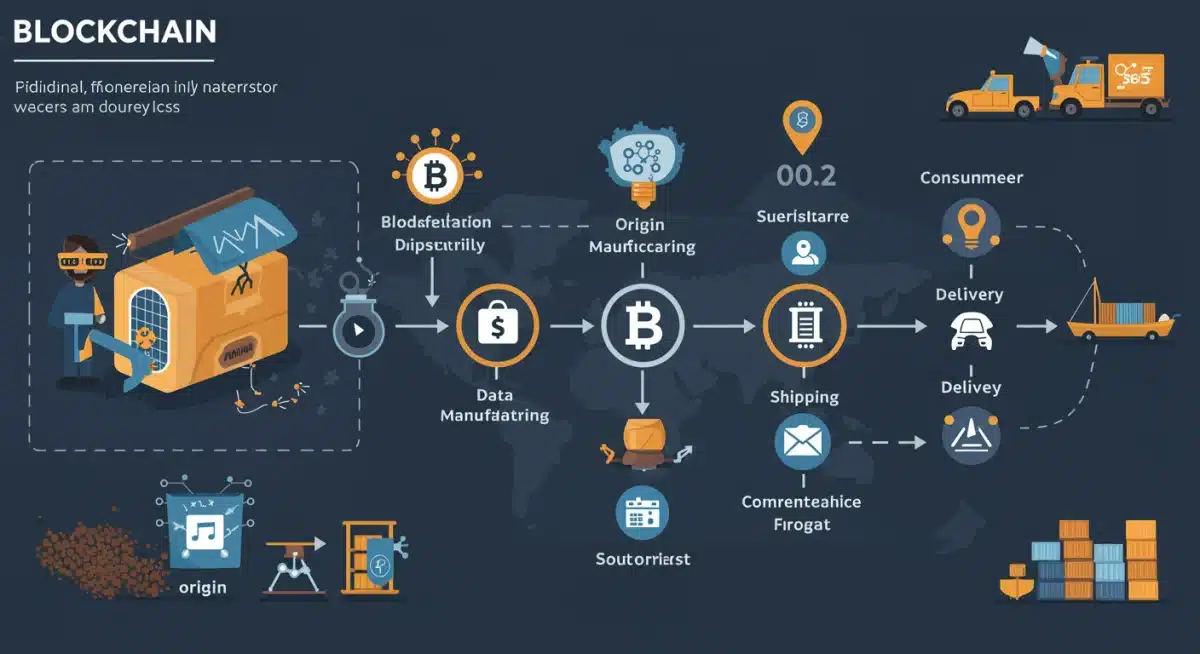
In the context of supply chains, blockchain offers a robust framework for tracking products, components, and even raw materials at every stage of their journey. Each transaction, such as a product moving from a factory to a warehouse or from a distributor to a retailer, can be recorded as a block on the chain. This creates an unalterable, transparent history that all authorized participants can access, providing real-time visibility and enhancing trust among stakeholders.
The immutable ledger: a foundation of trust
The immutability of blockchain records is perhaps its most compelling feature for supply chain applications. Once a transaction is recorded, it cannot be altered or deleted. This inherent characteristic builds a strong foundation of trust, as all parties can rely on the accuracy and integrity of the data.
- Data integrity: Ensures that all recorded information is authentic and hasn’t been tampered with.
- Reduced fraud: Makes it incredibly difficult for counterfeit goods or fraudulent activities to go unnoticed.
- Enhanced accountability: Clearly identifies who did what and when, assigning responsibility throughout the chain.
- Improved compliance: Simplifies adherence to regulatory requirements and industry standards.
This level of data integrity is crucial for industries where product authenticity, ethical sourcing, and regulatory compliance are paramount. From pharmaceuticals requiring strict temperature controls to luxury goods needing proof of origin, blockchain provides the verifiable evidence necessary to meet these demands.
Enhancing transparency: a 15% improvement by 2025
The projection of a 15% improvement in supply chain transparency by 2025 is not an arbitrary figure; it reflects the accelerating adoption and proven benefits of blockchain technology. This improvement will stem from several key areas, primarily driven by the ability to track products with unprecedented detail and share that information securely across an ecosystem of partners.
Increased transparency translates into tangible benefits for businesses and consumers alike. For companies, it means better inventory management, reduced waste, and the ability to quickly identify and resolve issues. For consumers, it offers the peace of mind that comes from knowing the true origin and journey of the products they purchase, aligning with a growing demand for ethical and sustainable consumption.
Real-time visibility and data sharing
One of the most significant contributions of blockchain to transparency is its capacity for real-time data sharing. Traditional supply chains often suffer from information silos, where data is fragmented and inaccessible to all relevant parties. Blockchain breaks down these barriers, creating a unified, shared source of truth.
- Instant updates: Stakeholders receive immediate notifications on product movements and status changes.
- Collaborative platforms: Enables seamless information exchange between suppliers, manufacturers, logistics providers, and retailers.
- Predictive analytics: Rich, real-time data allows for more accurate forecasting and proactive problem-solving.
- Reduced delays: By identifying bottlenecks and inefficiencies faster, delivery times can be optimized.
This enhanced visibility empowers businesses to make more informed decisions, react swiftly to disruptions, and optimize their operations for greater efficiency. The collective impact of these improvements is what drives the ambitious target of a 15% increase in overall transparency within the next few years.
Key benefits for businesses and consumers
The widespread adoption of blockchain in supply chains brings a multitude of benefits that extend across the entire value chain, impacting everyone from raw material producers to the final consumer. These advantages are not merely theoretical; they are being realized in pilot programs and early implementations across various industries.
For businesses, the primary advantages revolve around operational efficiency, risk mitigation, and brand reputation. By having a clearer, more reliable view of their supply chain, companies can make smarter decisions, reduce costs associated with fraud and waste, and build stronger relationships with their partners and customers. Consumers, in turn, gain greater assurance about the authenticity, safety, and ethical sourcing of the products they buy.
Streamlined operations and cost reduction
Operational efficiencies are a major driver for businesses adopting blockchain. The automation of many tracking and verification processes, coupled with the elimination of intermediaries, can significantly reduce administrative overheads and speed up transaction times.
- Automated verification: Smart contracts can automatically trigger payments or actions upon verification of delivery or quality.
- Reduced paperwork: Digital records replace cumbersome paper trails, saving time and resources.
- Lower auditing costs: The transparent and immutable ledger simplifies auditing processes.
- Optimized inventory: Real-time tracking helps reduce stockouts and overstocking.
These efficiencies contribute directly to cost savings, allowing businesses to reallocate resources to innovation and customer service. The ability to identify and address inefficiencies quickly also minimizes financial losses from spoilage, theft, or product recalls.
Challenges and considerations for implementation
While the promise of blockchain in supply chain traceability is immense, its widespread adoption is not without challenges. Implementing such a transformative technology requires careful planning, significant investment, and a collaborative effort across multiple stakeholders. Understanding these hurdles is crucial for successful deployment and for achieving the projected 15% improvement in transparency.
One of the primary concerns is the interoperability between different blockchain platforms and legacy systems. Many companies already have established IT infrastructures, and integrating new blockchain solutions seamlessly can be complex. Furthermore, the sheer volume of data generated by a global supply chain demands robust data management strategies and scalable blockchain architectures.
Data privacy and security concerns
Despite blockchain’s inherent security features, data privacy remains a significant consideration. While the ledger is immutable, the information recorded on it, if sensitive, needs to be protected. Balancing transparency with the need for commercial confidentiality is a delicate act.
- Permissioned blockchains: Many supply chain applications utilize private or permissioned blockchains, where access is restricted to authorized participants.
- Data encryption: Sensitive data can be encrypted before being added to the chain, ensuring only those with the decryption key can view it.
- Regulatory compliance: Adhering to data protection regulations like GDPR and CCPA is paramount.
- Scalability issues: Public blockchains can struggle with transaction volume, making private solutions more appealing for enterprise use.
Addressing these privacy and security concerns is essential to fostering trust among participants and ensuring the integrity of the entire system. Without robust solutions, the full potential of blockchain for supply chain traceability cannot be realized.
Industries leading the blockchain adoption
Several industries are at the forefront of embracing blockchain for supply chain traceability, driven by specific needs for authenticity, regulatory compliance, and ethical sourcing. These early adopters are demonstrating the practical benefits and paving the way for broader implementation across other sectors.
The food and beverage industry, for example, is leveraging blockchain to track products from farm to fork, ensuring food safety and combating fraud. Similarly, the pharmaceutical sector uses it to prevent counterfeit drugs from entering the market and to maintain the integrity of temperature-sensitive medications. Luxury goods and apparel brands are also using blockchain to verify authenticity and provide transparency about their ethical sourcing practices.
Food and pharmaceutical sectors: critical applications
The stakes are particularly high in the food and pharmaceutical industries, where product integrity directly impacts public health. Blockchain offers a solution to long-standing challenges in these sectors.
- Food safety: Rapidly trace contaminated products back to their source, minimizing outbreaks and recalls.
- Counterfeit prevention: Verify the authenticity of drugs, protecting patients from dangerous fake medications.
- Ingredient transparency: Provide consumers with detailed information about food ingredients and their origin.
- Temperature monitoring: Record immutable data on storage conditions for sensitive products throughout the cold chain.
These applications not only enhance consumer safety but also build brand trust and allow companies to demonstrate their commitment to quality and ethical practices. The success stories in these industries serve as powerful case studies for other sectors considering blockchain adoption.
The future outlook: beyond 2025
Looking beyond the immediate goal of a 15% improvement in transparency by 2025, the long-term outlook for blockchain in supply chain traceability is even more transformative. As the technology matures and becomes more integrated into existing systems, its capabilities will expand, leading to entirely new business models and unprecedented levels of efficiency and trust.
The evolution will likely involve greater interoperability between different blockchain networks, the development of more sophisticated smart contracts, and the integration of emerging technologies like IoT (Internet of Things) and AI (Artificial Intelligence) to create truly intelligent supply chains. These advancements will not only optimize logistics but also enable a circular economy, where products can be tracked through their entire lifecycle, from production to recycling and reuse.
Interoperability and smart contract evolution
The future success of blockchain in supply chains hinges on its ability to connect disparate systems and automate complex processes. Interoperability will allow different companies, even those using different blockchain platforms, to share information seamlessly, creating a truly global and interconnected supply network.
- Cross-chain communication: Protocols allowing different blockchains to interact and share data.
- Advanced smart contracts: More complex, self-executing agreements that can handle intricate supply chain scenarios.
- Tokenization of assets: Representing physical goods as digital tokens on a blockchain, simplifying ownership transfer and tracking.
- AI-driven insights: Leveraging artificial intelligence to analyze vast amounts of blockchain data for predictive insights and optimization.
These developments promise to create a supply chain ecosystem that is not only transparent and efficient but also highly resilient and adaptable to future challenges. The journey towards a fully transparent and intelligent supply chain is well underway, with blockchain as its foundational technology.
| Key Aspect | Description |
|---|---|
| Transparency Goal | 15% improvement in supply chain transparency by 2025 through blockchain adoption. |
| Core Technology | Decentralized, immutable ledger for secure and verifiable transaction records. |
| Key Benefits | Enhanced trust, reduced fraud, improved efficiency, and better regulatory compliance. |
| Challenges | Interoperability, data privacy, scalability, and initial implementation costs. |
Frequently asked questions
Blockchain’s primary role is to create an immutable, shared record of all transactions and movements within a supply chain. This distributed ledger ensures that data on product origin, manufacturing, and transit cannot be altered, providing unparalleled transparency and trustworthiness for all stakeholders involved in the process.
Blockchain increases transparency by offering real-time, end-to-end visibility of a product’s journey. Every step, from sourcing raw materials to final delivery, is recorded on a secure, accessible ledger. This eliminates information silos and allows all authorized participants to track products, verify authenticity, and monitor conditions instantaneously.
Consumers benefit from blockchain traceability through enhanced trust and assurance. They can verify the authenticity of products, confirm ethical sourcing practices, and gain detailed information about an item’s origin and journey. This empowers them to make more informed purchasing decisions, especially for products where quality, safety, or sustainability are critical concerns.
Key challenges include ensuring interoperability between diverse blockchain platforms and legacy systems, addressing data privacy concerns while maintaining transparency, managing the scalability required for global supply chains, and overcoming the initial investment and complexity of integrating new technologies. Collaboration across partners is crucial for successful adoption.
The food and pharmaceutical industries are leading the charge due to their critical needs for product authenticity, safety, and regulatory compliance. Food companies use it for farm-to-fork traceability, while pharmaceutical firms leverage it to combat counterfeit drugs and ensure cold chain integrity. Luxury goods and apparel sectors also use it for ethical sourcing and brand protection.
Conclusion
The journey towards a more transparent and efficient global supply chain is undeniably being spearheaded by blockchain technology. With a projected 15% improvement in transparency by 2025, this digital ledger system is not just an incremental upgrade but a fundamental shift in how goods are tracked, verified, and trusted. While challenges in interoperability, data privacy, and scalability persist, the proven benefits in sectors like food and pharmaceuticals underscore its immense potential. As the technology continues to evolve, integrating with AI and IoT, we can anticipate an even more resilient, intelligent, and accountable supply chain ecosystem, benefiting businesses, consumers, and the planet alike.