Adapting to Consumer Payment Trends: Small Retailers’ Q3 2025 Guide
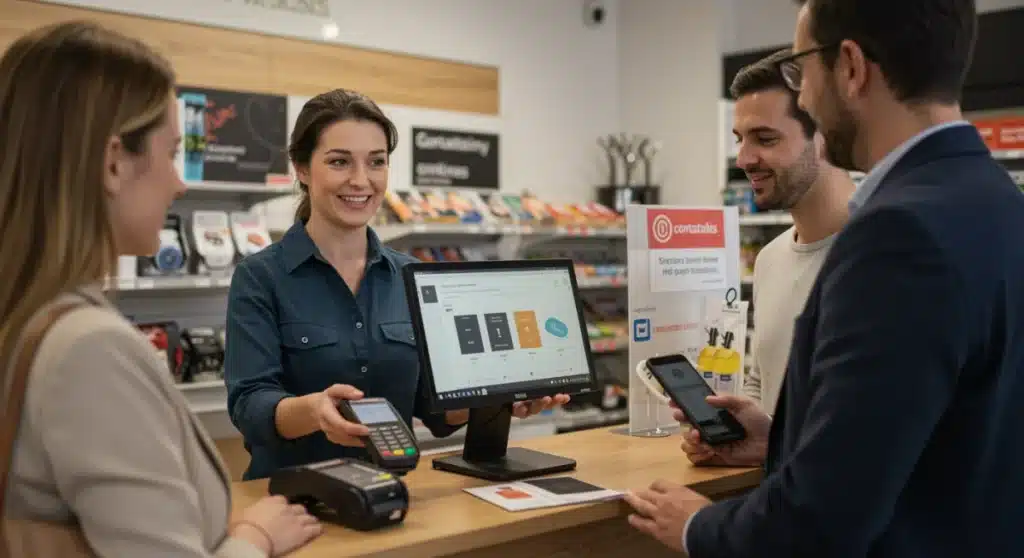
Adapting to consumer payment trends: what small retailers need to offer by Q3 2025 is crucial for survival, requiring the integration of modern solutions like contactless payments, digital wallets, and flexible financing to meet evolving customer expectations.
The retail landscape is constantly shifting, and for small businesses, staying ahead of the curve isn’t just an advantage—it’s a necessity. By Q3 2025, the way consumers pay for goods and services will have evolved significantly, and adapting to consumer payment trends: what small retailers need to offer by Q3 2025 will directly impact their viability. This article delves into the critical payment innovations and customer expectations that small retailers must embrace to thrive in the coming years.
Understanding the evolving payment landscape
The days of cash-only transactions or even simple card swipes are quickly becoming a relic of the past. Consumers today expect speed, convenience, and security in their payment options, driven by technological advancements and a growing preference for digital interactions. Small retailers, often operating with tighter margins and fewer resources than their larger counterparts, face the unique challenge of keeping pace without overhauling their entire operational structure.
This evolution isn’t just about offering more ways to pay; it’s about understanding the underlying psychological shifts in consumer behavior. People are increasingly comfortable with their smartphones as their primary payment tool, and they value seamless experiences. Ignoring these trends can lead to lost sales and a diminished customer base, as shoppers migrate to businesses that cater to their preferred payment methods.
The rise of contactless payments
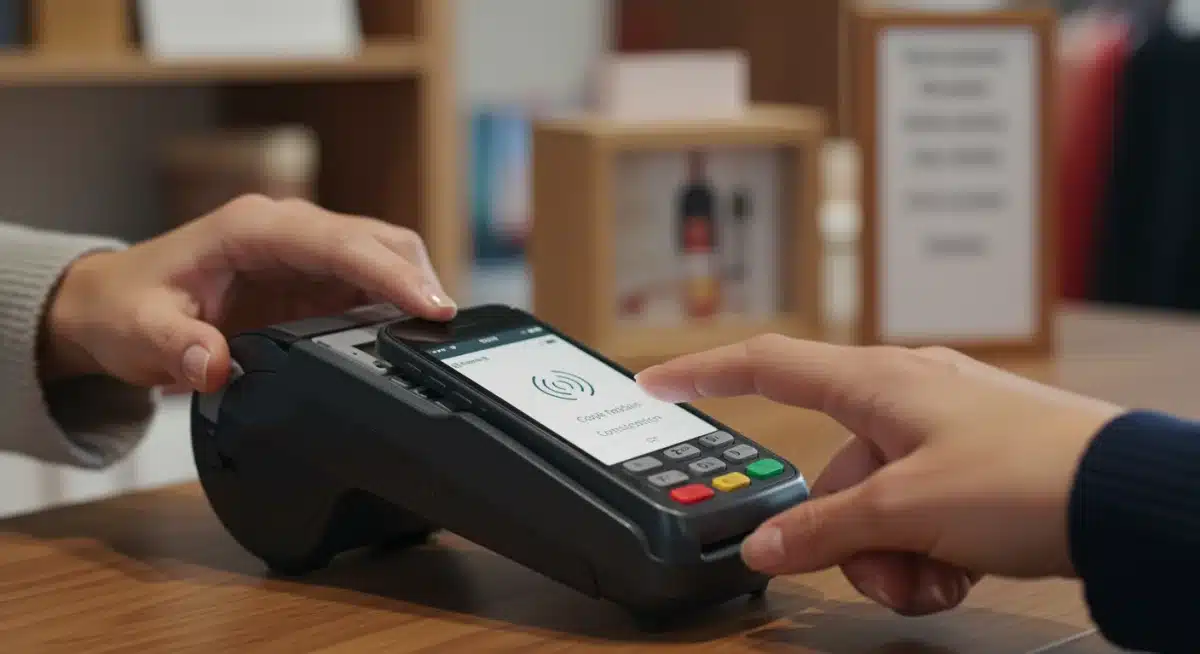
Contactless payment methods, such as tap-to-pay credit cards and mobile wallets, have seen an exponential rise in adoption. This trend was accelerated by global events that emphasized hygiene and minimized physical contact. For small retailers, implementing contactless solutions is no longer a luxury but a fundamental expectation.
- Speed and convenience: Contactless transactions are significantly faster than traditional swipe or chip methods, reducing checkout times and improving customer flow.
- Enhanced security: These methods often use tokenization, encrypting sensitive card data and making transactions more secure than older methods.
- Customer preference: A growing number of consumers actively seek out retailers that offer contactless options, viewing it as a modern and efficient way to pay.
- Reduced hardware needs: Many modern POS systems come equipped with contactless readers, or external readers can be easily integrated.
Adopting these technologies can also streamline operations, reduce human error, and provide valuable data on customer spending habits. It’s about creating a frictionless experience that encourages repeat business and positive word-of-mouth.
Embracing digital wallets and mobile payments
Beyond contactless cards, digital wallets like Apple Pay, Google Pay, and Samsung Pay are becoming ubiquitous. These platforms allow customers to store multiple payment methods securely on their smartphones, enabling quick and easy transactions. Small retailers must ensure their point-of-sale (POS) systems are compatible with these popular digital wallet options.
Key benefits for small businesses
Integrating digital wallets offers several advantages. It caters to a tech-savvy demographic, particularly younger consumers who are accustomed to managing their finances and making purchases through their mobile devices. It also reduces the need for customers to carry physical wallets, aligning with a more minimalist and convenient lifestyle choice.
- Broader customer reach: Attracts customers who prefer or exclusively use mobile payment solutions.
- Improved customer experience: Offers a quick, secure, and convenient checkout process.
- Reduced fraud risk: Digital wallets employ advanced encryption and authentication, minimizing the risk of fraud for both the customer and the retailer.
- Streamlined accounting: Digital transactions often come with better tracking and reporting features, simplifying bookkeeping.
The seamless integration of mobile payments into the retail experience can differentiate a small business from competitors, signaling a commitment to modernity and customer convenience. This is a crucial element in adapting to consumer payment trends: what small retailers need to offer by Q3 2025.
The rise of ‘buy now, pay later’ (BNPL) services
Flexible payment options, particularly ‘buy now, pay later’ (BNPL) services, have exploded in popularity. Companies like Affirm, Afterpay, and Klarna allow consumers to split purchases into smaller, interest-free installments, making larger ticket items more accessible. While traditionally associated with e-commerce, BNPL is increasingly making its way into physical retail spaces.
For small retailers, offering BNPL can significantly boost sales, particularly for higher-priced goods. It removes a major barrier to purchase by alleviating immediate financial strain on the customer. This can lead to increased average transaction values and conversion rates.
However, implementing BNPL requires careful consideration of integration costs and potential fees. Retailers need to partner with reputable BNPL providers that offer transparent terms and reliable service. The benefits, in terms of expanded customer base and increased purchasing power, often outweigh these considerations.
Cryptocurrency and alternative payment methods
While still a niche market, cryptocurrency payments are gaining traction, albeit slowly. For some small businesses, particularly those targeting tech-savvy or early-adopter demographics, accepting cryptocurrencies like Bitcoin or Ethereum might be a forward-thinking move. However, the volatility of cryptocurrencies and the complexities of managing them mean this isn’t a universal requirement for all small retailers by Q3 2025.
More broadly, alternative payment methods encompass a range of options that deviate from traditional credit cards. This could include:
- Peer-to-peer payment apps: While primarily for personal transfers, some businesses might explore integrating apps like Venmo or Zelle for specific transactions.
- QR code payments: Popular in many parts of the world, QR codes offer a simple, app-based payment method that can be easily implemented.
- Biometric payments: Though still emerging, technologies like fingerprint or facial recognition for payment could become more prevalent in the long term.
The key here is to assess your target audience and their preferences. While not every alternative method will be necessary, understanding the possibilities and being open to future integration is part of adapting to consumer payment trends: what small retailers need to offer by Q3 2025.
The importance of a robust point-of-sale (POS) system
At the heart of any successful payment strategy for a small retailer is a modern, flexible point-of-sale (POS) system. A robust POS isn’t just for processing transactions; it’s an integrated hub that can manage inventory, track sales data, facilitate customer loyalty programs, and, crucially, adapt to new payment technologies.
Investing in a cloud-based POS system is often the best choice for small businesses. These systems are typically more affordable, offer remote access, and receive automatic updates, ensuring compatibility with the latest payment innovations without constant manual intervention. When selecting a POS, consider its ability to integrate with:
- Contactless readers: Essential for tap-to-pay cards and mobile wallets.
- E-commerce platforms: For businesses with an online presence, seamless integration between in-store and online sales is vital.
- Inventory management: To ensure accurate stock levels and prevent overselling.
- Customer relationship management (CRM) tools: To personalize customer interactions and loyalty programs.
A well-chosen POS system simplifies the adoption of new payment methods and provides invaluable insights into business performance, making it a cornerstone for adapting to consumer payment trends: what small retailers need to offer by Q3 2025.
Security and customer trust in digital payments
As payment methods become more digital, the importance of security and data privacy escalates. Customers need to feel confident that their financial information is protected. Small retailers must prioritize robust security measures and transparency to build and maintain trust.
Best practices for payment security
- PCI DSS compliance: Ensure your POS system and payment processing adhere to Payment Card Industry Data Security Standard (PCI DSS) requirements.
- End-to-end encryption: Implement systems that encrypt sensitive data from the moment it’s captured until it reaches the payment processor.
- Fraud detection tools: Utilize features within your POS or payment processor that flag suspicious transactions.
- Regular software updates: Keep all payment-related software and hardware updated to patch security vulnerabilities.
- Staff training: Educate employees on best practices for handling payments and recognizing potential security threats.
Transparency with customers about how their data is handled and the security measures in place can also foster trust. Displaying security certifications or badges visibly can reassure customers. Ultimately, a secure payment environment is foundational to encouraging the adoption of new payment methods and ensuring customer loyalty.
Preparing for the future: actionable steps for small retailers
The landscape of consumer payments will continue to evolve, making continuous adaptation critical. For small retailers, proactive planning is essential to remain competitive and meet customer expectations by Q3 2025 and beyond.
Strategic implementation and review
Start by assessing your current payment infrastructure. Identify any gaps in your offerings compared to emerging trends. Engage with your customer base to understand their preferred payment methods and any frustrations they might have with your current system. This direct feedback is invaluable for prioritizing which new technologies to adopt.
Consider a phased approach to implementation. You don’t need to adopt every single new technology overnight. Prioritize the methods that offer the greatest benefit to your specific customer demographic and business model. For instance, if your customer base is primarily younger and tech-savvy, digital wallets and BNPL might be higher priorities than, say, cryptocurrency. Regularly review the performance of new payment methods, tracking their usage and impact on sales and customer satisfaction. This data-driven approach ensures that your efforts in adapting to consumer payment trends: what small retailers need to offer by Q3 2025 are both effective and efficient.
| Key Payment Trend | Retailer Action by Q3 2025 |
|---|---|
| Contactless Payments | Upgrade POS systems to accept tap-to-pay cards and mobile wallets for faster, more secure transactions. |
| Digital Wallets | Ensure compatibility with popular options like Apple Pay and Google Pay to cater to mobile-first consumers. |
| Buy Now, Pay Later (BNPL) | Integrate BNPL services (e.g., Affirm, Afterpay) to increase sales for higher-value items and attract new customers. |
| Robust POS System | Invest in a modern, cloud-based POS that integrates new payment methods, manages inventory, and offers data insights. |
Frequently asked questions about payment trends
Contactless payments are crucial because they offer speed, convenience, and enhanced security, which are increasingly expected by modern consumers. Their widespread adoption, accelerated by recent global events, means businesses not offering them risk losing customers to competitors who do.
Small retailers should prioritize supporting widely used digital wallets such as Apple Pay, Google Pay, and Samsung Pay. These platforms are popular among mobile-first consumers and offer secure, efficient transactions that cater to a tech-savvy demographic.
BNPL services benefit small businesses by making higher-priced items more affordable for customers, potentially increasing average transaction values and conversion rates. They remove immediate financial barriers, allowing customers to purchase items they might otherwise delay or forgo.
No, accepting cryptocurrency is not essential for all small retailers by Q3 2025. While it’s gaining traction, its volatility and complexity make it more suitable for businesses targeting specific, tech-savvy niches. Focus on more mainstream digital options first.
A modern POS system is central to adapting to payment trends. It acts as an integrated hub, facilitating the acceptance of new payment methods like contactless and digital wallets, managing inventory, and providing crucial sales data, all while ensuring security and efficiency.
Conclusion
The imperative for small retailers to embrace evolving payment trends by Q3 2025 cannot be overstated. From the widespread adoption of contactless and digital wallet technologies to the growing popularity of ‘buy now, pay later’ services, consumer expectations are clear. By strategically integrating these modern solutions and investing in a robust, secure POS system, small businesses can not only meet current demands but also position themselves for sustained growth and customer loyalty in an increasingly digital marketplace. Proactive adaptation is not just about keeping up; it’s about leading the way in customer experience and operational efficiency.